
Day of Makar Sankranti is decided as per Hindu Solar calendar, Panchang.Makar Sankranti is observed when the Sun transits from Sagittarius to Capricorn and is at 0 degrees of Capricorn makar Rashi.
Typically, it falls on the first day of the tenth solar month in most Hindu calendars.Currently the day of Sankranti falls either on January 14 or January 15 on Gregorian calenndar. If Sankranti moment occurs before sunset then it is observed on the same day otherwise it is observed on the next day.
The Two Main Periods of the Year, is divided by the Movement of the Sun in Northerly or Southerly Direction.
Sun is the key to giving us the Sidereal year and is a time keeper.Giving us not just the seasons, but also the year. The Vedic Solar year is divided into primarily two Uttarayana Northerly course and Dakshinaya – Southern course.
Thus Time or Samaya is an important factor.
ayanakṣaṇavārartumāsapakṣasamā dvija |sūryādīnāṁ kramājjñeyā nirviśaṁkaṁ dvijottama || 33||
aṣṭau māsāśca svarbhānoḥ ketormāsatrayaṁ dvija ||
Samaya refers to properly appointed time, the appropriate, right or best moment for Graha Jyotiṣa
All spiritual activity based on
sun and sunrise best moments for doing various activities.
| Graha Period | Time period in days/weeks etc |
| Ravi | ayana Half-year 180≅days |
| Chandra | Moment kṣaṇa |
| Maṅgala | vāra Weekday 1 |
| Budha | Ṛtu Season The six seasons |
| Guru | Māsa Month 30 |
| Śukra | Pakṣa Fortnight 15 |
| Śani | Samā Year 360 days |
| Rāhu | aṣṭa-māsa 8 months – 240 |
| Ketu | tri-māsa 3 months – 90 |
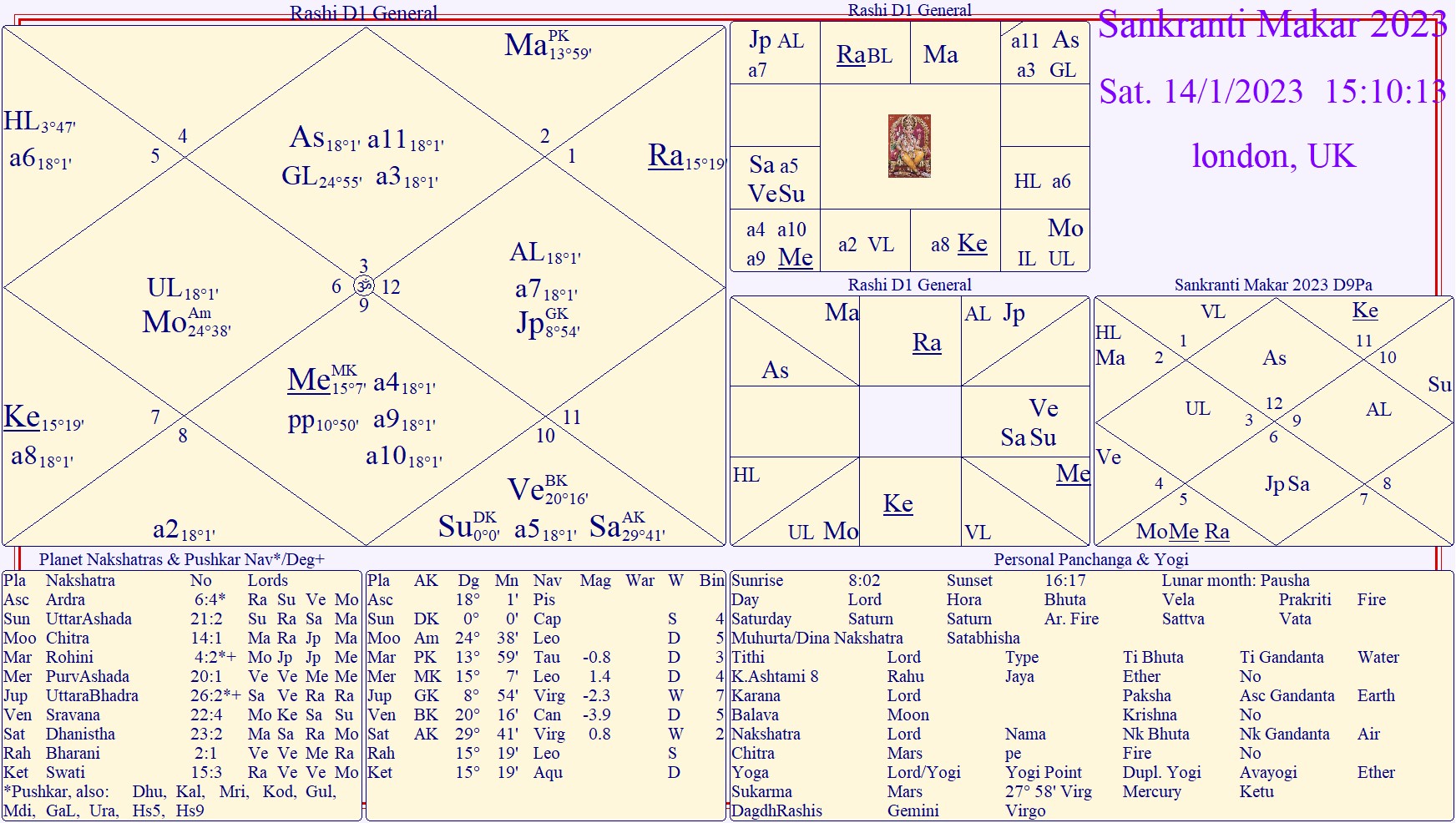
Chart above shows When the Sun enters Capricorn , highlighting the buidlup for the year to come at least for the next 6 months.
1. Fluctuations in property markets is imminent, albeit moon in digbala, the mood is that people want it to work, yet mercury is retrograding and in dying mks position, thus, there is hope of recovery at least for next few months! Once jpupiter conjoins Rahu, it is going to be diffucult to sustain.
2.Rise in AI , control of World Governments is invitable.
3.Lot of blame on various factions or groups. invaribly the death count will go further up.
Already there are people (latest that cannot be ignored – Lisa Marie Presley – triple vaccinated, passed with a heart attack!)
does not bode well, and no doubt lot of antics to take the attention away from this issue!
Sun’s descent into the phase of Uttarayana which is from Sidereal Capricorn to Cancer, thus its movement is in the northerly direction. This is extremely auspicious as traditionally for thousands of years it has come to be associated with the reaping of the harvest. Hence, it is a time, when the winter is at its peak and will soon be easing up thus bringing down the harshness of winters. (See the Ritu Seasons chart below).
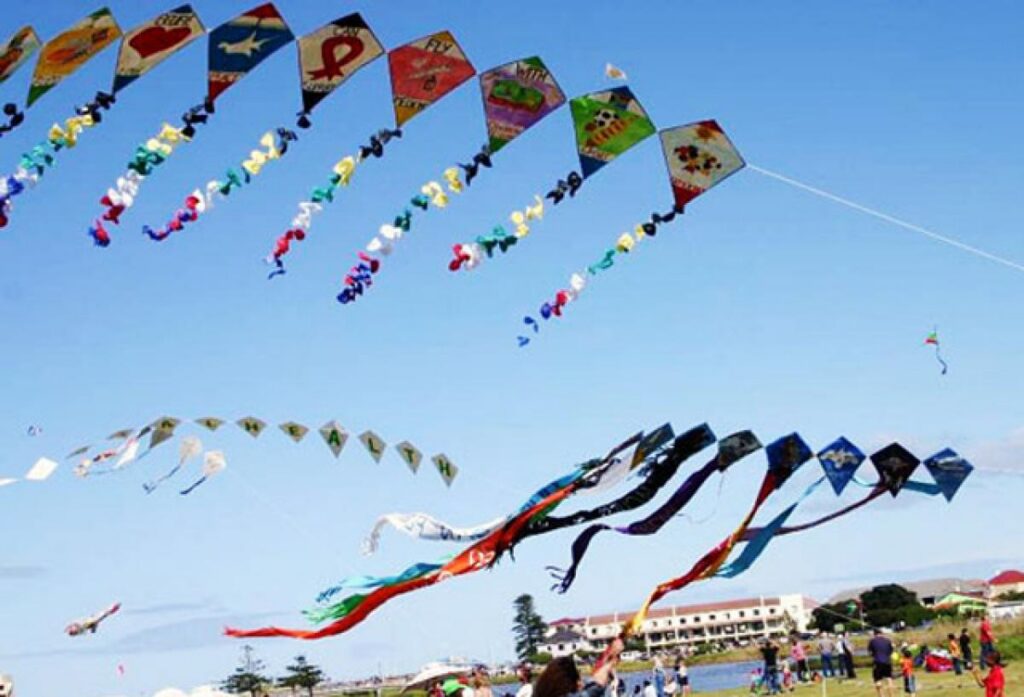
It is celebrated throughout the country in form of Kite flying to making sweets made of jaggery, sesame(black) and coconut, and savoury items.
What’s So great About the Sun entering Makar ?
For that we have to look at the astronomy coming from the Vedic times. Introducing Varaha Mihira was a native of Avanti and the son of Adityadasa who was an Astronomer and from whom he received his education as he himself tells us in his Brihat Jataka. Brihat Jataka is one of monumental works in Jyotisha by Varahmihira.
Unfortunately Varaha Mihira’s work on astronomy, known as the Panchasidhantika, is now lost ….
He was one of the 12 gems of the Court of Vikramarka. Now Vikrama Era, as we find from the Hindu calendar, dates from 56 B. C. whereas Varaha Mihira is considered to have flourished in the sixth century after Christ. A lot of the evidence points to that he flourished before a century Before Christ. And he has quoted from Arybhata and other astronomers.
verse 2 of Chapter III of his Brhat Samhita Varaha Mihira says:—
“At present the Solsticial points coincide with the beginning of Karkataka (Sign Cancer) and with the beginning of Makara (Sign Capricornus).”
This amounts to saying that the Vernal equinox, which is midway between the Solstices (90° from each), was at the commencement of Mesha Aries i.e. coincided with the Star Revati where the fixed Hindu Zodiac commences.
From Atharveda Veda Kaanda 19 / Sooktam 7
Garga Rishi! Nakshatrani Devata!
Trishtup-Bhurik Chandaha!
Chitrani sakam divi rochanani sarisrupani bhuvanejavani
turmisham sumatimichaamaano ahaani geerbhi saparyami nakam!1!
suhavamagne krittika rohini chaastu bhadram mrigashirah Sham aardhrah !
punarvasu soonruta chaaru pushyo Bhaanur aslesha ayanam magha mey !2!
punyam poorva Phalguni chottra hasta schittra shiva swaati sukho mey astu!
raadhe vishaakhe suhav anooradha jyeshta sunakshatramarishta moolam !3!
annam poorva raasataam aashadha oorja devy uttaraa aavahantu!
abhijinma raasataam punyameva shravanah shravishtaah kurvatam supushtim!4!
Aa mey maha chatabhishagam vareeya Aa mey dvaya proshtapadaa susharma!
Aa reyvato chashvayujow bhagam ma Aa mey rayim Bharanya aavahantu!5!
Verse 2 of Chapter III of his Brhat Samhita Varaha Mihira states –
“At present the Solsticial points coincide with the beginning of Karkataka (Sign Cancer) and with the beginning of Makara (Sign Capricornus).”
This amounts to saying that the Vernal equinox, which is midway between the Solstices (90° from each), was at the commencement of Mesha Aries i.e. coincided with the Star Revati where the fixed Hindu Zodiac commences.
The precession of the equinoxes was known to the Hindus long before it was known to the Europeans, although Hindu astronomers are not agreed as to the nature of its course—some asserting that it oscillates on both sides of the star Revati while others that it makes a complete revolution round the heavens, a point about which even European astronomers have not arrived at any conclusion.
The Sookta describes both astronomical and astrological elements. Twenty eight Nakshatras are identified starting with Krittika and reference is made to Ayanam occurring in Maghaa.
A nakshatra Abhijit is shown between Uttarashadha and Shravana. Its use has been discontinued in the Jyotish.
Rishi Gargya starts the list of twenty seven nakshatra‘s starting with Krittika. Choice of Krittika as the first of twenty-seven is very significant. Today we use Ashwini as the first star. The choice of first Nakshatra must correspond to a logically first day of a solar year, which dictates the weather cycles. Which is the year’s first day? Astronomically speaking, the spring Equinox day in Northern Hemisphere temperate zone .
Temperate zone of northern hemisphere of the earth. Vasantha ritu, the spring has always been considered as beginning of a year from Rig-vedic times
Rishi Gargya’s sooktha observation is that on spring Equinox day, Sun was in Krittika Nakshatra
Makar Sankranti is known as Uttarayan in Gujarat,India. Uttarayan is a significant festival in Gujarat spread over 2 days. The first day of Sankranti is known as Uttarayan and the next day of Uttarayan is known as Vasi Uttarayan. The day is considered highly auspicious and is dedicated to Lord Surya. In the western part of the country, which encompasses the states of Maharashtra & Gujarat, it is celebrated over two days. Kite-flying and eating Undiyo ane muthia on the terraces, is a given. Often the meal is centred around the Undhiyu which is spicy baked mix of winter vegetables (Recipe below), sweet rice pudding, Chikki (squares of blocks which is made from sesame seeds, peanuts and jaggery).
Kids and adults alike are exposed to the winter Sun, by the recreational game of Kite flying is a massive tradition, and exists still.
All parts of the country have different tastes but all have a similar sort of celebration meal.
Some of favourite recipes are given below, and of course they can be altered to one’s environment, diet, lifestyle. It is worth still giving it a shot and trying to make it on your own!
Why is it significant Sun’s Sojourn into the Zero Degrees Capricorn till Zero Degrees Cancer
The Sacred importance of Sun-God is epitomised in the Samba Purana as follows
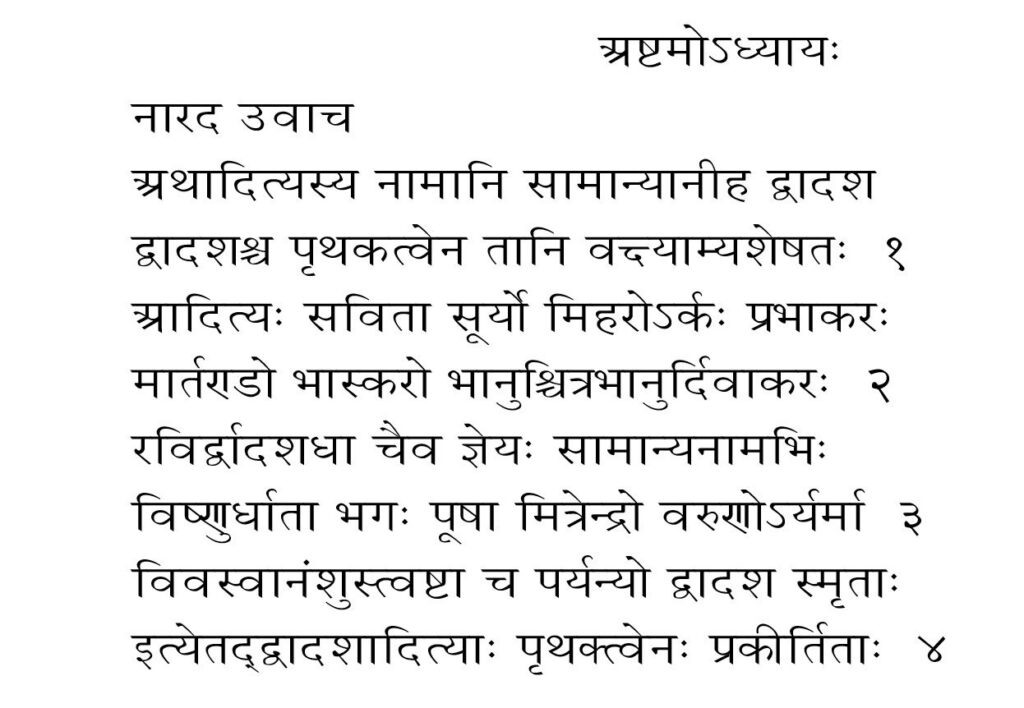
Narada spoke : – O Samba, Son of the yadu race, all the three worlds have originated from the Sun God.The entire universe inclusive of Gods, demons and human beings came into existence from the Sun god himself.
The all-encompassing splendour of Rudra, Visnu, Indra, excellent Brahmanas and Gods living in the heaven and the other worldly glory of all other creatures is based upon the Sun-God.
He is the Soul of all beings. He is the soveriegn of all the worlds.He is the God of Gods and he is the lord of all human beings. He is the Soul of the 3 worldsand is the supreme God.The obliations offered into the fire Agni, reaches the Sun God.The Sun gives rains and the rains produce food and the food produce creatures.
Thus we see, the importance of Sun’s movement from season to season, from One Direction to another.
He is the King of the Planets and the Master of the World, the thousand rayed Sun illuminates the Earth Bhu-loka by his three hundred rays. With these rays he produces in Hemanta-Sishir (Winter) Seasons Samba Purana
The 7th form of Sun God is known as Bhaga, and is situated in the Earth as well as in the bodies of human beings. Bhaga as a Aditya, Sun-God is associated with the Sign Capricorn.It embodies our connection to the earthly existence through our bodies.
We may have fathomed by now that the Sun indeed is the giver of Seasons. Being born in a season has special significances. And each of these six seasons is linked with the Sun’s connection through a special Constellation, Fixed Star and is named after.Meanwhile here is a short description of the seasons, in the Vedic Context and what they signify to be born in one of the 6 seasons, as per Jataka Bharnam.
| Mesha Aries | Vaisakha | April-May | Grīṣma(Summer) Natives born here are endowed with splendour & magnificence,learning, weatlth & gains, eloquent speaker, long hair, voluptuous and lover of water sports |
|||
| Vrishabha Tauraus |
|
May–June | ||||
| Mithuna – Gemini |
|
|
VarṣāMonsoon Native is Conqueror in battles, intelligent, valourous,lover of horse riding,has handsome appearances, phlegmatic,of windy nature,has love for woman and worldly pleasures. |
|||
| Kataka – Cancer |
|
July-Aug | ||||
| Simha Leo | Bhadrapad | August-September | Śarad – Autumn Native born here are slightly prone to anger,of windy nature, honoured and respected,has interest in doing his work,is pure of heart,loves battles and has means of conveyance. |
|||
| Kanya – Virgo | Ashwin | September-October | ||||
| Thula – Libra | Kartik | October-November | Hemanta(Late-Autumn, Early Winter)Native born here is Kings’ Minister, wise, clever, generous, liberal,virtuous, is excellent in performance of his work, is engaged in doing religious deeds, is thoughtful wise and always courteous. | |||
| Vrischika – Scorpio | Agahana / Margashira | November-December | ||||
| Dhanus – Sagittarius | Pausa | December-January | Shishir WinterNatives born here is lover of sweet foods, afflicted by hunger, (restlessness due to hunger) has happiness from sons and wife, is doer of good and virtuous deeds, handsome, prone to anger and endowed with strength. |
| Makara Capricorn | Magha | January-Februry | |
| Kumbha – Aquarius | Phalguna | Feb-March | Vasanta(Spring)Natives born in here are extremely beautiful,intelligent,valourous,skilled in music and Mathematics, proficient in the Study of Sastras, wears clean clothes and has pure heart. |
| Meena – Pissces | Chaitra | March-April | |
A whole Solar Year where the Sun goes through all the 12 Zodiacal signs Rashis, giving the seasons, is divided into two main parts. One is the Uttarayana, which is the Sun’s travel through the Northerly direction from sign of Capricorn till its ingress into Cancer.
Natives born in this UttaraAyana is said to remain happy,happiness from sons and wife, enjoys long life, is of righteous or moral conduct, generous or liberal and has patience and endurance.Jataka Bharnam
While the start of the Dakshinaya movement in Southerly direction, marking the Sun’s ingress into Cancer to Capricorn and all signs covering them.
Natives born is Yamayayana or Dashinayana is excessively proud, agriculturist, keeps cattle like cows(!), buffaloes, etc, is hard hearted,deceitful and intolerant. Jataka Bharnam
RECIPE for Undhiyu &
SWEET RICE + BANANA PUDDING
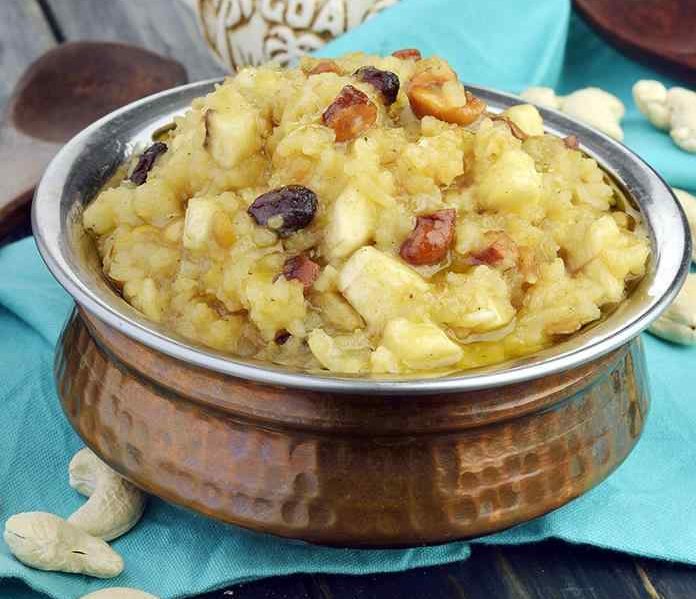
Ingredients for Sweet Rice+Banana+Cocnut pudding – Serve Warm or Cold with Shavings
of Chocolate!
1 cup raw rice-pudding , washed and drained
1 cup milk or cashew / almond milk
2 cups chopped jaggery (gur) / Coconut Natural Sugar
2 tbsp ghee / Cooconut butter
2 tbsp raisins
1 tsp cardamom (elaichi) powder
1/4 tsp Mace and Allspice and Cinnamon powders
a few strands of saffron (kesar) strands
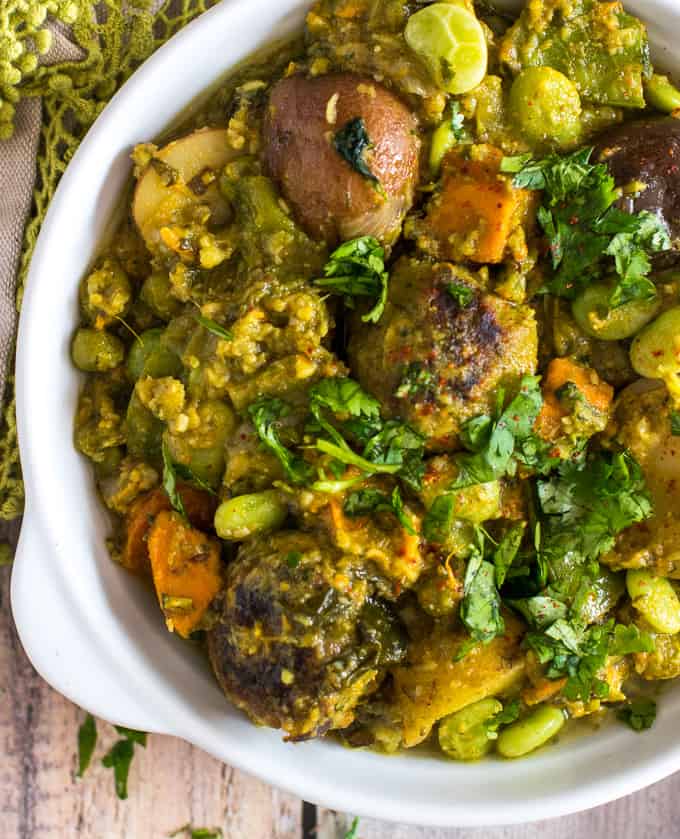
One of most delicious medley of winter root vegetables (5 of them) and coconut and spices.
680 × 839
Makar Sankranti and the Sun’s journey into Capricorn have cultural and astrological significance, it was knowledgeable. Can you provide insights from the article about the symbolism and traditions associated with this event?