MAHASHIVRATRI SPECIAL
March 11th 2021
One of the most sacred festival celebrations is the Mahashiva Ratri. It signals the coming together of Shiva and Shakti.
It varies year to year, but typically falls in Chaturdashi Tithi during Krishna Paksha in month of Magha is as per the Vedic South Indian calendar. In North Indian calendar Masik Shivaratri in month of Phalguna is known as Maha Shivaratri. Krishna Paksha which is the waning phase of the Moon and Chaturdashi tithi – which is the 14th phase of the Solar-Lunar angle.
Typically, this celebration includes maintaining jaagran, an all-night vigil & kirtan prayers. Most Shiva workshippers, mark this night as “overcoming ignorance, misfortune arising out of darknessand lack of knowledge” in one’s life and the world by meditating on Shiva with Offerings of fruits, leaves, sweets and milk . some perform all-day fasting with vedic or tantric worship of Shiva, and some perform meditations.
Why should we be concerned with even doing any of these rituals & mediations Chants ? Is it for better financial condition? Seeking better relationships? There are plenty of mundane, rajasic reasons why we seek to appease the Gods with rituals. One thing remains certain – That some kind of spiritual meditative practise is a must for the authentic seeker of Spirituality. This is not just a 9th house function, but also a 5th house one, as where are we devoted to? Your children? They will fly the nest someday to work on their own life’s karmas. Our creative pursuits? Ultimately it will be destroyed and something else will replace it.
Yet tthere has to be a bigger and wider ‘passion’ or motive than just the immediate gratification of wanting better things and relationships in our life!
All this can be acheived by going beyond the mundane life and connecting to the vastness of the universe in a contemplative manner. There is no better place to begin than familiarizing with the Vedic Scriptures. And no better forms of the complete Knowledge than Ishwara, who is Knowledge personified!
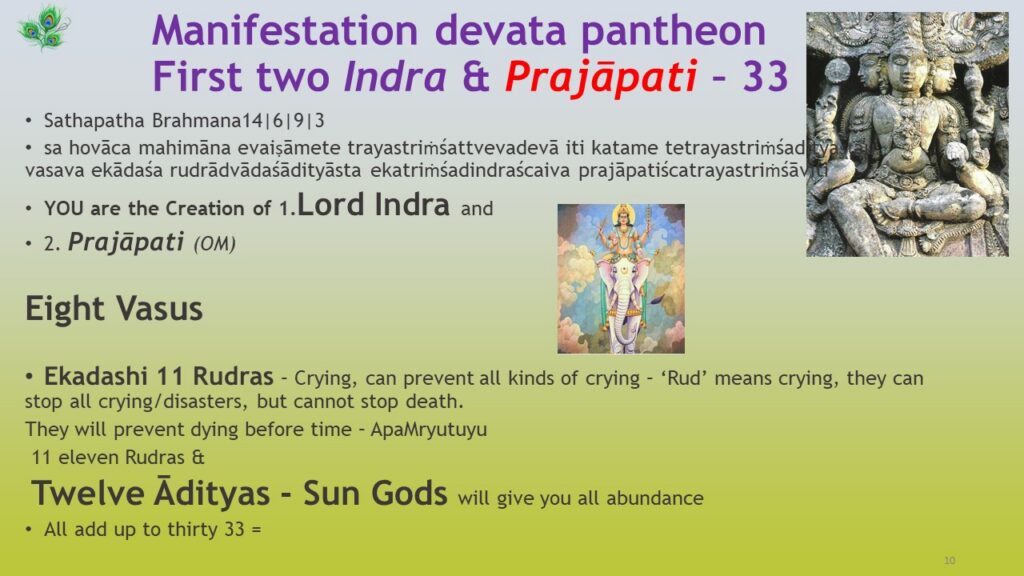
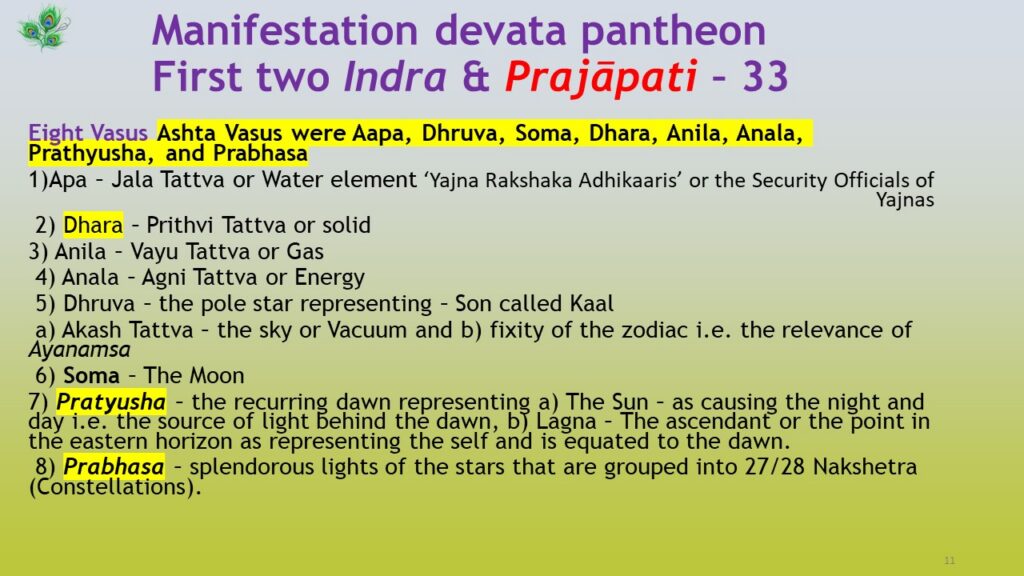
In all the Vedas including the RigVeda, they speak of the thirty-three divinities categorized as the Earth, Heaven, Space and talas or the intermediate regions. Including the dwadasa twelve Adityas, which are nothing but mapping to the 12 Zodiac Signs and is the giver of all light and Energy for us to sustain. The List of 33 divinties, also include the Ekadasa, eleven Rudras, that are to do with intense, ferocious nature; eight Vasus, the directional forces.
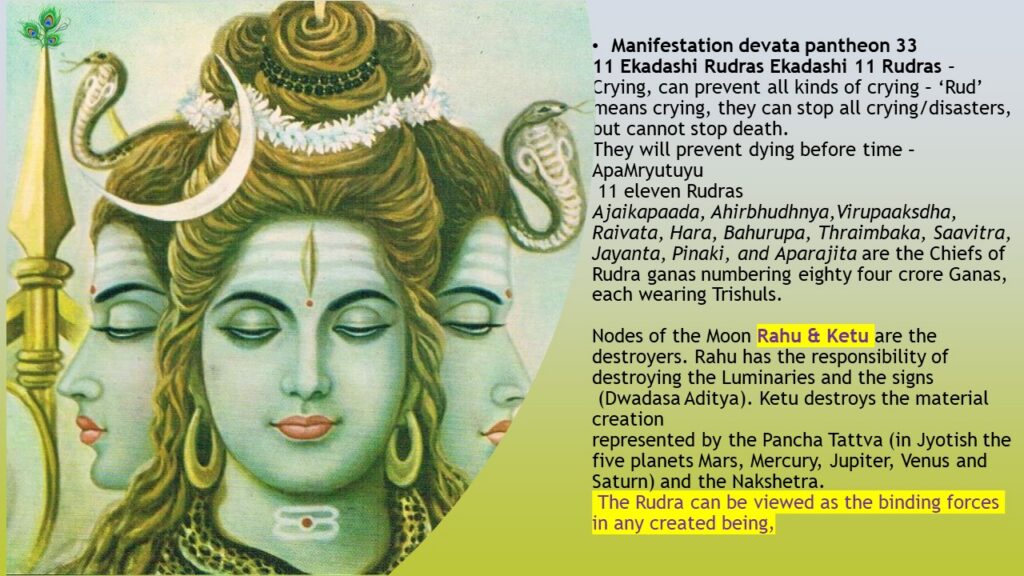
The aspects of the thirty-three divinities were later filtered to manifestation on Earth in the form of Pancha Maha Bhootas , The Five Great Elements, including Agni, fire, energy, Prithvi the Earthy element for life on earth; Vayu, the aspect of space, movement and air in the mid-region; and Surya Sun the universal energy and life that sustains and governs all existence, in the heavenly region, the space. And the Jala Water element.
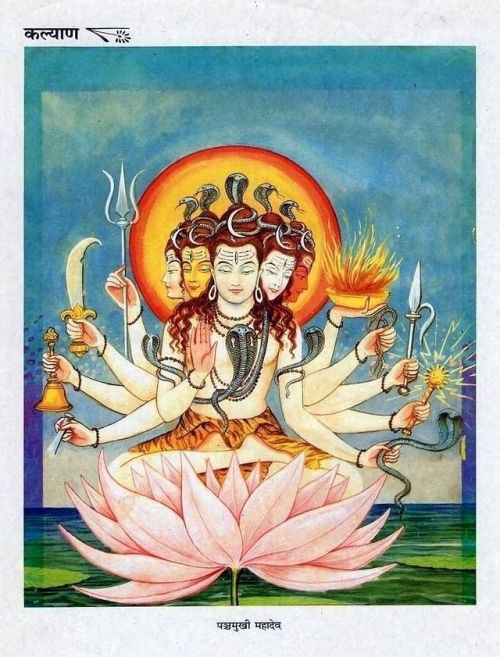
On The Five Manifestations of Lord Shiva
Excerpts from from Shiva Maha Purana Section 3 – Śatarudra-saṃhitā
Chapter 1 – The five incarnations of the supreme Brahman
- The five famous forms of Maheśa are thus named Īśāna, Puruṣa, Aghora, Vāma and Brahman.
- Īśāna form of Śiva is the first and the principal one. It directly occupies and presides over the individual soul, the enjoyer of Prakṛti. Associated with the Aksha Tattva Ether Element.
- The Īśāna form of Śiva is the permanent lord of the organ of hearing, speech and the all-pervading sky
- 41. Tatpuruṣa form of Śiva is the second. It occupies and presides over every object of enjoyment, the support of the attributes. Vayu tattva.Air Element
- Intelligent and wise persons call Tatpuruṣa as the lord of Tvac (organ of touch perception), hand, sense of touch and the wind element.
- The third form of Śiva is Aghora that stands within, occupies.and presides over the principle of intelligence with all its ramifications for the sake of Dharma. Associated with the Element of Fire Agni.
- Intelligent persons call the form Aghora, the support of the physical body, the sense of taste, of colour and of fire as well.
- The fourth form of Śiva is Vāmadeva who presides over the ego and is engaged in many incessant activities. Jala Tattva
- Vāmadeva form of Śiva is remembered as the lord of the organ of taste, of the organ of excretion, of taste itself and of waters as well.
- They know the form of Sadyojāta as the lord of the organ of smell, of smell itself, of the earth and of the generative organ.
- These forms of Śiva, the source of all glory shall be honoured and bowed to strenuously by those who seek glory.
- He who reads and listens to the origin of Sadyojāta and others, enjoys all desires and attains the ultimate goal.
We begin with Shiva Panchakshara Stotram शिव पञ्चाक्षर स्तोत्रम् composed by Sri Adi Shankaracharya
नागेन्द्रहाराय त्रिलोचनाय
भस्माङ्गरागाय महेश्वराय ।
नित्याय शुद्धाय दिगम्बराय
तस्मै न_काराय नमः शिवाय ॥१॥
Naagendra-Haaraaya Tri-Locanaaya
Bhasma-Angga-Raagaaya Mahe[a-Ii]shvaraaya |
Nityaaya Shuddhaaya Dig-Ambaraaya
Tasmai Na_Kaaraaya Namah Shivaaya ||1||
1.1: (Salutations to Lord Shiva) Who has the most excellent of Snakes as His Garland, and Who has Three Eyes,
1.2: Whose Body is Coloured (i.e. Smeared) with Sacred Ashes and Who is the Great Lord,
1.3: Who is Eternal, Who is ever Pure and Who has the Four Directions as His Clothes (signifying that He is ever Free),
1.4: Salutations to that Shiva, Who is represented by syllable “Na”,
The first syllable of the Panchakshara Mantra “Na-Ma-Shi-Va-Ya”.
मन्दाकिनीसलिलचन्दनचर्चिताय
नन्दीश्वरप्रमथनाथमहेश्वराय ।
मन्दारपुष्पबहुपुष्पसुपूजिताय
तस्मै म_काराय नमः शिवाय ॥२॥
Mandaakinii-Salila-Candana-Carcitaaya
Nandi-Iishvara-Pramatha-Naatha-Mahe[a-Ii]shvaraaya |
Mandaara-Pusspa-Bahu-Pusspa-Su-Puujitaaya
Tasmai Ma_Kaaraaya Namah Shivaaya ||2||
2.1: (Salutations to Lord Shiva) Who is Worshipped with Waters of River Mandakini and Smeared with Sandal Paste,
2.2: Who is the Lord of Nandi and of the Ghosts and Goblins; and Who is the Great Lord,
2.3: Who is deeply Worshipped with Mandara (Arka) and many other Flowers,
2.4: Salutations to that Shiva, Who is represented by syllable “Ma“,
The second syllable of the Panchakshara Mantra “Na-Ma-Shi-Va-Ya”.
शिवाय गौरीवदनाब्जवृन्द_
सूर्याय दक्षाध्वरनाशकाय ।
श्रीनीलकण्ठाय वृषध्वजाय
तस्मै शि_काराय नमः शिवाय ॥३॥
Shivaaya Gaurii-Vadana-Abja-Vrnda-
Suuryaaya Dakssa-Adhvara-Naashakaaya |
Shrii-Niila-Kanntthaaya Vrssa-Dhvajaaya
Tasmai Shi_Kaaraaya Namah Shivaaya ||3||
3.1: (Salutations to Lord Shiva) Who is Auspicious and Who is like the Sun causing the Lotus-Face of Gauri (Devi Parvati) to Blossom,
3.2: Who is the Destroyer of the Sacrifice (Yagna) of Daksha (Sacrifice of Daksha),
3.3: Who has a Blue Throat and has a Bull as His Emblem,
3.4: Salutations to that Shiva, Who is represented by syllable “Shi“,
The third syllable of the Panchakshara Mantra “Na-Ma-Shi-Va-Ya”.
वशिष्ठकुम्भोद्भवगौतमार्य_
मूनीन्द्रदेवार्चितशेखराय ।
चन्द्रार्कवैश्वानरलोचनाय
तस्मै व_काराय नमः शिवाय ॥४॥
Vashissttha-Kumbhodbhava-Gautama-Aarya-
Muuni-Indra-Deva-Aarcita-Shekharaaya |
Candra-Aarka-Vaishvaanara-Locanaaya
Tasmai Va_Kaaraaya Namah Shivaaya ||4||
4.1: (Salutations to Lord Shiva) Who is Worshipped by the Best and most Respected Sages like Vashistha, Pot-Born sage Agastya and Gautama …
4.2: … and also by the Devas, and Who is the Crown of the Universe,
4.3: Who has the Moon (Chandra), Sun (Arka) and Fire (Vaisvanara) as His Three Eyes,
4.4: Salutations to that Shiva, Who is represented by syllable “Va“,
The fourth syllable of the Panchakshara Mantra “Na-Ma-Shi-Va-Ya”.
यज्ञस्वरूपाय {यक्षस्वरूपाय} जटाधराय
पिनाकहस्ताय सनातनाय ।
दिव्याय देवाय दिगम्बराय
तस्मै य_काराय नमः शिवाय ॥५॥
Yajnya-Svaruupaaya {Yakssa-Svaruupaaya} Jattaa-Dharaaya
Pinaaka-Hastaaya Sanaatanaaya |
Divyaaya Devaaya Dig-Ambaraaya
Tasmai Ya_Kaaraaya Namah Shivaaya ||5||
5.1: (Salutations to Lord Shiva) Who is the embodiment of Yagna {or Who assumed the incarnation of Yaksha} and Who bears the Matted Hairs,
5.2: Who has the Trident in His Hand and Who is Eternal,
5.3: Who is Divine, Who is the Shining One and Who has the Four Directions as His Clothes (signifying that He is ever Free),
5.4: Salutations to that Shiva, Who is represented by syllable “Ya“,
The fifth syllable of the Panchakshara Mantra “Na-Ma-Shi-Va-Ya“.
पञ्चाक्षरमिदं पुण्यं यः पठेच्छिवसंनिधौ ।
शिवलोकमावाप्नोति शिवेन सह मोदते ॥६॥
Pan.caakssaram-Idam Punnyam Yah Patthe-Shiva-Samnidhau |
Shivalokam-Aavaapnoti Shivena Saha Modate ||6||
6.1: Whoever Recites this Panchakshara Stotram (Hymn in praise of the five syllables of Na-Ma-Shi-Va-Ya) near Shiva (Lingam),
6.2: Will Attain the Abode of Shiva and enjoy His Bliss.
( https://greenmesg.org/stotras/shiva/)
As one has gathered the PanchaTattva – The Five great elements is central to the 5 headed Shiva, which is the most elevated form for Manifestation. Hence central to the Shiva Puja – is the Panca Opachar Puja.
*(References – From Shiva MahaPurana Course of Pandit Sanjay Rath)
Pancha Upachar Pooja is done to pacify and cleanse the 5 tattvas, and you have the protection of Lord Shiva. The five Great Elements are the building blocks of our entire existence.
We offer five elements to Shiva Linga in the following order.
- Burning Incense Stick- Vayu tattva.
- Lighting a Lamp – Agni tattva
- Sandalwood Paste – Prithvi tattva
- Naivedyam food offerings – Jala tattva
- Flowers – Akash tattva
- The pooja is divided into 4 prahar Time periods starting from Sunset. For UK it is 9:00 am Approximately on Thursday March 11, 2021 is when the Tithi of Chaturdashi begins.
- Each day (24) as 8 prahars, four in the day and four in the night.
- Shivaratri pooja starts with the 1st prahar of Krishna Caturdashi night i.e. from the Sunset.
- The Pooja is divided into 5 periods of time.
The 4 prahars will be at night.
The 5th part is next day in morning as Sunrise as a summation. Akash Tattva. - People whose health allow themselves should fast on Maha Shivratri.
| Time Chunks | Time | Mula Mantra | |
| Prahar 1
|
6:30 pm to 9:30 pm IST
Sunset 05:59 PM for UK GMT 6 pm – 9 pm UK
|
Sadyojāta
|
Prithvi Tattva |
| Prahar 2 | 9:30 pm to 12:30 am IST
9:00 pm to 12:00 amUK GMT |
Vamadeva | Jala |
| Prahar 3“ | 12:30 am to 3:30 am IST
12:00 am to 3:00 am UK GMT |
Aghora | Agni |
| Prahar 4 | 3:30 am to 6:30 am IST
3:00 am to 6:00 am UK GMT |
Tatpuruṣa
|
Vayu |
| Prahar 5 | 6:30 am (Conclusion)
6:00am UK GMT |
Iśāna
|
Akasha |
RITUAL for the Day – POOJA VIDHI
- Achaman
- Ganesh Invocation
- Guru Invocation
- Dhyana
- Pancha Upachar Pooja
- Namaskara
- Pradakshina
- Japa
-
Achamana
We do need to prepare an altar/ritual place.
- We sip water three times with mantra of Vishnu to cleanse ourselves.
- This symbolizes cleaning of Mind, Body and Soul
- We take some water in our right-hand palm and sip water saying these three mantras.
- ॐ केशवाय नमः |om keśavāya namaḥ
- ॐ मधवाय नमः | om madhavāya namaḥ
- ॐ गोविन्दाय नमः | om govindāya namaḥ
- Now wash your hands
-
2.Ganesha Invocation
ॐ गं ग्लौं गणपतये विघ्नविनाशीने स्वाहा।
om gaṁ glauṁ gaṇapataye vighnavināśīne svāhā |
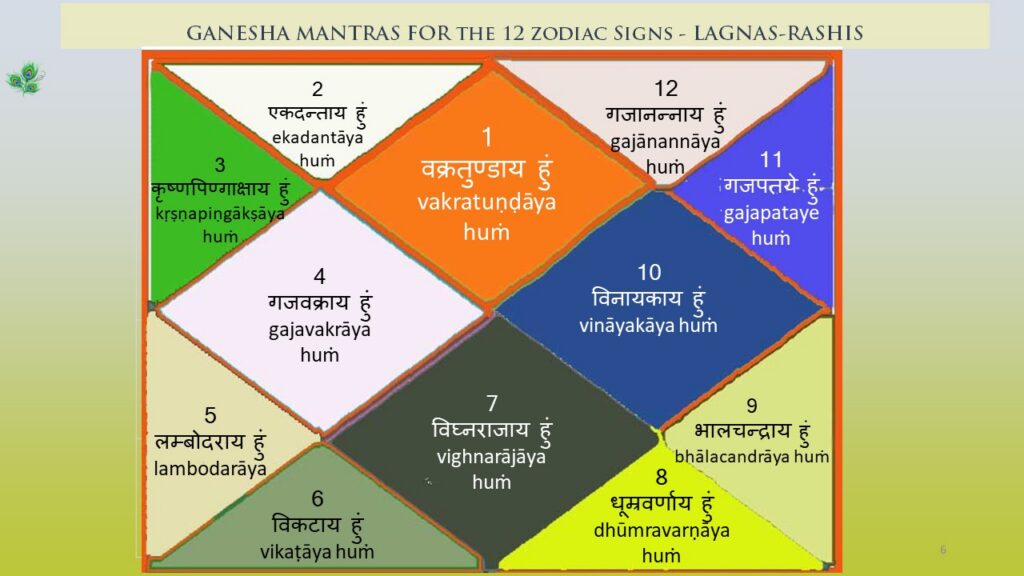
OR you can also chant the Ganesha Mantras below for the Signs suitable to you. Or all of them!
-
3.Guru Invocation
Om Gurave Namah
-
4. Shiva Dhyana
ध्याये नित्यं महेशं रजतगिरि निभिं चारु चन्द्रावतंसम्।
dhyāye nityaṁ maheśaṁ rajatagiri nibhiṁ cāru candrāvataṁsam |
रत्नाकल्पोज्ज्वलांगं परशुमृग वरा भीति हस्तं प्रसन्नम्॥
ratnākalpojjvalāṁgaṁ paraśumṛga varā bhīti hastaṁ prasannam ||
पद्मासीनं समंतात् स्तुतममरगण्येः व्यग्रकृतिं वसानम्।
padmāsīnaṁ samaṁtāt stutamamaragaṇyeḥ vyagrakṛtiṁ vasānam |
विश्वाद्यं विश्ववन्ध्यं निखिल भय हरं पंच वक्त्रं त्रिनेत्रम्॥
viśvādyaṁ viśvavandhyaṁ nikhila bhaya haraṁ panca vaktraṁ trinetram ||
-
Pancha Upachar Puja
5.1 Sadyojāta Prithvi Tattva Direction is West -Shakti is Iccha Desire nature, Colour is white & Beeja is हां
hāṁ
Prahar 1 6:30 pm to 9:30 pm IST Sunset05:59 PM for UK GMT 6 pm – 9
Mula Mantra
सद्योजातं प्रपस्द्यामि सद्योजाताय वै नमः।
भवे भवे नातिभवे भवस्व मां भवोद्भवाय नमः॥
sadyojātaṁ prapasdyāmi sadyojātāya vai namaḥ |
bhave bhave nātibhave bhavasva māṁ bhavodbhavāya namaḥ ||
OR Tattva Mantra 11 x108 times
ॐ लं सद्योजाताय नमः। om laṁ sadyojātāya namaḥ
108 x 11 times
And one mala of Panchakshari Mantra ॐ नं नमः शिवाय। om naṁ namaḥ śivāya | x 108
5.2 Prahar 2 Vamadeva Jala Shakti is Kriya Colour is Blood Beeja is हीं hīṁ
9:30 pm to 12:30 am IST
9:00 pm to 12:00 am
Mula Mantra
वामदेवाय नमो ज्येष्ठाय नमो रुद्राय
नमः कालाय नमः कालविकर्णाय नमो बलाय नमो बलप्रमथनाय
नमः सर्वभूतदमनाय नमो नमोन्मनाय नमः
vāmadevāya namo jyeṣṭhāya namo rudrāya
namaḥ kālāya namaḥ kālavikarṇāya namo balāya namo balapramathanāya
namaḥ sarvabhūtadamanāya namo namonmanāya namaḥ
| Tattva Mantra 11 x108 times | Panchakshari Mantra | |
ॐ वं वामदेवाय नमः।om vaṁ vāmadevāya namaḥ
|
ॐ मं नमः शिवाय।
om maṁ namaḥ śivāya |
|
5.3 Aghora – Agni Tattva हूं South
hūṁ Shakti is Jnana & Colour is blue
Prahar 3“12:30 am to 3:30 am IST
12:00 am to 3:00 am UK GMT
Mula Mantra
ओं अघोरेभ्योथ घोरेभ्योघोरघोरतरेभ्यः।
सर्वेभ्यः सर्वसर्वेभ्यो नमस्तेस्तु रुद्ररूपेभ्यः।
oṁ aghorebhyotha ghorebhyoghoraghoratarebhyaḥ |
sarvebhyaḥ sarvasarvebhyo namastestu rudrarūpebhyaḥ
Tattva Mantra 11 x108 times ॐ रं अघोराय नमः | om raṁ aghorāya namaḥ
Panchakshari Mantra ॐ शिं नमः शिवाय। om śiṁ namaḥ śivāya |
5.4 Tatpuruṣa – Vayu Tattva East हैं
haiṁ Shakti is Ananda Colour is Yellow
Prahar 4 – 3:30 am to 6:30 am IST 3:00 am to 6:00 am UK GMT
Mula Mantra
तत्पुरुषाय विद्महे महादेवाय धीमहि।
तन्नो रुद्रः प्रचोदयात्
tatpuruṣāya vidmahe mahādevāya dhīmahi |
tanno rudraḥ pracodayāt
Tattva Mantra 11 x108 times ॐ यं तत्पुरुषाय नमः। om yaṁ tatpuruṣāya namaḥ|
Panchakshari Mantra ॐ वं नमः शिवाय। om vaṁ namaḥ śivāya |
12 March – Morning
- Light lamp
- Shiva Tandava Stortra
- Make Naivaedyam offerings like rice pudding etc & ofer 5 different kinds of fruit & flowers.
- Iśāna Direction Upward, Colour of Sky Tattva Aksha
Beeja हौं hauṁ
Shakti is Samba
| Prahar 4 | 6:30 am IST
6:00 am UK GMT |
||||
| Mula Mantra | Tattva Mantra 11 x108 times | Panchakshari Mantra | |||
| ईशानः सर्वविद्यानामीश्वरः सर्वभूतानां
ब्रह्माधिपतिर्ब्रह्मा शिवो मेस्तु सदा शिवोम् īśānaḥ sarvavidyānāmīśvaraḥ sarvabhūtānāṁ brahmādhipatirbrahmā śivo mestu sadā śivom
|
ॐ हं ईशानाय नमः। om haṁ īśānāya namaḥ|
|
ॐ यं नमः शिवाय। om yaṁ namaḥ śivāya |
|
|||
- We conclude with the Iśāna Mantra and at the last we worship Gauri Sankara. Gauri is consort of Lord Shiva and is her Shakti too.
- One who worships Gauri Sankar sustains his samsara and also moves towards moksha.
-
ॐ नमः शिवाय गौरी शंकराय |om namaḥ śivāya gaurī śankarāya
*(Refrences – From Shiva MahaPurana Course of Pandit Sanjay Rath)
- After this we break the fast.
SHANTI MANTRAS towards the end
ॐ असतो मा सद्गमय ।
तमसो मा ज्योतिर्गमय ।
मृत्योर्मा अमृतं गमय ।
ॐ शान्तिः शान्तिः शान्तिः ॥
Om Asato Maa Sad-Gamaya |
Tamaso Maa Jyotir-Gamaya |
Mrtyor-Maa Amrtam Gamaya |
Om Shaantih Shaantih Shaantih ||
1: Om, O Lord, Keep me not in the Phenomenal World of Unreality, but make me go towards the Reality (of Eternal Self),
2: Keep me not in (the Ignorant State of) Darkness, but make me go towards the Light (of Spiritual Knowledge),
3: Keep me not in (the World of) Mortality, but make me go towards the World of Immortality (of Self-Realization),
4: Om, Peace, Peace, Peace.
Shanti Mantra from Isa Upanishad
ॐ आप्यायन्तु ममाङ्गानि वाक्प्राणश्चक्षुः
श्रोत्रमथो बलमिन्द्रियाणि च सर्वाणि ।
सर्वं ब्रह्मौपनिषदं
माऽहं ब्रह्म निराकुर्यां मा मा ब्रह्म
निराकरोदनिराकरणमस्त्वनिराकरणं मेऽस्तु ।
तदात्मनि निरते य
उपनिषत्सु धर्मास्ते मयि सन्तु ते मयि सन्तु ।
ॐ शान्तिः शान्तिः शान्तिः ॥
oṃ āpyāyantu mamāṅgāni vākprāṇaścakṣuḥ
śrotramatho balamindriyāṇi ca sarvāṇi |
sarvaṃ brahmaupaniṣadaṃ
mā’haṃ brahma nirākuryāṃ mā mā brahma
nirākarodanirākaraṇamastvanirākaraṇaṃ me’stu |
tadātmani nirate ya
upaniṣatsu dharmāste mayi santu te mayi santu |
oṃ śāntiḥ śāntiḥ śāntiḥ ||
May my limbs, speech, vital breath, eyes, ears, as also my strength and all the senses grow vigorous. All this is the Absolute (Brahman) referred to in the Upanishads. May I never negate the absolute. May the absolute never negate me. May there be no negating. May there be no negating in me. Let those basic tenets enunciated in the Upanishads, rest in the Self.
Let them be in Me. Aum Peace! Peace! Peace!
JYOTIRLINGA MANTRAS : Light of Lord Shiva directly reaching the Soul
From Shiva MahaPurana
Chapter 1 – The greatness of Jyotirliṅgas and their Upaliṅgas
Section 4 – Koṭirudra-Saṃhitā
Sūta said:—
- O brahmins, O excellent sages, you have asked well. I shall explain them in brief with a desire for the welfare of the worlds and due to my affection for you.
- O sage, there is no limit to the number of phallic images. The entire earth, the entire universe is in the form of a phallus.
- The holy centres are equipped with phallic images. Everything is founded on these. There is no limit to their number. I shall mention a few of them.
- Whatever is seen, described or remembered is Śiva’s form. Nothing other than that has real existence.
12-13. Still I shall explain in the manner I have heard. Let it be heard with pleasure O excellent sages, whatever images are there on the earth in the Pātāla or in heaven, everywhere Śiva is worshipped by the gods, Asuras and human beings.
- O excellent ones, the three worlds consisting of the gods, Asuras and human beings are pervaded by Śiva in the form of phallic image for the welfare of the worlds.
- In order to bless the worlds, lord Śiva assumes different phallic forms here in the holy centres as well as in other places.
- Śiva incarnates in those places wherever he is devoutly remembered by the devotees. After carrying out their task he stations himself there.
- He has assigned his phallic form for the benefit of the worlds. The devotee attains perfection by worshipping that form.
- O noble ascetics, there is no limit to the number of his phallic images on the earth. Still I narrate the important ones.
- Even among the important ones, I shall enumerate the principal ones, on hearing which a man instantly gets rid of his sins.
- O excellent one, I shall mention the most important of the Jyotirliṅgas on hearing which a person becomes sinless.
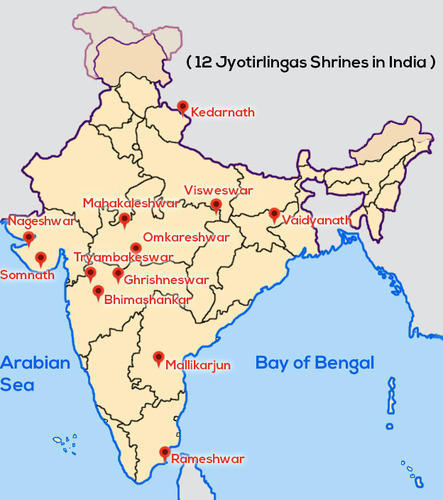
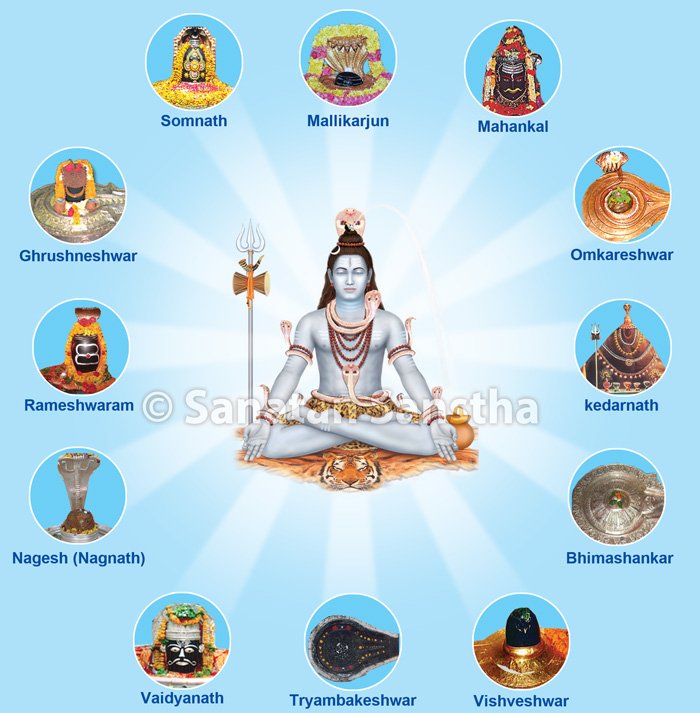
21-24. He who reads or recites the twelve names early in the morning is freed from all sins and attains the fruits of all Siddhis. The twelve Jyotirliṅgas are—Somanātha in Saurāṣṭra, Mallikārjuna in Śrīśaila, Mahākāla in Ujjayinī Parameśvara in Oṃkāra, Kedāra on the Himavat, Bhīma-Śaṅkara in Dākinī (Ḍākinī?), Viśveśa in Vārāṇasī, Tryambaka on the bank of the Gautamī, Vaidyanātha in the cremation ground, Nāgeśa in the Dārukā forest, Rāmeśa at Setubandha and Ghuśmeśa at Śivālaya.
- O great sages, such excellent men will attain those desires for which they recite the names.
- Those who recite them without any desire but with purity of mind will never have rebirth involving residence in the mother’s womb.
- By worshipping these, people of all castes get their miseries destroyed in this world and become liberated hereafter, to be sure.
- The food offerings of these Jyotirliṅgas shall be taken and others shall be fed with the same. Such acts reduce the sins to ashes instantaneously.
- O brahmins, the results of the worship of Jyotirliṅgas cannot be described adequately by Brahmā and others.
- Even if one of them is worshipped continuously for six months, the misery of rebirth in the mother’s womb will never recur.
- Even if a person of base birth happens to see Jyotirliṅga, he will be born in a pure and good family.
- Being born in a good family he will become rich and master all the Vedas. Then by performing auspicious rites, he shall attain liberation without any obstacle.
- O great sages, whoever he may be, an outcaste, a slave or an eunuch, he will be born as a brahmin and become liberated. Hence one shall view the Jyotirliṅga.
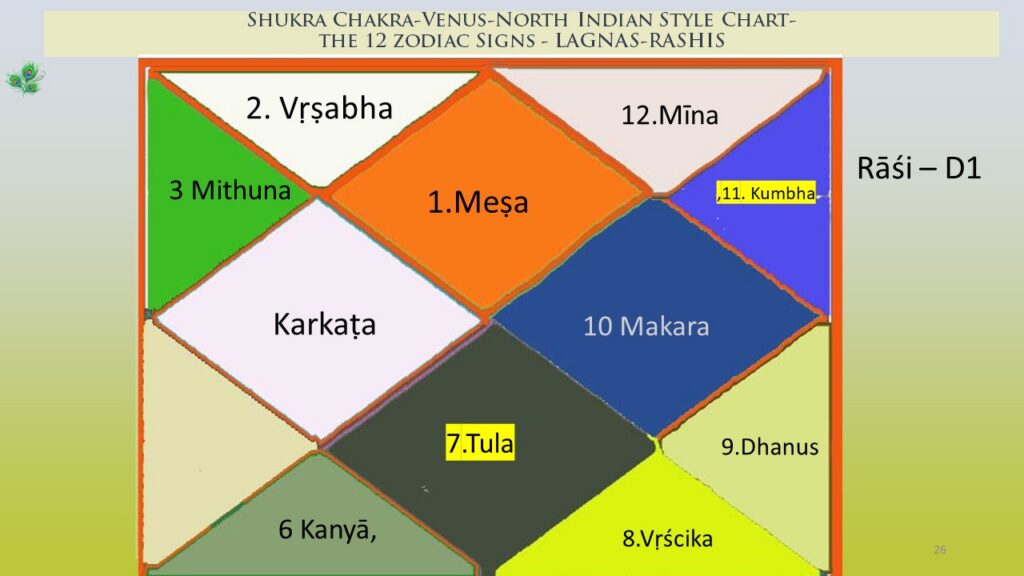
Below are the Mantras for the various Rashis Signs mapped to the Jyotirlinga.
Which Jyotirlinga you belong to is a complicated calculation, but suffice to say, that look at the placement of Shani Saturn in your chart. And then choose the corresponding Jyotirlinga Mantra. Starting the Mantra on Shivaratri is extremely auspicious!
-
Aries ॐ नमः शिवाय रामेशवराय हौं जुं सः | om namaḥ śivāya rāmeśavarāya hauṁ juṁ saḥ|
-
Taurus – ॐ नमः शिवाय सोमेशवराय हौं जुं सः | om namaḥ śivāya someśavarāya hauṁ juṁ saḥ|
-
Gemini ॐ नमः शिवाय नागेशवारय हौं जुं सः | om namaḥ śivāya nāgeśavāraya hauṁ juṁ saḥ|
-
Cancer ॐ नमः शिवाय ओमकारेशवराय हौं जुं सः | om namaḥ śivāya omakāreśavarāya hauṁ juṁ saḥ|
-
Leo ॐ नमः शिवाय वैद्यशेवारय हौं जुं सः | om namaḥ śivāya vaidyaśevāraya hauṁ juṁ saḥ|
-
Virgo ॐ नमः शिवाय मल्लिकार्जुनाय हौं जुं सः | om namaḥ śivāya mallikārjunāya hauṁ juṁ saḥ|
-
Libra ॐ नमः शिवाय माहाकालेशवारय हौं जुं सः | om namaḥ śivāya māhākāleśavāraya hauṁ juṁ saḥ|
-
Scorpio ॐ नमः शिवाय घृष्णेशवारय हौं जुं सः | om namaḥ śivāya ghṛṣṇeśavāraya hauṁ juṁ saḥ|
-
Sagittarius ॐ नमः शिवाय विश्वेशराय हौं जुं सः | om namaḥ śivāya viśveśarāya hauṁ juṁ saḥ|
-
Capricorn ॐ नमः शिवाय भीमाशंकरय हौं जुं सः | om namaḥ śivāya bhīmāśankaraya hauṁ juṁ saḥ|
-
Aquarius ॐ नमः शिवाय केदरेशवारय हौं जुं सः | om namaḥ śivāya kedareśavāraya hauṁ juṁ saḥ|
-
Pisces ॐ नमः शिवाय त्र्यंबकेश्वराय हौं जुं सः | om namaḥ śivāya tryaṁbakeśvarāya hauṁ juṁ saḥ|
Shiva AshtottaraSataNamavalih 108 Names of Lord Shiva
ōṃ mahēśvarāya namaḥ He who is the greatest lord
ōṃ śambhavē namaḥ He who is Shambhu
ōṃ pinākinē namaḥ He who holds the bow called Pinaka
ōṃ śaśiśēkharāya namaḥ He who collected the moon
ōṃ vāmadēvāya namaḥ He who is Vama deva
ōṃ virūpākṣāya namaḥ He who has a not pleasant eye
ōṃ kapardinē namaḥ He who holds the skull
ōṃ nīlalōhitāya namaḥ He who is the colour of blue metal
ōṃ śūlapāṇayē namaḥ He who holds the trident
ōṃ khaṭvāṅginē namaḥ He who holds the sword
ōṃ viṣṇuvallabhāya namaḥ He who is the Lord of Lord Vishnu
ōṃ śipiviṣṭāya namaḥ He who is with ray of light
ōṃ ambikānāthāya namaḥ He who is the Lord of Parvathi
ōṃ śrīkaṇṭhāya namaḥ He who has a divine neck
ōṃ bhaktavatsalāya namaḥ He who loves his devotees
ōṃ bhavāya namaḥ He who is happening
ōṃ śarvāya namaḥ He who is Shiva who destroys
ōṃ trilōkēśāya namaḥ (20) He who has three type of hairs
ōṃ śitikaṇṭhāya namaḥ He who has a black neck
ōṃ śivāpriyāya namaḥ He who is liked by Parvathi
ōṃ ugrāya namaḥ He who is fierce
ōṃ kapālinē namaḥ He who holds the skull
ōṃ kaumārayē namaḥ He who is a lad forever
ōṃ andhakāsura sūdanāya namaḥ He who killed Andhakasura
ōṃ gaṅgādharāya namaḥ -He who carries river Ganga
ōṃ lalāṭākṣāya namaḥ He who has an eye in the forehead
ōṃ kālakālāya namaḥ He who is the death to God of death
ōṃ kṛpānidhayē namaḥ (30) He who is the treasure of mercy
ōṃ bhīmāya namaḥ He who is Gross
ōṃ paraśuhastāya namaḥ He who has axe in his hand
ōṃ mṛgapāṇayē namaḥ He who has a deer in his hand
ōṃ jaṭādharāya namaḥ He who has a matted lock
ōṃ ktelāsavāsinē namaḥ He who lives in Kailasa
ōṃ kavacinē namaḥ He who wears an armour
ōṃ kaṭhōrāya namaḥ he who is very harsh
ōṃ tripurāntakāya namaḥ He who destroyed the three cities
ōṃ vṛṣāṅkāya namaḥ He who is the Lord of the bull
ōṃ vṛṣabhārūḍhāya namaḥ (40) He who rides a bull
ōṃ bhasmōddhūḻita vigrahāya namaḥ He whose body is sprinkled with ash
ōṃ sāmapriyāya namaḥ He who likes Sama Veda
ōṃ svaramayāya namaḥ He who is spread in everything
ōṃ trayīmūrtayē namaḥ He who is the trinity
ōṃ anīśvarāya namaḥ He who is the God who destroys
ōṃ sarvajñāya namaḥ He who orders every thing
ōṃ paramātmanē namaḥ He who is the divine soul
ōṃ sōmasūryāgni lōcanāya namaḥ He who has moon, Sun and ire as his eyes
ōṃ haviṣē namaḥ He who is the fire offering
ōṃ yajñamayāya namaḥ (50) He who is personification of fire sacrifice
ōṃ sōmāya namaḥ He who is the moon
ōṃ pañcavaktrāya namaḥ He who has five necks
ōṃ sadāśivāya namaḥ -He who is perennially peaceful
ōṃ viśvēśvarāya namaḥ He who is the Lord of the universe
ōṃ vīrabhadrāya namaḥ He who is Vira Bhadra
ōṃ gaṇanāthāya namaḥ He who is the leader of Ganas
ōṃ prajāpatayē namaḥ He who is the lord of all beings
ōṃ hiraṇyarētasē namaḥ He who shines like God
ōṃ durdharṣāya namaḥ He who is difficult to see
ōṃ girīśāya namaḥ (60) He who is the Lord of the mountain
ōṃ giriśāya namaḥ He who is the Lord of the mountain
ōṃ anaghāya namaḥ He who is faultless
ōṃ bhujaṅga bhūṣaṇāya namaḥ He who wears snake as ornament
ōṃ bhargāya namaḥ He who is Lord Shiva
ōṃ giridhanvanē namaḥ He who has mountain as the bow
ōṃ giripriyāya namaḥ He who loves mountains
ōṃ kṛttivāsasē namaḥ He who wears a hide
ōṃ purārātayē namaḥ He who is delighted for ever
ōṃ bhagavatē namaḥ He who is the archer
ōṃ pramadhādhipāya namaḥ (70) He who is a great lamp
ōṃ mṛtyuñjayāya namaḥ He who has won over death
ōṃ sūkṣmatanavē namaḥ He who has a micro body
ōṃ jagadvyāpinē namaḥ He who is spread all over the world
ōṃ jagadguravē namaḥ He who is the teacher of the world
ōṃ vyōmakēśāya namaḥ He who has the sky as his hair
ōṃ mahāsēna janakāya namaḥ He who can create great armies
ōṃ cāruvikramāya namaḥ He who is pretty and valorous
ōṃ rudrāya namaḥ He who is fiercely angry
ōṃ bhūtapatayē namaḥ He who is the Lord of Bhutas
ōṃ sthāṇavē namaḥ (80) He who is stable
ōṃ ahirbhuthnyāya namaḥ He who wears a serpent
ōṃ digambarāya namaḥ He who wears directions as cloth
ōṃ aṣṭamūrtayē namaḥ He who has eight forms
ōṃ anēkātmanē namaḥ -He who has several forms
ōṃ svāttvikāya namaḥ He who is a sathvika (peaceful)
ōṃ śuddhavigrahāya namaḥ He who has a clean image
ōṃ śāśvatāya namaḥ He who is perennial
ōṃ khaṇḍaparaśavē namaḥ He who is armed with axe
ōṃ ajāya namaḥ He who is never born
ōṃ pāśavimōcakāya namaḥ (90)He who frees one frOm attachment
ōṃ mṛḍāya namaḥ He who is dead
ōṃ paśupatayē namaḥ -He who is the Lord of all beings
ōṃ dēvāya namaḥ–He who is the God
ōṃ mahādēvāya namaḥ He who is the great God
ōṃ avyayāya namaḥ –He who never changes
ōṃ harayē namaḥ –He who is the destroyer
ōṃ pūṣadantabhidē namaḥ He who killed Pushpa Dantha
ōṃ avyagrāya namaḥ He who is not agitated
ōṃ dakṣādhvaraharāya namaḥ He who destroyed the house of Daksha
ōṃ harāya namaḥ (100)He who destroys
ōṃ bhaganētrabhidē namaḥ He who has sun, moon and fire as eyes
ōṃ avyaktāya namaḥ He who is not clear
ōṃ sahasrākṣāya namaḥ He who has thousand eyes
ōṃ sahasrapādē namaḥ He who has thousand feet
ōṃ apapargapradāya namaḥ He who helps us to complete
ōṃ anantāya namaḥ He who does not have any end
ōṃ tārakāya namaḥ He who is the star
ōṃ paramēśvarāya namaḥ (108) He who is the divine Lord.