Prayer to Lord Gaṇeśa
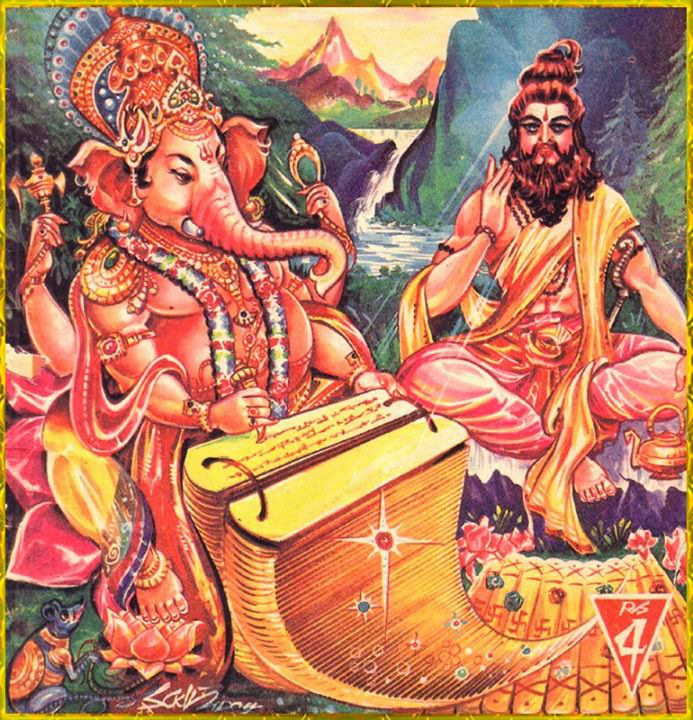 ॐ गणानां त्वा गणपतिं हवामहेकविं कवीनामुपमश्रवस्तमम् । ज्येष्ठराजं ब्रह्मणाम् ब्रह्मणस्पत आ नः शृण्वन्नूतिभिःसीदसादनम् ॥ ॐ महागणाधिपतये नमः ॥
Om Gannaanaam Tvaa Ganna-Patim Hava-Amahe Kavim Kaviinaam-Upama-Shravas-Tamam |
Jyessttha-Raajam Brahmannaam Brahmannas-Pata Aa Nah Shrnnvan-Nuutibhih-Siida-Saadanam ||
Om Mahaa-Ganna-Adhipataye Namah ||
Meaning:
Om, O Ganapati, To You Who are the Lord of the Ganas (Celestial Attendants or Followers), we Offer our Sacrificial Oblations,
You are the Wisdom of the Wise and the Uppermost in Glory,
You are the Eldest Lord (i.e. ever Unborn) and is of the Nature of Brahman (Absolute Consciousness);
You are the Embodiment of the Sacred Pranava (Om),
Please come to us by Listening to our Prayers and be Present in the Seat of this Sacred Sacrificial Altar.
Om, our Prostrations to the Mahaganadhipati (the Great Lord of the Ganas)
CONSTITUTION OF OUR UNIVERSE – WHAT ARE WE MADE OF?
सृष्टिक्रमकथनाध्यायः ॥ १॥
अथैकदा मुनिश्रेष्ठं त्रिकलज्ञं पराशरम् । पप्रच्छोपेत्य मैत्रेयः प्रणिपत्य कृताञ्जलिः ॥ १॥
भगवन् परमं पुण्यं गुह्यं वेदाङ्गमुत्तमम् ।त्रिस्कन्धं ज्यौतिषं होरा गणितं संहितेति च ॥ २॥
एतेष्वपि त्रिषु श्रेष्ठा होरेति श्रूयते मुने । त्वत्तस्तां श्रोतुमिच्छामि कृपया वद मे प्रभो ॥ ३॥
कथं सृष्टिरियं जाता जगतश्च लयः कथम् । खस्थानां भूस्थतानां च सम्बन्धं वद विस्तरात् ॥ ४॥
Verse 1-4. Offering his obeisance to all-knowing Mahārishi Parāśar and with folded hands, Maitreya said: “O venerable Mahārishi, Jyotish, the supreme limb of the Vedas, has three divisions, viz. Horā, Ganita and Samhita. Among the said three divisions Horā, or the general part of Jyotish is still more excellent. I desire to know of its glorious aspects from you. Be pleased to tell me, how this Universe is created? How does it end? What is the relationship of the animals, born on this earth, with the heavenly bodies? Please speak elaborately”
From Chapter 1 verse 1-4 of the great compendium on Horsocopy by the greatest of the Sages Maharishi Parāśara’ (पराशर) called the Bṛhat parāśara horā śāstra’ (बृहत् पराशर होरा शास्त्र)
In the greatest works on Jyotisha Vedic Astrology, the beginning chapter with the first verse itself we get a glimpse that the Study of Astrology (Hora) is part of a larger Vedas and is one of the eye of the Vedas. This is vastly important thus we can infer that the Vedic philosphy and the creation of the universe is vital part of the study of Astrology horā’ (होरा) means ‘horoscope or horoscopy’; also means “hour” or “time”. While ‘Sāstra’ (शास्त्र) means ‘compendium’, ‘book’, ‘manual’, ‘rule’, ‘instruction’, ‘science’, and ‘advice’.
SHIVA SHAKTI – BUILDING BLOCKS OF THE UNIVERSE
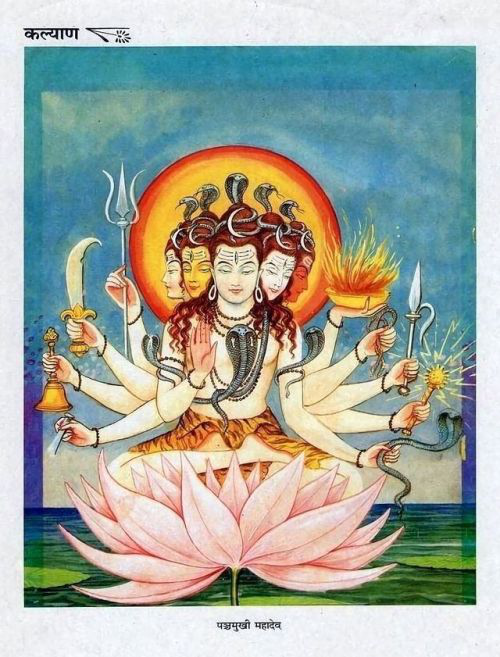
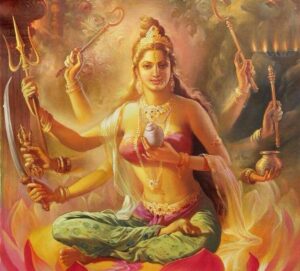
SHIVA IS the All present – impersonal, Inactive, Eternal Pure Consciousness – Shakti is Dynamic, pure bliss and Consciousness
And the Force behind every manifestation in this Universe is Shakti. Shakti is transcendence,awareness perfection and total summation of all egos, and of her own will divides herself into two.
Imperfection is concomitant with such scission; There is bound to be an insentient phase which represents the aforesaid exterior or unmanifested void; The sentient void is Sadashiva Tattva.
The sentient phase is called Ishwara; And the insentient is called the Maya or Avidya in the Upanishads.
At the time of Creation – Ishwara divides himself into three aspects – Rudra, Vishnu and Brahma.Representing the modes of the Ego associated with the three qualities of darkness, brightness and activity – which is saw earlier – which is nothing but the Gunas.
From Tripura Rahasya translated by Swami Saraswathi
GUNAS ATTITUDES – Building blocks for the Universe
All Vedic texts including the Bhagvad Gita has extensive use of Gunas as they are indicative of core buidling blocks along with the 5 Great Elements, through which we were created.Lord Krishna mentions the Gunas in following few stanza.
Bhagavad-gītā – Chapter 14, Verse 5
सत्त्वं रजस्तम इति गुणा: प्रकृतिसम्भवा: |
निबध्नन्ति महाबाहो देहे देहिनमव्ययम् || 5||
sattvaṁ rajas tama iti guṇāḥ prakṛiti-sambhavāḥ
nibadhnanti mahā-bāho dehe dehinam avyayam
O mighty-armed Arjun, the material energy consists of three guṇas (modes)—sattva (goodness), rajas (passion), and tamas (ignorance). These modes bind the eternal soul to the perishable body.
तत्र सत्त्वं निर्मलत्वात्प्रकाशकमनामयम् |
सुखसङ्गेन बध्नाति ज्ञानसङ्गेन चानघ || 6||
tatra sattvaṁ nirmalatvāt prakāśhakam anāmayam
sukha-saṅgena badhnāti jñāna-saṅgena chānagha
Amongst these, sattva guṇa, the mode of goodness, being purer than the others, is illuminating and full of well-being. O sinless one, it binds the soul by creating attachment for a sense of happiness and knowledge.
रजो रागात्मकं विद्धि तृष्णासङ्गसमुद्भवम् |
तन्निबध्नाति कौन्तेय कर्मसङ्गेन देहिनम् || 7||
rajo rāgātmakaṁ viddhi tṛiṣhṇā-saṅga-samudbhavam
tan nibadhnāti kaunteya karma-saṅgena dehinam
O Arjun, rajo guṇa is of the nature of passion. It arises from worldly desires and affections, and binds the soul through attachment to fruitive actions.
Bhagavad-gītā – Chapter 14, Verse 5
सत्त्वं रजस्तम इति गुणा: प्रकृतिसम्भवा: |
निबध्नन्ति महाबाहो देहे देहिनमव्ययम् || 5||
sattvaṁ rajas tama iti guṇāḥ prakṛiti-sambhavāḥ
nibadhnanti mahā-bāho dehe dehinam avyayam
O mighty-armed Arjun, the material energy consists of three guṇas (modes)—sattva (goodness), rajas (passion), and tamas (ignorance). These modes bind the eternal soul to the perishable body.
तत्र सत्त्वं निर्मलत्वात्प्रकाशकमनामयम् |
सुखसङ्गेन बध्नाति ज्ञानसङ्गेन चानघ || 6||
tatra sattvaṁ nirmalatvāt prakāśhakam anāmayam
sukha-saṅgena badhnāti jñāna-saṅgena chānagha
Amongst these, sattva guṇa, the mode of goodness, being purer than the others, is illuminating and full of well-being. O sinless one, it binds the soul by creating attachment for a sense of happiness and knowledge.
रजो रागात्मकं विद्धि तृष्णासङ्गसमुद्भवम् |
तन्निबध्नाति कौन्तेय कर्मसङ्गेन देहिनम् || 7||
rajo rāgātmakaṁ viddhi tṛiṣhṇā-saṅga-samudbhavam
tan nibadhnāti kaunteya karma-saṅgena dehinam
O Arjun, rajo guṇa is of the nature of passion. It arises from worldly desires and affections, and binds the soul through attachment to fruitive actions.
Bhagavad-gītā – Chapter 14, Verse 5
तमस्त्वज्ञानजं विद्धि मोहनं सर्वदेहिनाम् |
प्रमादालस्यनिद्राभिस्तन्निबध्नाति भारत || 8||
tamas tv ajñāna-jaṁ viddhi mohanaṁ sarva-dehinām
pramādālasya-nidrābhis tan nibadhnāti bhārata
O Arjun, tamo guṇa, which is born of ignorance, is the cause of illusion for the embodied souls. It deludes all living beings through negligence, laziness, and sleep.
सत्त्वं सुखे सञ्जयति रज: कर्मणि भारत |
ज्ञानमावृत्य तु तम: प्रमादे सञ्जयत्युत || 9||
sattvaṁ sukhe sañjayati rajaḥ karmaṇi bhārata
jñānam āvṛitya tu tamaḥ pramāde sañjayaty uta
Sattva binds one to material happiness; rajas conditions the soul toward actions; and tamas clouds wisdom and binds one to delusion.
अर्जुन उवाच |
कैर्लिङ्गैस्त्रीन्गुणानेतानतीतो भवति प्रभो |
किमाचार: कथं चैतांस्त्रीन्गुणानतिवर्तते || 21||
arjuna uvācha
kair liṅgais trīn guṇān etān atīto bhavati prabho
kim āchāraḥ kathaṁ chaitāns trīn guṇān ativartat
Arjun inquired: What are the characteristics of those who have gone beyond the three guṇas, O Lord? How do they act? How do they go beyond the bondage of the guṇas?
Verse 22-23
श्रीभगवानुवाच |
प्रकाशं च प्रवृत्तिं च मोहमेव च पाण्डव |
न द्वेष्टि सम्प्रवृत्तानि न निवृत्तानि काङ् क्षति || 22||
उदासीनवदासीनो गुणैर्यो न विचाल्यते |
गुणा वर्तन्त इत्येवं योऽवतिष्ठति नेङ्गते || 23||
śhrī-bhagavān uvācha
prakāśhaṁ cha pravṛittiṁ cha moham eva cha pāṇḍava
na dveṣhṭi sampravṛittāni na nivṛittāni kāṅkṣhati
udāsīna-vad āsīno guṇair yo na vichālyate
guṇā vartanta ity evaṁ yo ’vatiṣhṭhati neṅgate
- Verse 22-23
- श्रीभगवानुवाच |
- प्रकाशं च प्रवृत्तिं च मोहमेव च पाण्डव |
- न द्वेष्टि सम्प्रवृत्तानि न निवृत्तानि काङ् क्षति || 22||
- उदासीनवदासीनो गुणैर्यो न विचाल्यते |
- गुणा वर्तन्त इत्येवं योऽवतिष्ठति नेङ्गते || 23||
- śhrī-bhagavān uvācha
- prakāśhaṁ cha pravṛittiṁ cha moham eva cha pāṇḍava
- na dveṣhṭi sampravṛittāni na nivṛittāni kāṅkṣhati
- udāsīna-vad āsīno guṇair yo na vichālyate
- guṇā vartanta ity evaṁ yo ’vatiṣhṭhati neṅgate
- The Supreme Divine Personality said: O Arjun, The persons who are transcendental to the three guṇas neither hate illumination (which is born of sattva), nor activity (which is born of rajas), nor even delusion (which is born of tamas), when these are abundantly present, nor do they long for them when they are absent. They remain neutral to the modes of nature and are not disturbed by them. Knowing it is only the guṇas that act, they stay established in the self, without wavering.
Nārāyaṇāya – The Supreme Force
Nārāyaṇā Suktam of the Yajurveda states:- Nārāyaṇā is the Lord of the universe. This master is the ruler of himself. He is the eternally auspicious one and he is constant and unchanging. This Narayana is the highest thing to be known. He is the inner-psyche of all. He is the supreme object and the highest goal of attainment.
Nārāyaṇā is the supreme Brahman. Nārāyaṇā is the supreme Reality. Narayana is the supreme Light. Nārāyaṇā is the supreme Self. Narayana is the most excellent meditate and meditation.
Narayana Upanishad continues …The supreme person Narayana willed to create beings. From Narayana emerged the life principle. From Narayana emerged the mind and all the senses. From Narayana, came Vayu Air element, Surya Sun, Varuna and Prithvi, which became the constituents of the Universe. From Narayana came Brahma. From Narayana emerged Maha-Rudra. From Narayana came Indra. From Narayana came all the Prajapatis. From Narayana came the twelve sons, the eight Vasus, the Rudra and all the Vedas.All beings emerged from Narayana. Narayana sustains all beings. Every being merges into Narayana. Narayana is the eternal principle.Brahma is Narayana. Shiva is Narayana. Indra is Narayana. Earth and Heaven are Narayana.Time verily is Narayana. Directions are Narayana. The upper world is Narayana. The nether world is Narayana. Narayana forms the inner as well as the outer worlds.Everything is a manifestation of Narayana. He is both past, present and future.Narayana is immaculate, ever blissful, blemishless and non-dual. Narayana is the Supreme Self without a moment. This is declared by the Yajurveda. Narayana, who is also known as Vishnu, pervades the whole universe and it is He alone who exists.
Narayanatharbasir Upanishad: It is from Narayana only that everything is generated, by Him only everything is maintained and in Him only everything is annihilated. Therefore Narayan is eternally existent. Whatever is there it is nothing but Narayana—everything that is now in existent and everything that will be created in future also. Narayana is the unadulterated Deity and there is only Narayana and nothing else.
From Bhagavat Purana (11.3.34-35)
**—Brahman and Paramatma are synonyms of Narayana. Oh you who are conversant in the transcendental knowledge be unto Him. He is the cause of all causes in the matter of creation, maintenance and destruction. He is present in all stages of manifestation, non-manifestation and potential. All functions of the body and senses including the pulsating heart everything conducted by Him only and everything is kept in action and for this reason He is the King of all living creatures.
Narayana Upanishad further states –
Om. Then Nārāyaṇa, the supreme Purusha desired. “I shall create offspring.” From Nārāyaṇa emanates prāṇa, manas, the several organs of sense and action, ākāś, vāyu, agni, āpas and pṛṭhivī that supports all. From Nārāyaṇa emanates Brahmā. From Nārāyaṇa emanates Ruḍra. From Nārāyaṇa emanates Inḍra. From Nārāyaṇa emanates Prajāpaṭi (the divine progenitor). From Nārāyaṇa emanates the twelve āḍiṭyas, ruḍras, vasus, and all the chhanḍas (Veḍas). From Nārāyaṇa only do (all these) proceed. Through Nārāyaṇa do (they) prosper. In Nārāyaṇa (they) are absorbed.
The Ṛgveḍa teaches this.Then Nārāyaṇa is eternal. Brahmā is Nārāyaṇa, Śiva is Nārāyaṇa, Inḍra is Nārāyaṇa, Kāla (time) is Nārāyaṇa, Ḍik (space) is Nārāyaṇa, the intermediate quarters also are Nārāyaṇa; that which is above is Nārāyaṇa, that which is below is Nārāyaṇa, that which is in and out is Nārāyaṇa, the whole universe which existed and will exist is Nārāyaṇa. Nārāyaṇa is the only one that is stainless, sinless, changeless, and unnameable, and that is pure and divine. There is no second. Whoever knows Him thus, becomes Vishṇu Himself. The Yajurveḍa teaches this.
- He is called “Veera [heroic]” because by his power He makes all worlds, all devas, all beings and all Bhootas (Disembodied beings) play, and allow them to take rest and also creates, helps them grow and attracts without any break these worlds, devas, beings and bhoothas. He is behind every action, very capable, mountain like and one who fulfills the desires of devas.
- He is “Maha Vishnu”, because he pervades in all the worlds and makes all the world pervade, similar to the fatty gum that spreads in all meat, from this side to that and also from other side to this side. There is nothing in the world that is not him. He is pervading in all things in the world. He is the leader of all souls. Worship of souls is His worship. He exists in all the three shining things viz. Moon, Sun and fire.
He shakes off (the evil effects of) Kali through the mere uttering of the name of the Lord Nārāyaṇa, who is the primeval Purusha.” Again Nāraḍa asked Brahma: “What is the name?” To which Hiraṇyagarbha (Brahma) replied thus: (the words are:)
“1. Harē, 2. Rāma, 3. Harē, 4. Rāma, 5. Rāma, 6. Rāma, 7. Harē, 8. Harē; 9. Harē 10. Kṛshṇa, 11. Harē, 12. Kṛshṇa, 13. Kṛshṇa, 14. Kṛshṇa 15. Harē, 16. Harē. These sixteen names (words) are destructive of the evil effects of Kali. No better means than this is to be seen in all the Veḍas. Hare equates to you the Jupiter energy, Rama is the Surya Avvatar and Krshna is the Moon Avaatar
Hare Krishna Hare Krishna, Krishna Krishna Hare Hare
हरे कृष्ण हरे कृष्ण , कृष्ण कृष्ण हरे हरे |
Hare Rāma Hare Rāma Rāma Rāma Hare Hare
हरे राम हरे राम , राम राम हरे हरे ||
Narayana with Sri Shakti is called Maha-Vishnu and is of pure Satwa Guna;
Narayana with Bhu Shakti is Param-Brahmä and is of pure Rajas Guna; while Narayana with Nila Shakti is Sada-Shiva and is of pure Tamas Guna. These three parts are full of nectar and are imperceptible.
The static Vāsudeva is unmanifested with two shakti i.e. Sri and Bhū – and permeates the FOUR spiritual worlds Mahar, Janar, Tapar and Satya Loka. With Sri Vasudeva populates the worlds and with Bhū, He is the firmament of the worlds, sustaining them.
The dynamic Vasudeva is manifested with three shakti » Śrī, Bhū and Nīla – and permeates the THREE material worlds Bhūr, Bhuvar, Svaha with different mixtures of all three shakti.
Tarasara Upanishad
Then Sage Bharadvaja asked Yajnavalkya: “What is Taraka ? What is that which causes one to cross (this mundane existence)”. To which Yajnavalkya replied: “Om Namo Narayanaya is the Taraka. It should be worshipped as Chidatma. Om is a single syllable and of the nature of Atman. Namah is of two syllables and is of the nature of Prakriti (matter). Narayanaya is of five syllables and is of the nature of Parabrahman. He who knows this becomes immortal. Through ‘Om’, is Brahma produced; through ‘Na’ is Vishnu produced; through ‘Ma’ is Rudra produced; through ‘Na’ is Ishvara produced; through ‘Ra’ is the Anda-Virat (or Virat of the universe) produced; through ‘Ya’ is Purusha produced; through ‘Na’ is Bhagavan (Lord) produced; and through ‘Ya’ is Paramatman produced. This Ashtakshara (eight syllables) of Narayana is the supreme and the highest Purusha. Thus is the Rig-Veda with the first foot (or half).
VASUDEVA – PURUSA – NARAYANA – VISHNU
4.1. Narayana in Rig Veda is not the name of a god; but is the name of the Rishi to whom the hymn Purusha- Sukta was revealed. Purusha Sukta running into sixteen riks occurs in the last book (mandala 10: 7.90.1-16) of Rig Veda. Purusha- Sukta – commencing with the line sahasraśīrṣā puruṣaḥ sahasrākṣaḥ sahasrapāt – is the only hymn dedicated to Purusha; and is repeated in other Vedas with slight modifications.
The devatha invoked in the Sukta is Purusha the transcendental “primordial person” from whose body the universe was created. He was both sacrificer and the sacrificed, and his rite was the simulated prototype for all later Vedic sacrifices.
The Rishi of the Purusha Sukta is Narayana; and , its Devata is Purusha. It is said, the Rishi and his deity (devatha) merged into one; and , thus Narayana became the Purusha (Satapatha Brahmana 13. 6. 1.1)
puruṣo ha nārāyaṇo’kāmayata atitiṣṭheyaṃ sarvāṇi bhūtānyahamevedaṃ sarvaṃ
syāmiti sa etam puruṣamedham pañcarātram
yajña kratum apaśyattamāharattenāyajata teneṣṭvātyatiṣṭhatsarvāṇi bhūtānīdaṃ
sarva mabha vadatitiṣṭhati sarvāṇi bhūtānīdaṃ sarvam bhavati ya evam
vidvān puruṣamedhena yajate yo vaitadevam veda
[This perhaps is just as Rishi Vamadeva merged into Shiva becoming one of the five faces of Shiva to represent the aspect of Vama or “preserver” associated with the element of water.]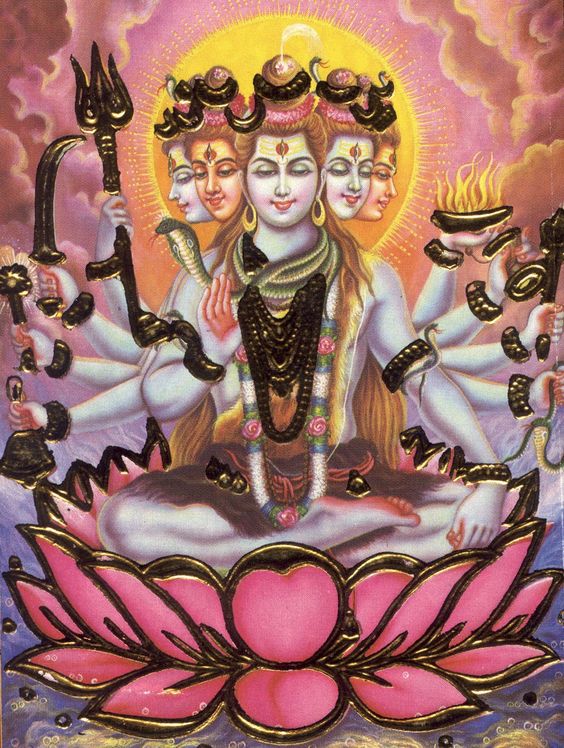
During the later periods, Purusha came to be recognized as Vishnu and Purusha Sukta the eulogy of Vishnu, because the all-pervading Vishnu by then was identified with Surya, Agni, and Yajna (yajno vai vishnuh). The virtues and powers of Purusha and his associations with elements in nature were analogues to Vishnu relations with the Vedic deities. And, with that, Vishnu, Narayana and Purusha were all treated as one.
Purusha is cosmic in nature and pervades all universe; yet, it resides in each being as its very essence (antaryamin).
Similarly, in Vishistadwaita, Narayana the Parama Purusha (the supreme person) is the embodiment of the Absolute the Brahman who assumed the divinely auspicious charming form (divya mangala vigraha) out of compassion for all beings.
The transcendental Para Vasudeva assumed the Vyuha forms and Avatars for the benefit of all beings. Narayana Paramatman dwells in all beings and matter as the Antaryami or ‘Suksma Vasudeva’ like the ‘Smokeless flame’ seated in the ‘lotus of the heart ‘. Narayana just as the Purusha is the source of all existence and all that exists resolves in to him.
In the process Purusha, Narayana, vasudeva and Vishnu all merged in to each other.This became the basis for the Bhagavatha Dharma
Narayanaya vidmahe Vasdudevaya dhimahi Tanno Vishnuh prachodayath ………..Mahanarayanopanishad
6.2. The expression Narayana also suggests several other meanings; the more common of which, as given in Manu Smriti (1.10) are: ‘the primal waters’; ‘that which does not perish’; ‘the spirit that abides (ayana) in the water (Nara, apah) of existence’ and being the ‘goal of all knowledge’. Narayana’s association with water is very intimate. Narayana, it is said, Narayana as Purusha not only resides in water in his natural state (prui sete) ; but, is the very essence of water. These explanations are meant to suggest that Narayana is an infinite cosmic ocean from which all creation arises, in which all beings live and into which all that exists resolves.
āpo narā iti proktā āpo vai narasūnavaḥ / tā yad asyāyanaṃ pūrvaṃ tena nārāyaṇaḥ smṛtaḥ // Mn_1.10 //
6.3. Further, the creation and destruction of the universe, it is believed, is neither its beginning nor its end. They are just segments of a long spread out cyclical process. When creation is withdrawn, the universe does not totally cease or is it wiped out. The universe that was destroyed persists in a subtle form as a reminder of what once was; and as a germ of what will be the next universe. That potent reminder (Sesha) of the destroyed universe is embodied in Sesha the serpent coiled itself and floating upon limitless ocean of casual waters. Sesha whose other name is Anantha (the endlessness) represents the non-evolved form of nature (prakrti).Vishnu the pervader and preserver rests on Sesha floating on water, until he wills the next cycle of creation. Vishnu then is Narayana the one who abides in water. Narayana also means ‘the abode of man and of all existence’
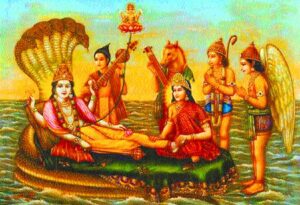
Narayana with Sri Shakti is called Maha-Vishnu and is of pure Satwa Guna; Narayana with Bhu Shakti is Param-Brahmä and is of pure Rajas Guna; while Narayana with Nila Shakti is Sada-Shiva and is of pure Tamas Guna. These three parts are full of nectar and are imperceptible.
The static Vāsudeva is unmanifested with two shakti i.e Sri and Bhū – and permeates the FOUR spiritual worlds Mahar, Janar, Tapar and Satya Loka. With Sri Vasudeva populates the worlds and with Bhū, He is the firmament of the worlds, sustaining them.
The dynamic Vasudeva is manifested with three shakti » Śrī, Bhū and Nīla – and permeates the THREE material worlds Bhūr, Bhuvar, Svaha with different mixtures of all three shakti.
Therefore technically, the manifested worlds with all the planets, the Suns and stars and everything is only one-eighth portion of Narayana. » hence the definition mantra of Narayana must have eight syllables
ॐ नमो नारायणाय | om namo nārāyaṇāya
when Vāsudeva manifests with the three shakti, He displays miśra guṇa » the sattva, rajas and tamas is mixed and with differing proportions
- Sattva excess comes by domination of Śrī Śaktī
- Rajas excess comes by domination of Bhū Śaktī
- Tamas domination comes by domination of Nīla Śaktī
- Sattva domination brings forth four signs » Cancer, Leo, and their 5th in reverse and direct i.e. Pisces (5H reverse from Cn) and Sg (5H direct from Leo). So, we say that Lakṣmī dominates the trines due to this 5th and 9th house. Hence we now know that the trinal houses are the Lakṣmī sthana places. The rulers of these signs are Sun, Moon and Jupiter. Which are of Sattva Guna.
- Rajas domination brings forth four signs » 2nd and 10th from Cancer (reverse) and Leo (direct). We have Gemini and Libra (2H, 10H from Cn in reverse) and Virgo, Taurus (2H, 10H from Le in direct). Mercury and Venus are of Rajas Guna.
- Tamas domination brings forth four signs » 4th and 7th from Cancer (reverse) and Leo (direct). We have Aries and Capricorn (4H, 7H from Cancer in reverse) and Scorpio, Aquarius (4H, 7H from Leo in direct movement).While Mars, Rahu, and Saturn are of Tamas Guna.
The three Steps of Vishnu – Paramam Padam of Vamana Avvatar who is a form of Lord Vishnu himself
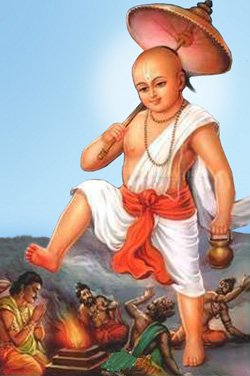

In this manner Vāsudeva takes three steps springing forth Sattva, Rajas and Tamas dominated rāśi. Similarly, the three lokas that manifest with Vāsudeva have a dominance of Tamas (Bhū), Rajas (Bhuva) and Sattva (Svarga).
Realise that the guṇa Attitudes in these are all miśra and not śuddha, pure.
- Bhū-Loka comprises Lagna → 4th bhāva houses
- Bhuva Loka comprises 5th → 8th bhāva houses
- Svarga Loka comprises 9th → 12th bhāva houses
In this manner twelve rāśi are created with the dominance of sattva, rajas and tamas guṇa respectively. And we have the powerful dvādasākṣari mantra of 12 syllables from Nārada muni that touches the signs and ends at the holy feet of Vāsudeva
ॐ नमो भगवते वासुदेवाय | om namo bhagavate vāsudevāya.
These are two of the three mantras of the Nārāyaṇa kavacha. They are based on Sṛṣṭi creation and go into the very root of all creation.
Credit – Pandit Sanjay rath PJC introduction
Characteristics of the Gunas – Attitudes
| Characteristics of Rajas Guna |
Characteristics of Sattava | Characteristics of Tamas |
| Creating,quick,rushed,desirous,greedy,
Energy of Brahma,Saraswati |
Sustaining,balanced,
High levels of consciousness, Bringing truth and awareness, Energy of Vishnu |
Transforming, dull, slow, without thought or care, unconscious, Ignorant of inherent nature and problems,
destruction,entropy, Energy of Rudra – Shiva |
Venus WATER – Mercury EARTH |
Sun (FIRE) – Moon – Jupiter (DIVINE_ETHER element and spiritual aspects of Ketu (South Node)
|
Mars-KETU(FIRE)Saturn-RAHU (AIR)
|
Horā
अहोरात्र य पवार्ू यलोपा होराऽविश यते। त य िवज्ञानमात्रणे जातकमफर् लं वदेत॥् १॥
ahorātrasya pūrvāntyalopād horā’vaśiṣyate | tasya vijñānamātreṇa jātakarmaphalaṁ vadet || 1||
Sage Parāśara teaches The word होरा (horā) is derived from अहोरात्र ahorātra which means day अहो (aho) and night रात्र (rātra)
- Dropping the first syllable of अहो (aho) and last syllables of रात्र (rātra) – what remains is हो (ho) रा (rā) होरा (horā)
When a jyotiṣa has the िवज्ञान vijñāna of horā, the ‘karma phala’ – fructification of karma of any jātaka horoscope is comprehensible
Vijñāna means and includes Knowledge: act of distinguishing or discerning, understanding, comprehending, recognizing.
Another meaning is the Ability: the skill, proficiency, art based on study and practice. Yet another is about connection to science, doctrine based on study and comparison.
Yet when we look to the Upanishads, one of the oldest texts of the Vedas, purpose of knowledge is self-realisation. Self-realisations of what? It goes on to say : Kena-upaniṣad mantra 2.3:यस्यामतं तस्य मतं मतं यस्य न वेद सः । अविज्ञातं विजानतां विज्ञातमविजानताम् ॥ ३ ॥
yasyāmataṃ tasya mataṃ mataṃ yasya na veda saḥ |
avijñātaṃ vijānatāṃ vijñātamavijānatām || 3 ||
yasya—by whom (of that knower of Brahman); amatam—is not thought (who thinks that he does not know Brahman) not to be reasoned or thought out or determined; tasya—by him; of him; matam—it is known; matam—it is thought (who thinks that he knows Brahman); yasya—by whom; na—not; veda—he knows; saḥ—he; avijñātam—not known, not realised; vijānatām—of (by) the difference knowers (who still have the idea of distinctions of the knower, knowledge and known); vijñātam—known; avijānatām—by (of) non-difference knowers, who do not know distinctions of knower, known, and knowledge The force of is to denote “distinction, mainfoldness”.
Of whom (the opinion is) “Brahman is not to be thought of,” by him He is (rightly) thought. He who thinks “Brahman has been thought of by me,” he does not know. By those who consider “we have realised Brahman,” He has not been realised. By those who consider “we cannot fully realise Brahman” He is realised.
Rāśināmāni
Rāśi: Sun Signs – Given by the SOLAR MOTION
राशिनामानि। rāśināmāni |
मेषो वृषोऽथ मिथुनः कर्कटः सिंहकन्यके। तुलाऽथ वृश्चको धन्वी मकरः कुंभमीनकौ॥
meṣo vṛṣo’tha mithunaḥ karkaṭaḥ siṁhakanyake | tulā’tha vṛścako dhanvī makaraḥ kuṁbhamīnakau ||
The word rāśi refers to a quantity of something, and is a measure of this quantity implying something tangible; It means a heap, mass or pile of stuff, can mean a group or multitudes of beings like animals or men.
Ecliptic is 360° and is composed of twelve rāśi each measuring 30° longitude. Now, when we divide 360° by 30°, we get 12 rāśi Signs. WHY 30° for each sign? The Sun and Moon were observed to conjoin in the sky every 30 days. And it was observed that the average motion of the Sun is about 1° per day. Therefore, in 30 days the Sun would have moved ahead by 30°. This measure by which the Sun moved ahead between two conjunctions with the Moon is called a rāśi. In western terminology it literally means a Sign.
Yuga, The Concept and the Four Yuga Rāśi
The Vedāṅga Jyotiṣa (Vj) or also referred to as Jyotiṣavedāṅga, of Lagadha, is one of earliest known Indian texts on astronomy. The extant text is dated to the final centuries BCE, but it may be based on a tradition reaching back to about 700-600 BCE.
Its describes some of the the astronomical knowledge of the times of altar ritual. It has an internal date of c. 1350 BCE obtained from its assertion that the winter solstice
was at the asterism Sravishta. ancient name of this nakshatra is Sravishta, current times it is Dhanistha. Sravishta Star means someone about whom people have heard a lot anout or are famous or well known and is the constellation Delphini. Recent archaeological discoveries
support such an early date, and so this book assumes great importance in
the understanding of the earliest astronomy. Vedāṅga Jyotiṣa VJ describes the mean motions of the Sun and the Moon. This manual is available in two recensions: the earlier Rigvedic VJ (RVJ) and the later Yajurvedic VJ (YVJ).
RVJ has 36 verses and YVJ has 43 verses. As the only surviving extant astronomical text from the Vedic period/
The measures of time used in VJ are as follows
1 lunar year = 360 tithis (As there are 30 tithis in a months x 12 = 360)
1 solar year = 366 solar days
1 day = 30 muhurtas
1 muhurta = 2 nadikas
1 nadikas = 10 1/20 kalas
1 day = 124 amsas (parts)
1 day = 603 kalas
Furthermore, five years were taken to equal a yuga. A ordinary yuga consisted of 1,830 days. An intercalary month was added at half the yuga and another at the end of the yuga.
(References : Birth and Early Development of Indian Astronomy By Subhash Kak Louisiana State University)
Yet there is another Yuga that we are referring to when we are mapping the Rashis to the Yugas.
Kṛta Yuga = Agni koṇa: Fire trines 1, 5, 9 signs
Dvāpara Yuga = Jala koṇa: Water trines 4, 8, 12 signs
Treta Yuga = Vāyu koṇa: Air Trines 7, 11, 3 signs
Kali Yuga = Pṛthvi koṇa Earth Trines = 10, 2, 6 signs
- Longevity of men decreased from 1000, 500, 250 and 125 years during these four yuga
- Planets occupying the rāśi and navāṁśa contribute parts of their daśā periods towards longevity
- Kṛta, 4 pada (full) daśā People born in Kṛta rāśi get everything without asking
- Dvāpara, 3 pada Dvāpara rāśi get wealth and desires though work and trade
- Treta 2 pada Treta rāśi get wealth etc, if they so desire
- Kali rāśi, 1 pada purposes Kali rāśi never get the benefit even for what they work for.
NAMAVALI Jataka Parijata Slokas 4 to 6 and first quarter of Sloka 7
The Various Vedic Names for Rashis = Signs.
The first sign, astrologers style as Mesha, Aja, Viswa, Kriya, Tumbura or Adya,
the second as Vrishabha, Uksha, Go, Tavuru cr Gokula;
the third as Dwandwa, Nriyugma, Jutuma, Yama, Yuga or Mithuna;
the fourth as Kulira, Karkataka , Karkta; the fifth as Kanthirava, Simha, Mrigendra or Leya;
the sixth as Pathona, Kanya, Ramani or Taruni,
the seventh as Thauli, Vanik, Juka, Thula; or Dhata;
the eighth as Ali. Vrischika, Kaurpi or Kita;
the ninth as Dhanus, Chapa or Sarasana;
the tenth as Mriga, Mrigasya, Makara or Nakra;
the eleventh as Kumbha, Ghata or Thoyadhara;
and the twelfth as Meena, Anthya, Mathsya, Prithurorna or Jhasha.
The following are the Latin names for the several zodiacal signs from Mesha onwards :
Mesha … Aries
Vrishabha … Taurus
Mithuna … Gemini
Kataka … Cancer
Simha … Leo
Kanya …Virgo
Tula … Libra
Vrischika . ..Scorpio
Dhanus …. Sagittarius
Makara … Capricorn
Kumbha … Aquarius
Meena ….. Pisces
KālaPURUSA- The Natural Man
Each sign of kaal purush represents a particular body part of human.As depicted in image.
Kaal means eternal time and Purusha means the Man. Kaal is a vital concept.All the classical texts refer Aries as the beginning Sign ending with Pisces, as Kaai-Purusha or Zodiac Chart, meaning the chart of the Universal Man.
The Vitruvian Man, drawing represents Leonardo’s concept of the ideal human body proportions. Its inscription in a square and a circle comes from a description by the ancient Roman architect Vitruvius in Book III of his treatise De architectura. Yet, as has been demonstrated, Leonardo did not represent Vitruvius’s proportions of the limbs but rather included those he found himself after measuring male models in Milan. Similarly, Kaal Purusa, commences with the Head – as Aries, representing the Sun in Aries on the Ascendant depicting the form of Lord Shiva – of highest form of Knowledge and Strength.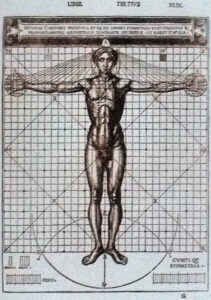
Thus, first ascendant, as we know is Aries, ruled by a martial planet Mars. Mars is the Man, Male governing planet. Aries ascendant and his lord Mars represents all Men born under this Sun.
The Almighty God Himself though Nirakaar (without bodily form) in His basic existence but appears in SakaarRupa embodied form as Ardh-Naarishwar Rupa; The concept of in the combined form of God Shiva (male) and Goddess Shakti(female). As this is the first point of creation of this Triguna -tri means three and guna means essence meaning combined form of all three essence which exists in this world.
Lord Shiva as a first male on this earth, has Aries Ascendant with exalted Sun in the first house. It is rightly mentioned in Indian classical texts about God Shiva as our symbolic Father and Goddess Shakti as our symbolic Mother. In other words, this is the first creation of almighty God as male and female identity on this universe.
Hence to further our understanding of Human mind and the twelve Ascendants, this is a crucial view, that every Rising sign will carrry the energy of the very first House – Aries. The Sky Father – Cosmic Father Lord Shiva is merging with the Cosmic mother Shakti. 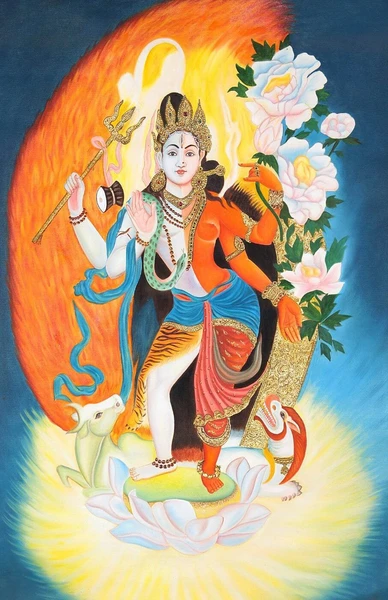
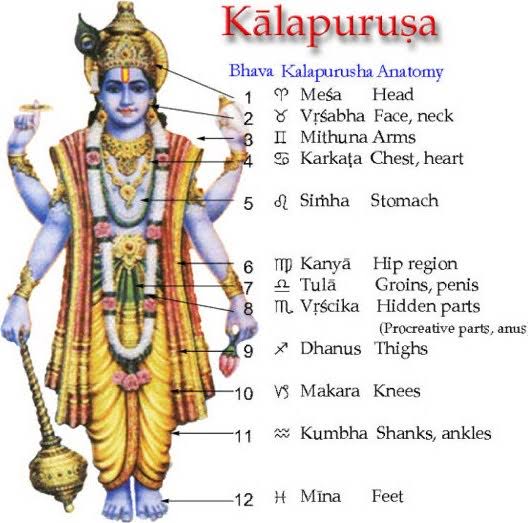
| 1.Meṣa Aries | Head |
| 2.Vṛṣabha Taurus | Face;Neck;throat; |
| 3.Mithuna -Gemini | Arms;shoulders |
| Karka -Cancer | Chest |
| Siṃha -Leo | Stomach |
| Kanyā -Virgo | Back, Intestines |
| Tula -Libra | Sexual Organs, Waist |
| Vṛścika -Scorpio) | Hidden parts, Anus |
| Dhanus -Sagittarius | Thighs |
| Makara -Capricorn | Knee |
| Kumbha -Aquarius | Lower Legs |
| Mīna -Pisces | Feet |
Dvādasa āditya – Parāśara
मेषो वृषश्च मिथुनः कर्कसिंहकुमारिकाः । तुलालिऽश्च धनुर्नक्रे कुम्भो मीनस्ततः परम् ॥ ३॥
meṣo vṛṣaśca mithunaḥ karkasiṁhakumārikāḥ | tulāli śca ‘ dhanurnakre dhanurnakre kumbho mīnastataḥ mīnastataḥ param || param || 3||
Parāśara uses the names for the 12 rāśi
-
Meṣa 2. Vṛṣa [Vṛṣabha] 3. Mithuna 4. Karka [Karkaṭa] 5. Siṁha 6. Kumāri Tulā 8. Āli [Vṛścika] 9. Dhanus 10.Nakra [Makara] [Kanyā] 11.Kumbha 12.Mīna
Credit – PtSanjay Rath Pjc Foundation course
Meṣa Aries Lord Maṅgala
| Sign | Triplicity | Quadruplicity | Sex | Ruler | ||
| No | Rashi Name | Mobility | Gunas | |||
| 1 | Aries | Fire | Movable | Rajas | Male | Mars |
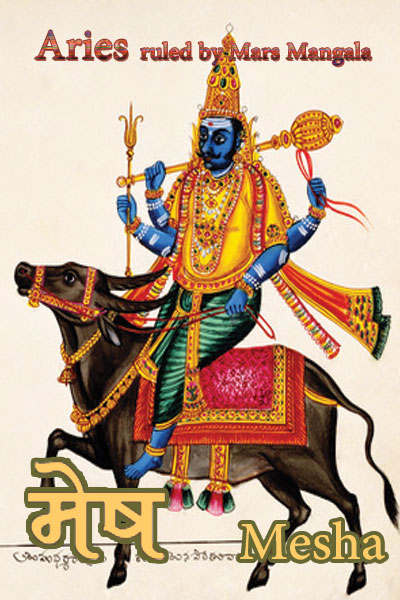
- Big body
Quadruped rāśi ; Night strong ; Courageous in three worlds ;East Residence ; Related to royalty ; Wanders in hills ; Like the Ram its symbol it has the ability to climb up mountains and hills. Rajas Guṇa Agni;Tail rising – Fiery
From Saravali
- EFFECTS OF BIRTH IN ARIES ASCENDANT.
One born in Aries Ascendant will be highly susceptible to fire, be interested in visiting foreign places, be miserly in disposition, emaciated, not happy, be jealous, stammering in speech, troubled by bilious and windy diseases and complaints of heat, be skillful in performance, timid, religious, not very intelligent and will destroy others wealth. He will be fickle-minded. He will enjoy pleasures, be famous, will have bad (ugly) nails, be bereft of brothers, be discarded by his father, will walk fast, will have inactive (or unlucky) children, be endowed with various kinds of wealth and be, virtuous. His wife will belong to a base family, be virtuous and be reproached even by her own people. The native will derive happiness and wealth in undesirable manners.
From Dhundiraj’s Jataka Bharnam जातकाभरण
-Wrathful, avaricious,
- Fierce terrible nature, As per maansgri
- Self pride
- Wealthy,
- Doer of auspicious deeds
- Dull witted , vicious brothers
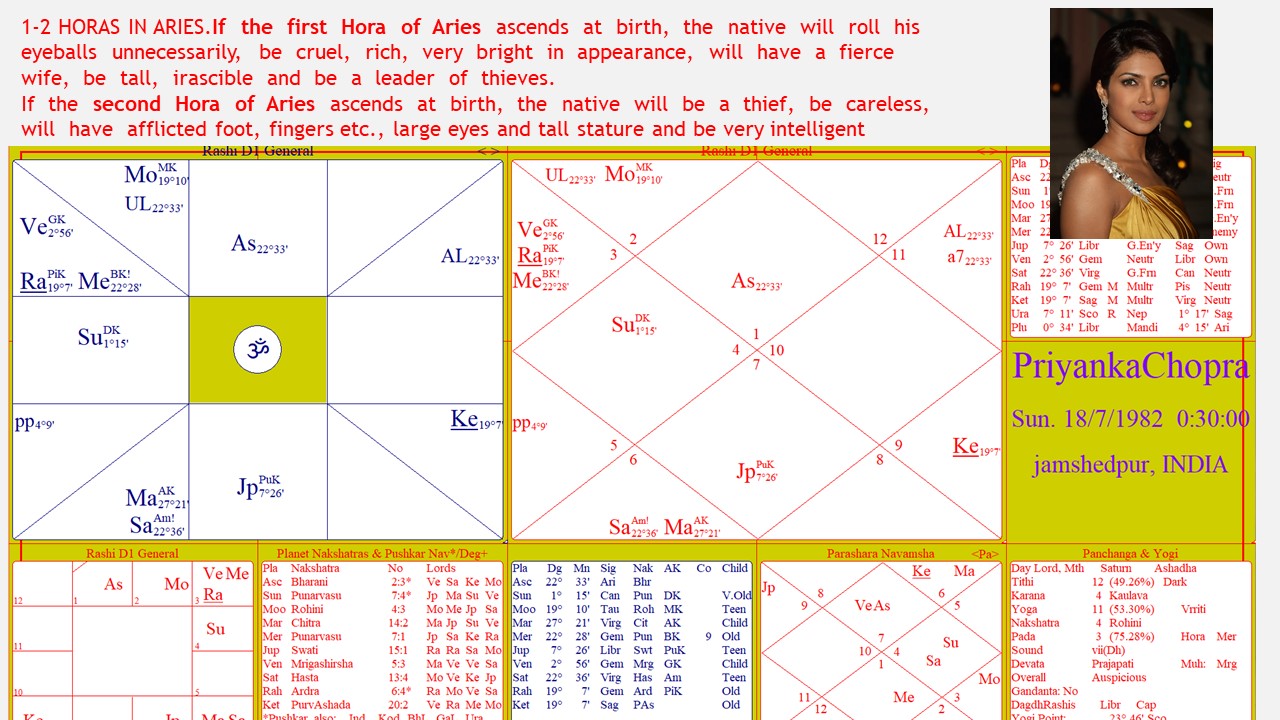
- Conqueror of enemies1-2 HORAS IN ARIES.If the first Hora of Aries ascends at birth, the native will roll his eyeballs unnecessarily, be cruel, rich, very bright in appearance, will have a fierce wife, be tall, irascible and be a leader of thieves.If the second Hora of Aries ascends at birth, the native will be a thief, be careless, will have afflicted foot, fingers etc., large eyes and tall stature and be very intelligent.
- YOGAS PRODUCED WITH ARIES LAGNA – ASCENDANT
-
No planet Yoga 1 Sun Moon Conjunction Strong fire – Gives Raja Yoga
2 Venus Maraka – but not on its own 3 Jupiter+Saturn No result. Even though 9+10th lordships, should give DharmaKarma dhipati Lordships yet does not necesasrily produce it.
4. Mars in conjunction wit 6th & 8th Lords some diseases small pox etc 5. Mars in 8th Does not produce any yoga - 4. Venus is a maraka killer
- 5. Jupiter becomes a maraka killing planet if he occupies Capricorn
- 6. A Jupiter–Saturn association doesn’t confer a rajayoga
- 7. An Aries native will have fear of diseases (especially smallpox), weapons and injuries
- 8. If Mars conjoins Mercury, death by brain disease occurs in his dasa and bhukti
- 9. This is the only lagna where it’s great if the 2nd lord is in the 12th; this isn’t the case with any other lagnas ; Probably because the Venus Lord of 2nd House is exalted in the 12th. And 12th house is where ‘our feet go’ so is auspicious to have Venus in the 12th and that too exlated.
- 10. A Mars–Venus combination can be both favorable and fatal
- 11. Mars, when conjoined with Jupiter and Venus in Taurus, becomes a yogakaraka
- 12. If the above combination occurs in Gemini, there isn’t any yoga
- 13. If Mars conjoins Jupiter in Cancer, he becomes a yogakaraka
- 14. Mars will prove a benefic during his dasa if he’s in Leo
- 15. Jupiter in Aquarius won’t automatically give good results in his dasa
- 16. A Mercury–Mars combination in Virgo gives the native skin diseases, eruptions and wounds.
- 17. The native will possess self–earned wealth if Mars and Venus are in Libra
- 18. Mars, if in conjunction with Sun and Venus in Scorpio, will confer some fame
- 19. There’s a special yoga produced when Mars, Sun and Jupiter are in Sagittarius, with Venus and Saturn in Libra
- 20. Venus confers a rajayoga if he’s in lagna with the Sun and unaspected by Jupiter
- 21. Sun will become a yogakaraka when aspected by Jupiter; the same can’t be said for Venus when she is aspected by Jupiter
- 22. A Sun–Mercury–Venus combination in Aquarius is a fortunate combination, with all three conferring riches during their dasas and bhuktis
- 23. When Sun is in lagna and Moon in Cancer, the native enjoys a rajayoga
- 24. A Sun–Jupiter–Venus combination in Capricorn helps the native enjoy dips in
-
Vṛṣabha Taurus Lorded by Shukra
-
2 Taurus Earth Fixed Tamas Female Venus White Colour, Long tall, quadruped Rasi, Night Strong,
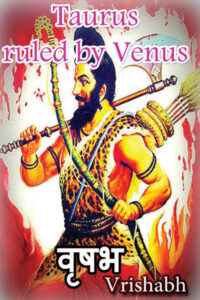
South Residences, villages and businessmens, Prithvi rasi, Hind Rising
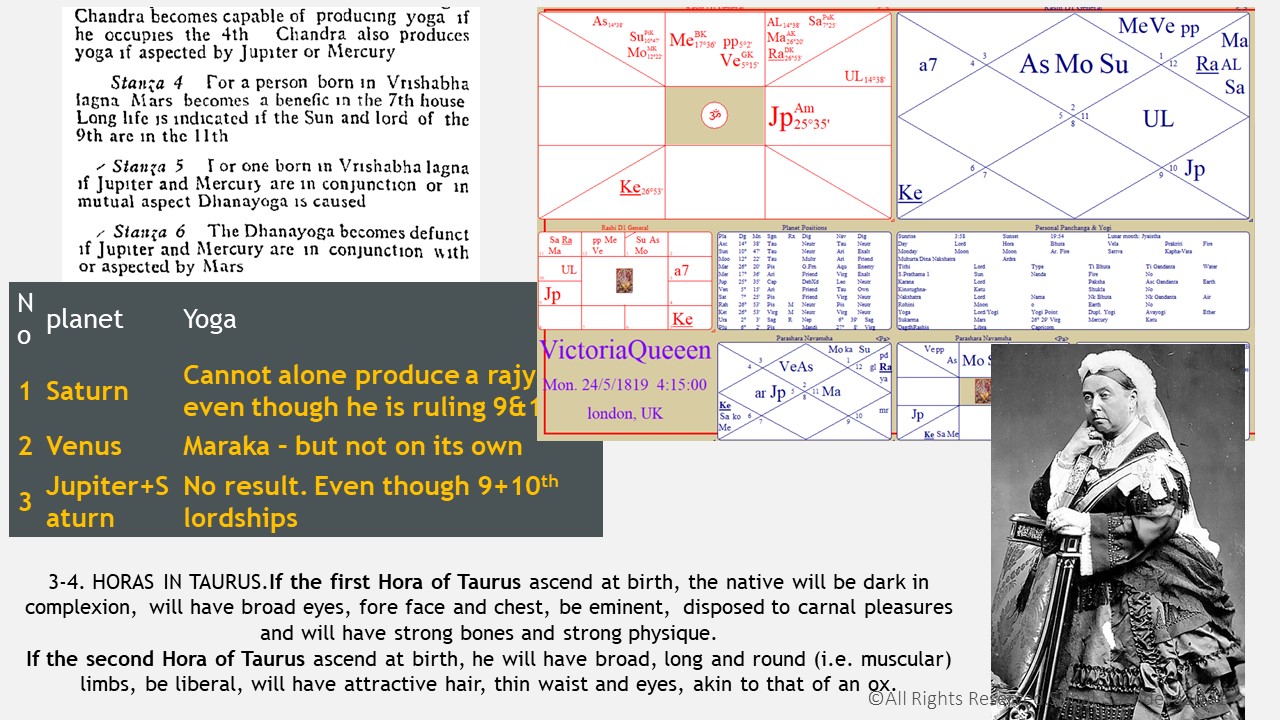
- 7-9. EFFECTS OF BIRTH IN TAURUS ASCENDANT.One born in Taurus Ascendant will be brave, will endure miseries, be happy, will destroy his enemies, will have the tendency of gathering wealth right from boyhood, will have broad and strong forehead, nose, cheeks and lips, be industrious, fortunate, devoted to parents, liberal, will have many expenses, be very short-tempered, be phlegmatic and windy in humour, be the father of (many) daughters, will insult his own men, be devoid of religion, be interested in women, fickle minded, be fond of food and drinks and be endowed with various kinds of robes and ornaments.From Dhundiraj’s Jataka Bharnam जातकाभरण–Leader among men, good, skilled , worthy natives, full of honour, & honouring or preceptors, Gurus, Brahmins –Seeks Harmony, tough, steady, patience over projects–Seeker of permanence and stability–Sweet speech, melodious, arts, as Venus Ruled
3-4. HORAS IN TAURUS.If the first Hora of Taurus ascend at birth, the native will be dark in complexion, will have broad eyes, fore face and chest, be eminent, disposed to carnal pleasures and will have strong bones and strong physique.
If the second Hora of Taurus ascend at birth, he will have broad, long and round (i.e. muscular) limbs, be liberal, will have attractive hair, thin waist and eyes, akin to that of an ox.
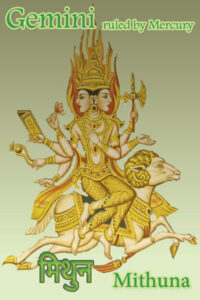
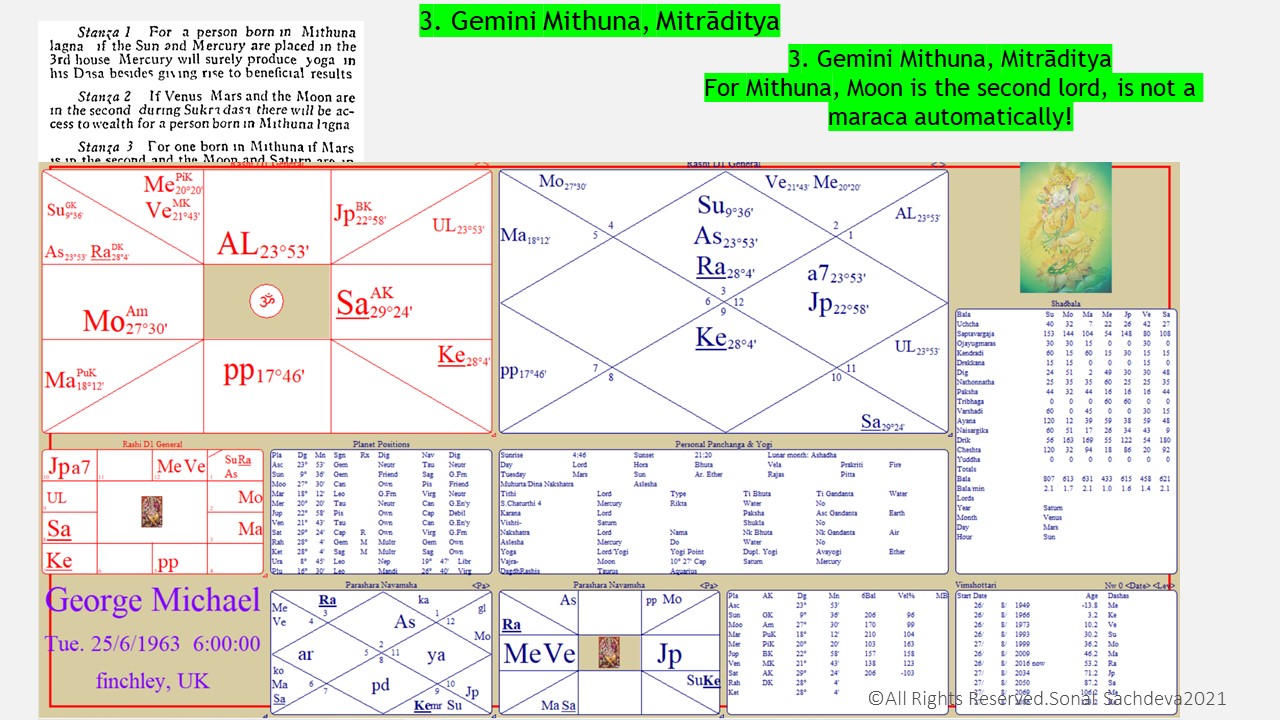
Mithuna Gemini Mitrāditya (Jun 15 – Jul 14)
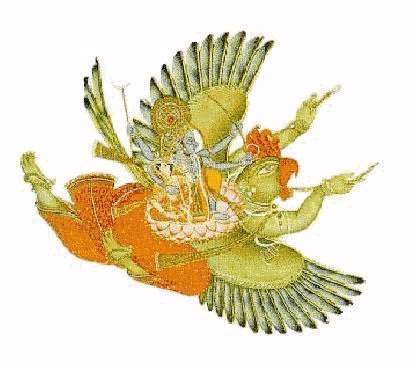
| 3 | Gemini | Air | Dual | Satwa | Male | Mercury |
- Male wielding mace + female with lute
- Head rising
- West Residence
- Vāyu rāśi
- Biped Rāśi
- Night strong
- Villages, cities
- Windy temperament
- Even
- balanced body
- 10-13. EFFECTS OF BIRTH IN GEMINI ASCENDANT.One born in Gemini Ascendant will have a dear wife, be fond of ornaments, charitable, respectable, will have two mothers, will be favourable even to his enemies, be interested in music, fine arts, Vedas, Shastras, amusement, poetry etc., gentle, fond of beautification, be conceit, truthful, impatient, will have evil sons, be crafty, will have a few relatives, will possess limbs of irregular sizes, will have round eyes, be fierce in appearance, will destroy even fearful enemies and will be endowed with lands, jewels, gold etc.
From Dhundiraj’s Jataka Bharnam जातकाभरण & Maansagri
-Voluptous, beautiful, has number of friends and sons, wealthy,
-sweet temperament, philosopher, lives near the king
Get success where sharpness of intellect is called for, versatile genius!
Strange hospitality, progressive ideas, Is Attached to Yoga, skilled, knows essence of things, Attached to Yoga & meditation, Ascetic, enjoys the pleasures of the senses, lascivious/lustful and Creative
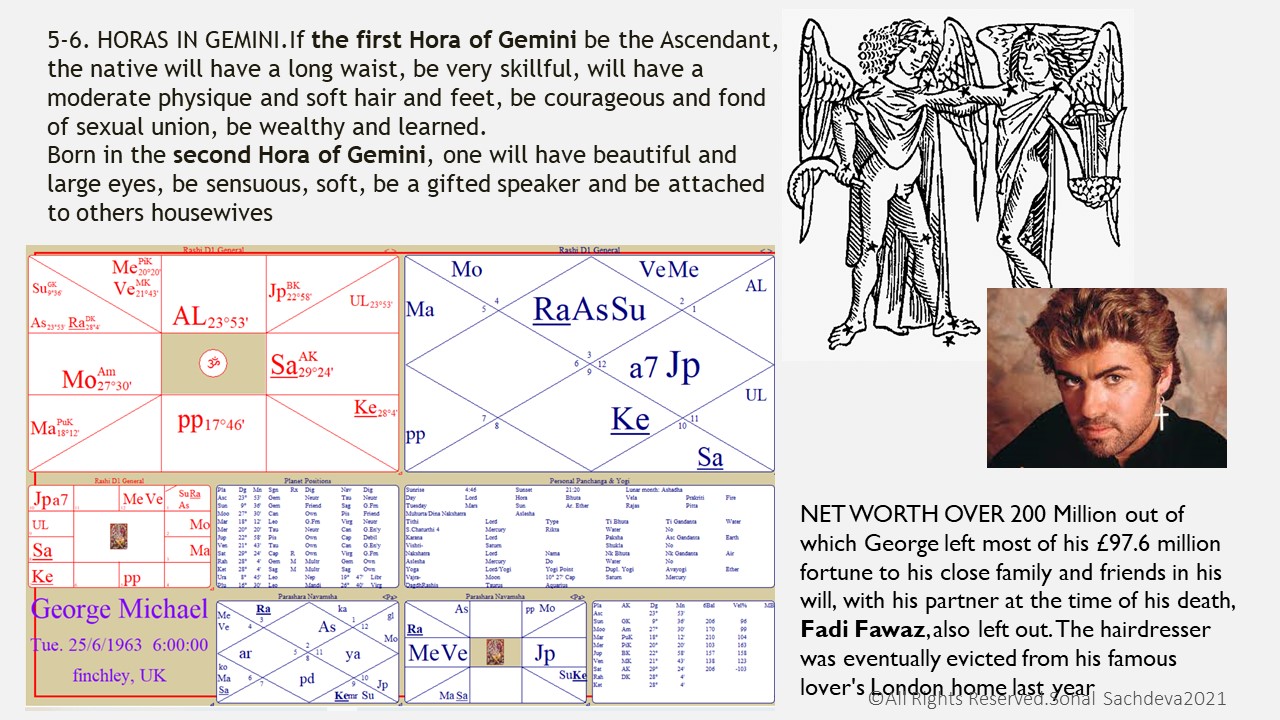
Born in 2nd Hora of Gemini – certains soft eyes and all indications of qualities suggested by Saravali
5-6. HORAS IN GEMINI.If the first Hora of Gemini be the Ascendant, the native will have a long waist, be very skillful, will have a moderate physique and soft hair and feet, be courageous and fond of sexual union, be wealthy and learned.Born in the second Hora of Gemini, one will have beautiful and large eyes, be sensuous, soft, be a gifted speaker and be attached to others housewives
-
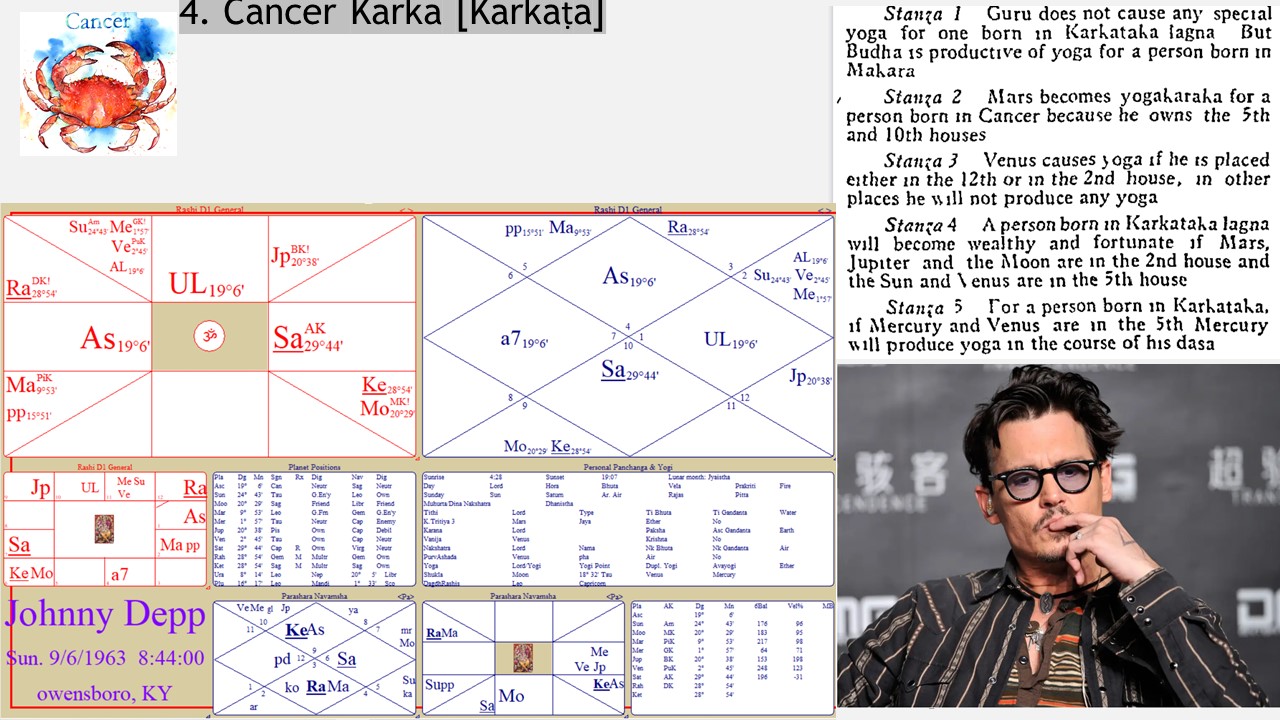
Karkaṭa Cancer Lord: Chandra
4 Cancer Water Movable Rajas Female Moon
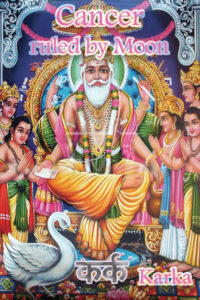 Pale-red -pink color•resorts to forests •Represents•RepresentsBrāhmaṇa•Night strong•Many feet -like crab, or many people •Bulky bodyBulkybody•Sattva guṇa•Jala rāśi•Hind rising•
 - 14-17. EFFECTS OF BIRTH IN CANCER ASCENDANT.One born is Cancer Ascendant will be timid, will have many residences, be fickle minded, learned, intelligent, enduring, troubled by diseases of the anus, will destroy his enemies, be crooked in disposition, sensuous, will honour Brahmins and Gods, be religious, very phlegmatic, will possess a physique, akin to that of a female, be honoured for his virtues, will be preceded by sisters in birth, be bereft of relatives, will have a few children, will have a censured family and a vile wife, will enjoy others wealth, be firmly obstinate, will live in foreign places, be valorous in his deeds, be courageous, will earn through water (i. e. products related to water, sea travel etc.) and be endowed with wife, ornaments, robes and happiness.
- From Dhundiraj’s Jataka Bharnam जातकाभरण & Maansagri–Loves to eat sweet foods, serves saintly people, fond of sporting in water, extremely Generous, takes real substance of things, emotional, sensitive, –Creates atmospheres of intimacy and affinity, –Wearing excellent clothes and jewels, speaks beautifully, ponderous body,–Sensual nature, physical pleasures etc sweet drinks etc
- Cancer Karka [Karkaṭa] Lagna – not automatic – Jupiter will give rajyoga even though it lords the 9th house.
Venus * mercury in 12th house will give rajyoga.
Of course Sri Rama Chart, Moon – Jupiter in lagna will lead to fame and fortune and huge rajyoga!
7-8. HORAS IN CANCER.If the birth be in the first half of Cancer, one will be endowed with elevated body, (i.e. be prominent in appearance), a beautiful head, eminence and intelligence, be weak sighted, will have limbs moving off and on, be crafty, dark in complexion, ungrateful and will have broken teeth.
181If the birth be in the second half of Cancer, he will be fond of gambling and travels, will have a broad chest, be quite truthful, irascible and will have a harsh physique
Siṁha Leo Lord: Sūrya
5 Leo Fire Fixed Tamas Male Sun
-
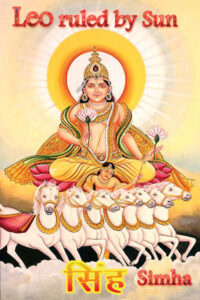
- Sattva Guṇa- Odd Sign •Quadruped rāśi•Kṣatriya varṇa•Head rising•Large white body•resorts to forestsresortstoforests•East residence•Day strong
- 18-21. EFFECTS OF BIRTH IN LEO ASCENDANT.One born in this Ascendant will be fond of eating meat, will earn wealth and honour through the king, be bereft of religion, be dutiful in family affairs, will have a face, resembling that of a lion, will hold a high rank of office, be majestic, strong, bold, will speak sparingly, be a miser, will trouble others, be desirous of (eating or) worldly enjoyments, will wander in hills and forests, be irascible, be firm in friendship, be careless, inaccessible (or inviolable), will destroy his enemies, will have famous sons, will honour the virtuous, be rich through agriculture etc., interested in business and will spend heavily on prostitutes, dancers and his own wife and will suffer dental diseases.
- From Dhundiraj’s Jataka Bharnam जातकाभरण & Maansagri–Weak body,its handsome, valiant,voluptuous,has few sons, thinks he is more intelligent than others–Strong resolution , high ideals, –High forbearance for others but not in financial matters–Grief becoz of their hasty nature
- 9-10. HORAS IN LEO.One born in the first Hora of Leo will have blood-red eyes, be bold, be endowed with a large and long physique, be crooked, happy and decidedly firm in his undertakings.One born in the
- later half of Leo will be fond of women, sweets, foods, drinks and robes, will move frequently, will have a harsh physique, be liberal, fond of travels, will have a few sons, will enjoy pleasures and be firm in friendship.
Kanyā Virgo Lord: Budha
6 Virgo Earth Dual Satwa Female Mercury & Rahu North Node -
Resorts to hills and mountains -Mountain King •Day strong•Head rising•Medium built•Biped rāśi -human •South residence•Lady holding corn and fire •Vaiśya varṇa•Various colors; spotted, sprinkled,•Strong wind, Wind god,Strongwind,Windgod,storm, hurricane •Detailed, organised [act of breaking into pieces•Virgin, Young girl, Youth, childhood•Tamas Guṇa•
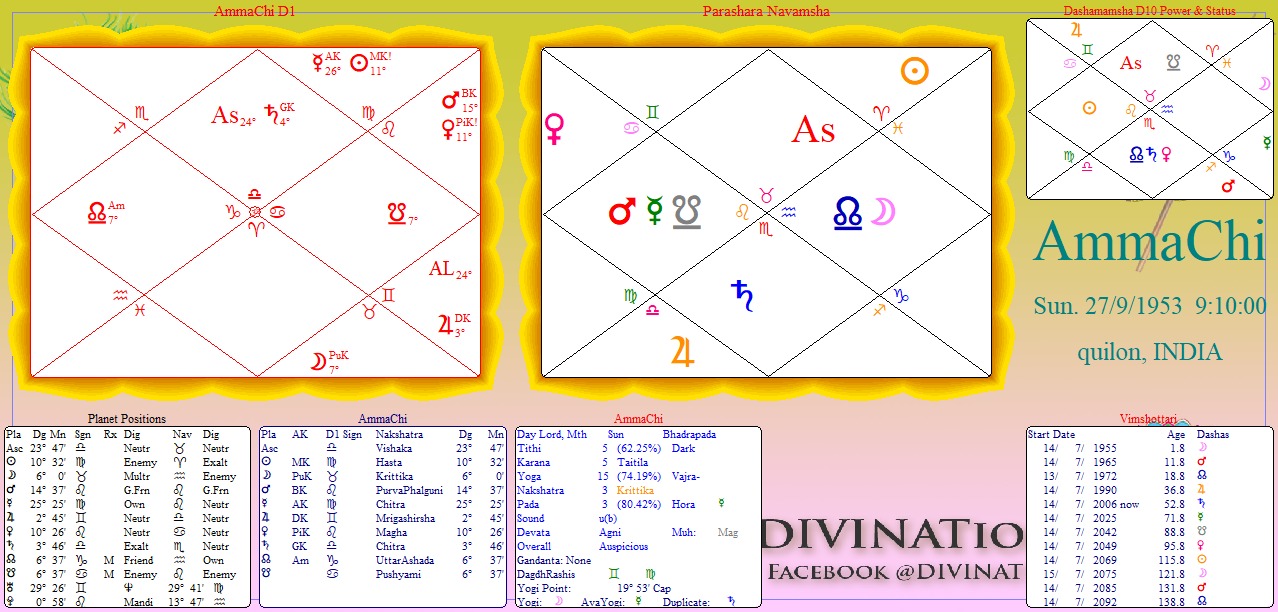
22-25. EFFECTS OF BIRTH IN VIRGO ASCENDANT.
One born in Virgo Ascendant will be gentle, skillful in training (or teaching others), music, poetry and fine arts be a sweet speaker, be affectionate, interested in charitable and serving others, will sport with virgins, be endowed with goodness, merciful, will enjoy others wealth, will wander, will have a females disposition, be modest, be a liar, will attempt to enlarge his landed properties, be fortunate, sensuous, famous, virtuous, beautiful, will honour elders, be sinful, inimical to brothers, will have (more) daughters, be phlegmatic and windy in humour and will be away from base and inimical people.
From Dhundiraj’s Jataka Bharnam जातकाभरण & Maansagri
Dula natured, vigilant, great command over language, great skill in depth analysis of problems, practical approach, go with intent, have all the virtues, loves intercourse etc (Rahu ?)
From Bhavartha Ratnakara –
Venus rules the 9th house and Jupiter the 4th – in their dashas or Sun in Conjunction with Moon or Venus will give wealth and fortune
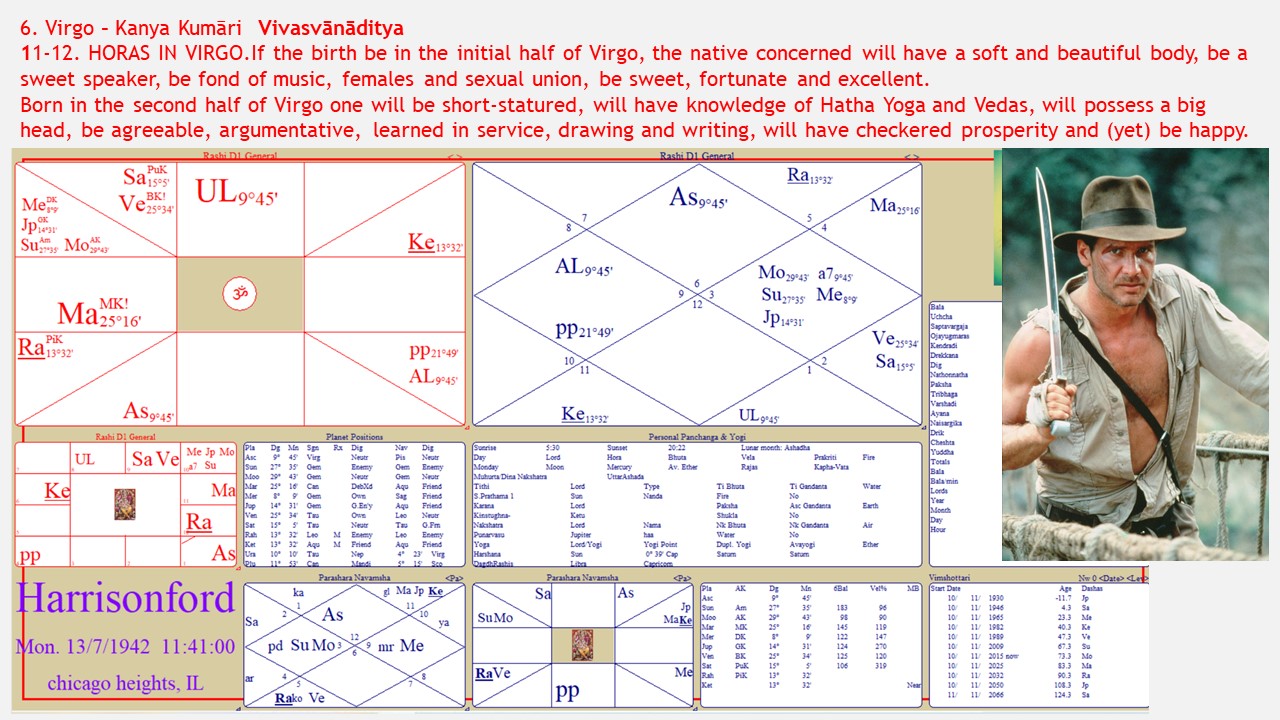
. Virgo – Kanya Kumāri Vivasvānāditya
11-12. HORAS IN VIRGO.If the birth be in the initial half of Virgo, the native concerned will have a soft and beautiful body, be a sweet speaker, be fond of music, females and sexual union, be sweet, fortunate and excellent.
Born in the second half of Virgo one will be short-statured, will have knowledge of Hatha Yoga and Vedas, will possess a big head, be agreeable, argumentative, learned in service, drawing and writing, will have checkered prosperity and (yet) be happy.
-
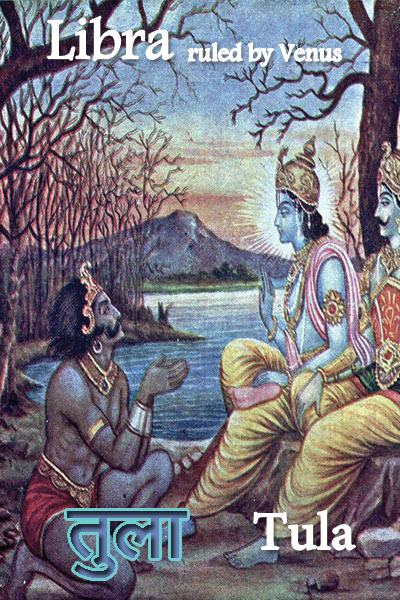
7.Tula Libra Lord: Śukra
7 Libra Air Movable Rajas Male Venus -
-
Head rising•Day strong•Black colorBlackcolor•Rajas guṇa•West residence•Resorts to plains -prefers land •Destructive, hurting -ihi -mischievous •Śūdra varṇa•Medium built•Biped rāśi -human •
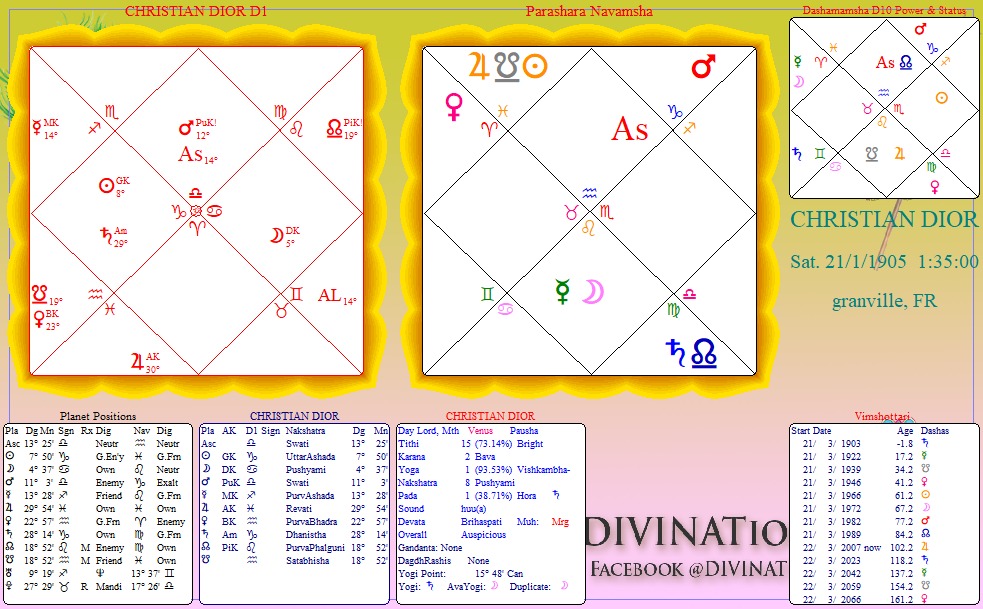
26-29. EFFECTS OF BIRTH IN LIBRA ASCENDANT.
One born in Libra Ascendant will have a crooked physique, be bereft of virtues, be fickle minded, will have increasing and decreasing wealth, be bereft of physical happiness, be phlegmatic and windy in humour, be fond of promoting quarrels, will have a long face and a long physique, be virtuous, learned, very miserable, very intelligent, will injure others honour, will possess beautiful and black eyes, will honour guests, Gods and Brahmins, will perform Yagnas etc., will respect preceptors (or elders), be respectable, will help the helpless, be truthful, will have a beautiful body, will be affectionate to brothers, be pre-eminent, chaste, will yet help sinners, will have mean profession, be charitable, be religious and baseminded.
From Dhundiraj’s Jataka Bharnam जातकाभरण & Maansagri
Expert in trade, excellent in the family, wealthy, learned , auspicious, gaps between teeth, endowed with intelligence, melancholic, peaceful temperament, (IF MARS NOT ACTIVATED!)
-
YOGAS From Bhavartha Ratnakara – Jupiter owns 3/6th and Saturn 4th 5th. Hence they can give great yogas especially Saturn. Jupiter – goes against the grain!
-
4. If Sun and Mercury are in Virgo and aspected by Saturn, the father will be fortunate5. If Mars is in association with Sun, Saturn and Mercury, it produces immense good6. If Sun, Mercury and Saturn are combined with either Moon or Mars, a rajayoga is produced7. If there’s a Sun–Venus–Mercury combination in lagna, the native gets very fortunate and wealthy8. If in lagna there are Mercury, Saturn and Venus, or the Moon and Mars in Aries, the Mercury dasa will prove fruitful9. The presence of Mars and Mercury in Leo, Jupiter in Taurus and Saturn in Gemini creates a rajayoga10. If Moon is in lagna with Jupiter either in Virgo or Pisces, the Saturn dasa brings in wealth and fortune11. Venus becomes a maraca if he’s in the ascendant12. If the Saturn is in lagna and Moon in Cancer, a rajayoga results13. If Saturn, Jupiter, Mercury and Mars are in Aquarius, and Rahu is in Cancer, the native enjoy dips in holy rivers like the Ganga during the Rahu dasa.
13-14. HORAS IN LIBRA.If the first Hora of Libra ascends at birth one will have a round face, elevated nose and back and large eyes, be sportive, will have a strong body and strong bones, be wealthy and will be affectionate to his men.
f the second Hora of Libra ascends at birth, he will be very wealthy, will have firm wealth, will be endowed with black and curly hair, be crafty, round-eyed, will have a strong lower body and attractive skin and will have defective feet.
-
-
8.Scorpio Āli [Vṛścika] Parjanya Aditya Parjanyāditya Lord: Mars
-
-
Slender body•Many feet -insect or many •Brahmanarasi – The Sign of the Brahmana – Saintly Priests. •Resorts to holes, dark dingy places•North residence•Day strong•Light Brown, Light Yellow•Amphibian•Hairy body•Very sharp -intelligent and Passionate•
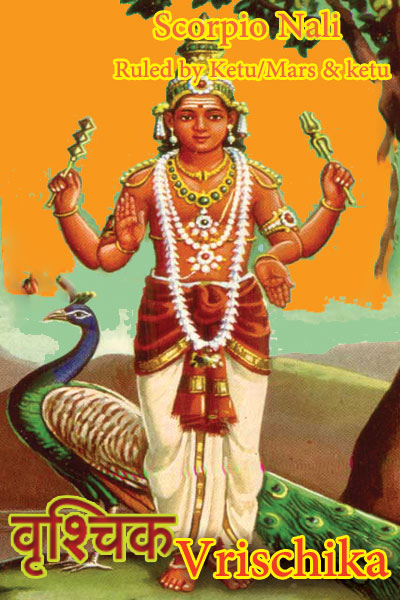
One born in Scorpio Ascendant will have fleshy and broad limbs, (as though) perfected by exercises, be clever, crooked in innate disposition, valorous, attached to his mother inclined to quarrel, generous, will have majestic and tawny eyes, a prominent chest, a sunken belly and depressed nose, be adventurous, firm, fierce, trustworthy, amusing, be troubled by bilious complaints, will have a big family, will betray his preceptors (or elders) and friends, be engaged in attracting other women, will have an attractive face, will serve a king, will have enemies, be pious, will give his money to others, will possess an amiable wife, be religious, affectionate and base.
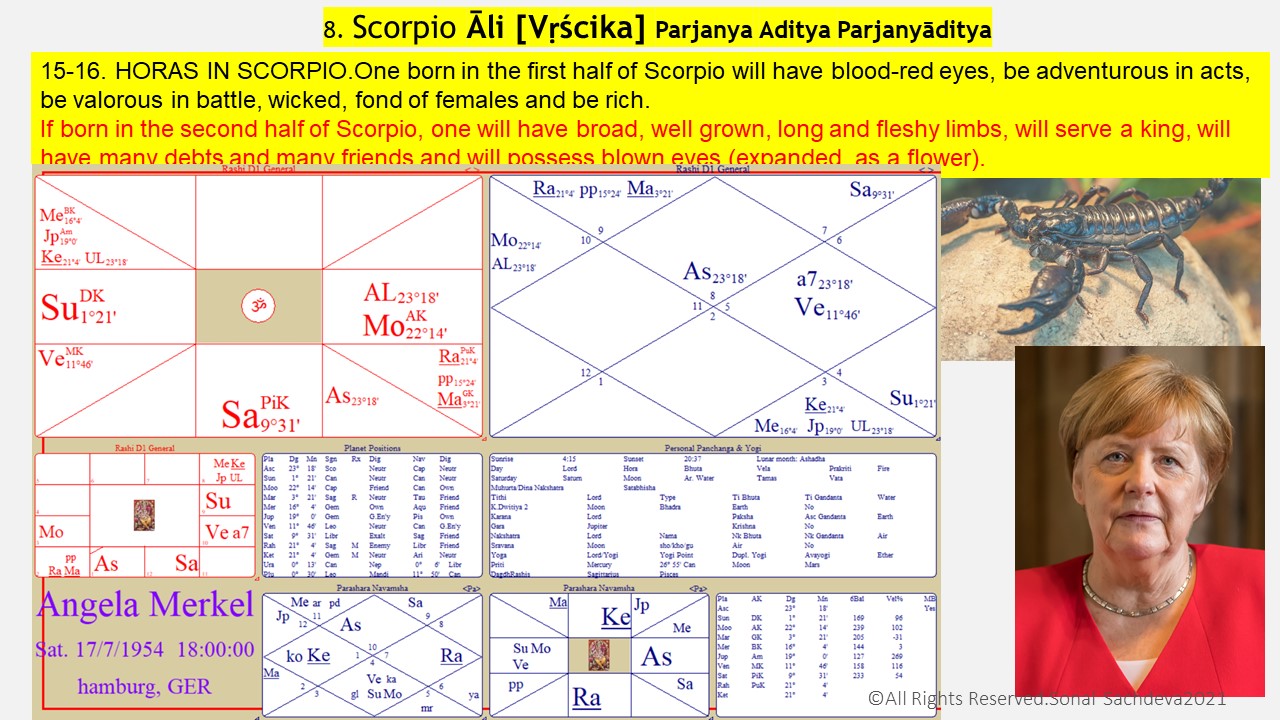
15-16. HORAS IN SCORPIO.One born in the first half of Scorpio will have blood-red eyes, be adventurous in acts, be valorous in battle, wicked, fond of females and be rich.
If born in the second half of Scorpio, one will have broad, well grown, long and fleshy limbs, will serve a king, will have many debts and many friends and will possess blown eyes (expanded, as a flower).
- YOGAS for Scorpio according to Bhavarath Ratnakara 1. An association of Jupiter and Mercury brings in wealth2. If Jupiter is in Capricorn, the native will be charitable3. If Sun, Mercury and Venus are in Taurus, the Mercury dasa confers lots of fame and power4. When Jupiter and Mercury are in Pisces with Moon in Virgo, the native will be fortunate5. If there’s a Jupiter–Moon–Ketu combine in Cancer, the Ketu dasa will be ordinary but the Jupiter dasa excellent
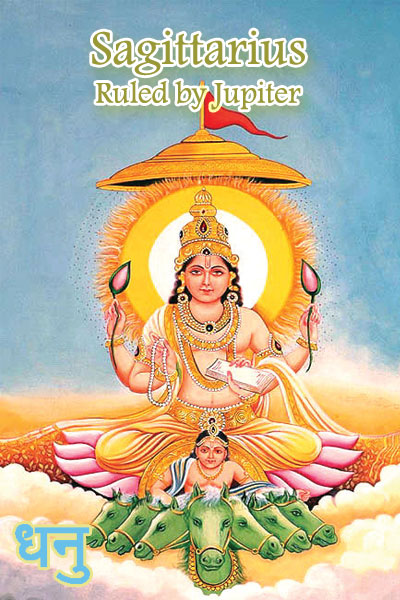
9. Sagittarius Dhanus Aṁśuman āditya (Dec 16 – Jan 13) Lord: Guru
9 Sagittarius Fire Agni Dual Sattvic Male Jupiter -
Head Rising• •Sattva Guṇa •Head rising•Headrising•Lord: Guru•Night strong•Fiery -Agni tattva •Kṣatriya varṇa•Initial ½ biped -human latter ½ quadruped•Even built•Evenbuilt•East residence•Wields Bow •Prefers land •Splendorous•Protects Brāhmaṇa
17-18. HORAS IN SAGITTARIUS.One born in the first half of Sagittarius will possess a wide and split face and chest, with eyes and neck contracted (i.e. small), will be discarded by elders in boyhood and be pious.
If the later half of Sagittarius rises, one will possess eyes akin to the petals of a lotus and long arms, will have knowledge of Shastras, be good in appearance, will speak sweetly, be fortunate and famous.
-
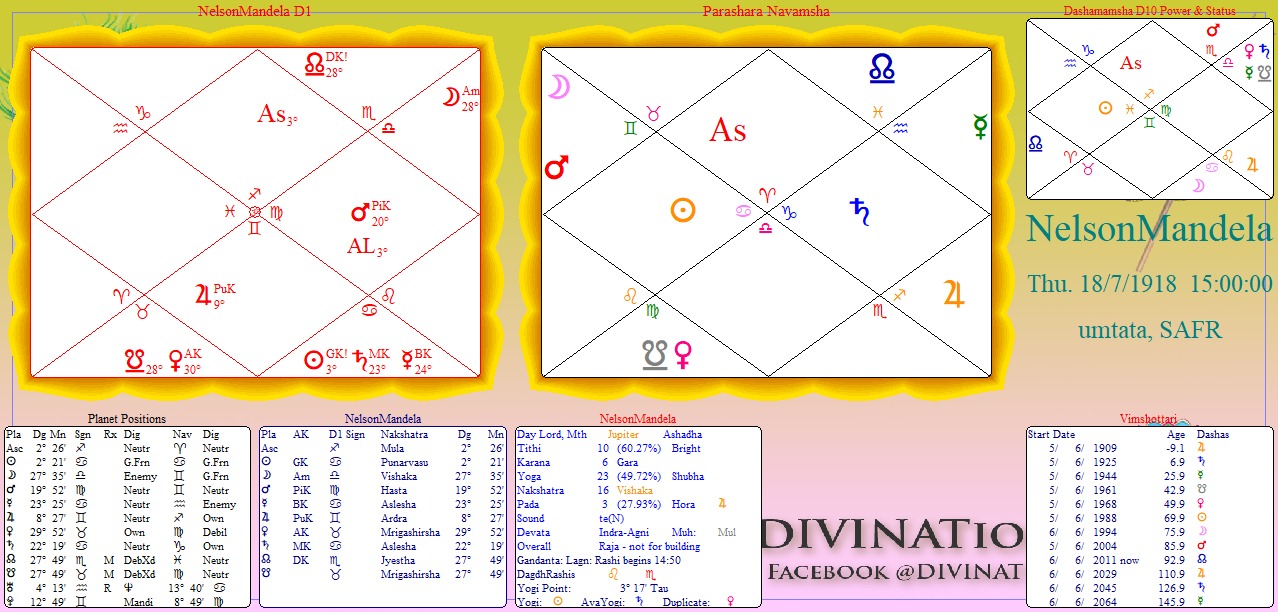
Nelson Mandela – Sagittarius Rising, in the first Hora extremely auspicious as Jupiter the lord of the Ascendant is aspecting the Lagna. Lord of the Moon sign is Venus who is the Atmakaraka and is in Taurus (This is Kevala Yoga – Very strong and gift of Shiva to be able to lead people)
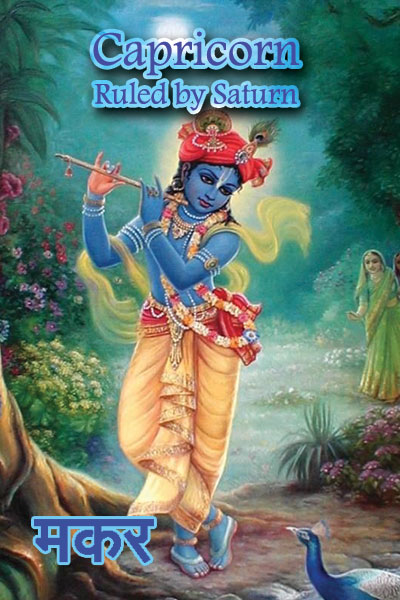
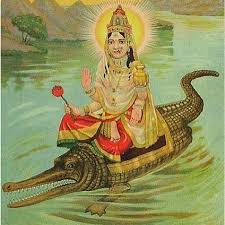
10 Capricorn Makara – Nakra Bhagāditya Lord: Śani
-
10 Capricorn Earth Prithvi Chara Movable Tamas Female Saturn - Tamas Guṇa•Pṛthvi tattvaṛ•South residence•Night strong•Hind rising•Large body•Many dark colors -blue •Resorts to forests and•Resortstoforestsandplains•Initial ½ quadruped, latter ½ Footless -crawls and moves in water
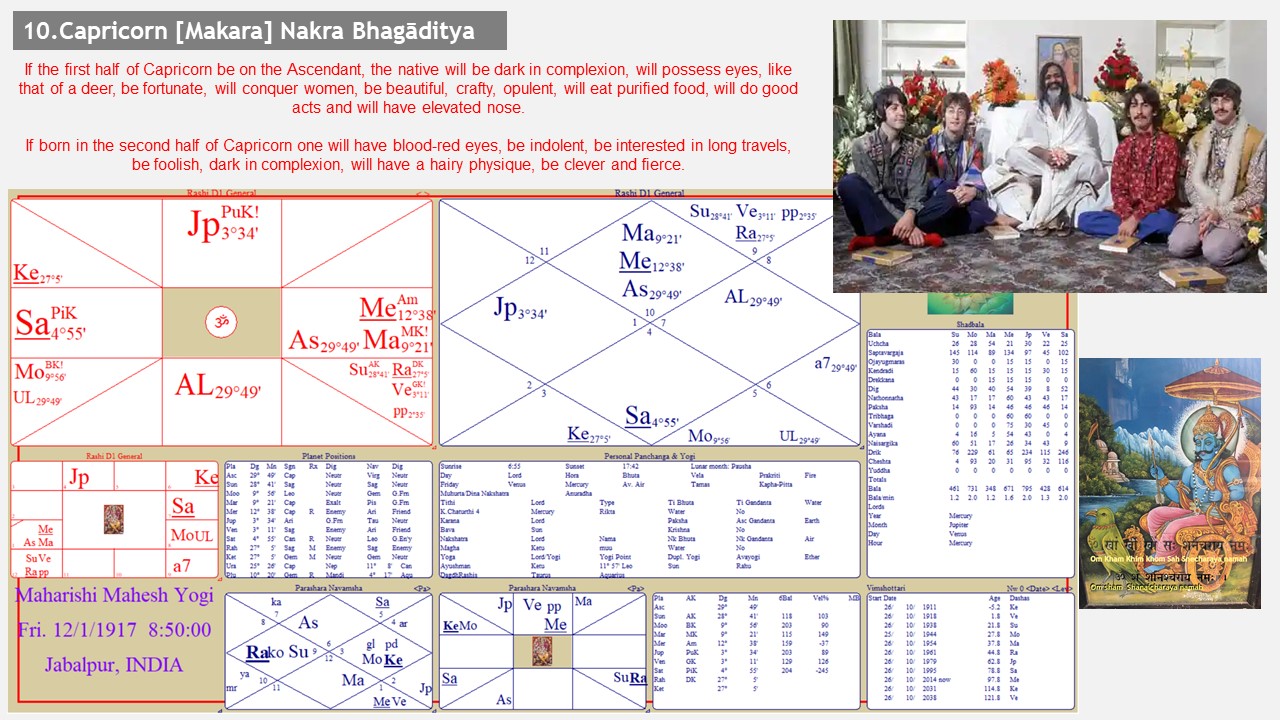
 38-41. EFFECTS OF BIRTH IN CAPRICORN ASCENDANT.
 One born in Capricorn Ascendant will have an emaciated body, be timid, will have a face, akin to that of a deer, be troubled by windy diseases, will have a bright and elevated nose, be not mighty, will have many sons, be hairy-bodied, will have broad feet and hands, be devoid of conduct and virtues, be tormented by thirst (or morbid heat), be dear to the fair sex, will wander in hills and forests, be valorous, will have knowledge of Shastras, Vedas, fine arts, music and musical instruments, will have little strength, be a householder, be hostile, wicked, ill disposed to relatives, splendourous, will have a wicked wife, will not be a talebearer, be wealthy, virtuous, will serve a king, be very liberal, happy and fortunate.If the first half of Capricorn be on the Ascendant, the native will be dark in complexion, will possess eyes, like that of a deer, be fortunate, will conquer women, be beautiful, crafty, opulent, will eat purified food, will do good acts and will have elevated nose.If born in the second half of Capricorn one will have blood-red eyes, be
 - indolent, be interested in long travels, be foolish, dark in complexion, will have a hairy physique, be clever and fierce.
-
-
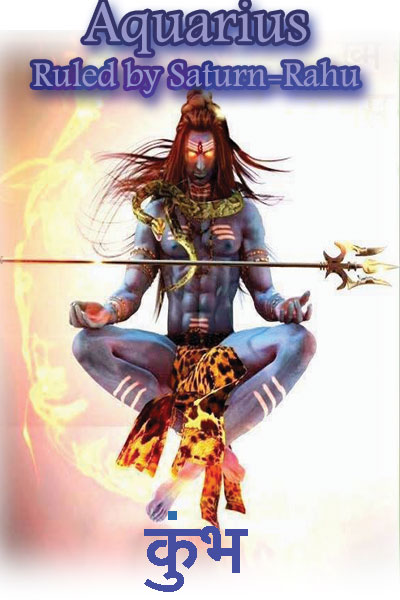
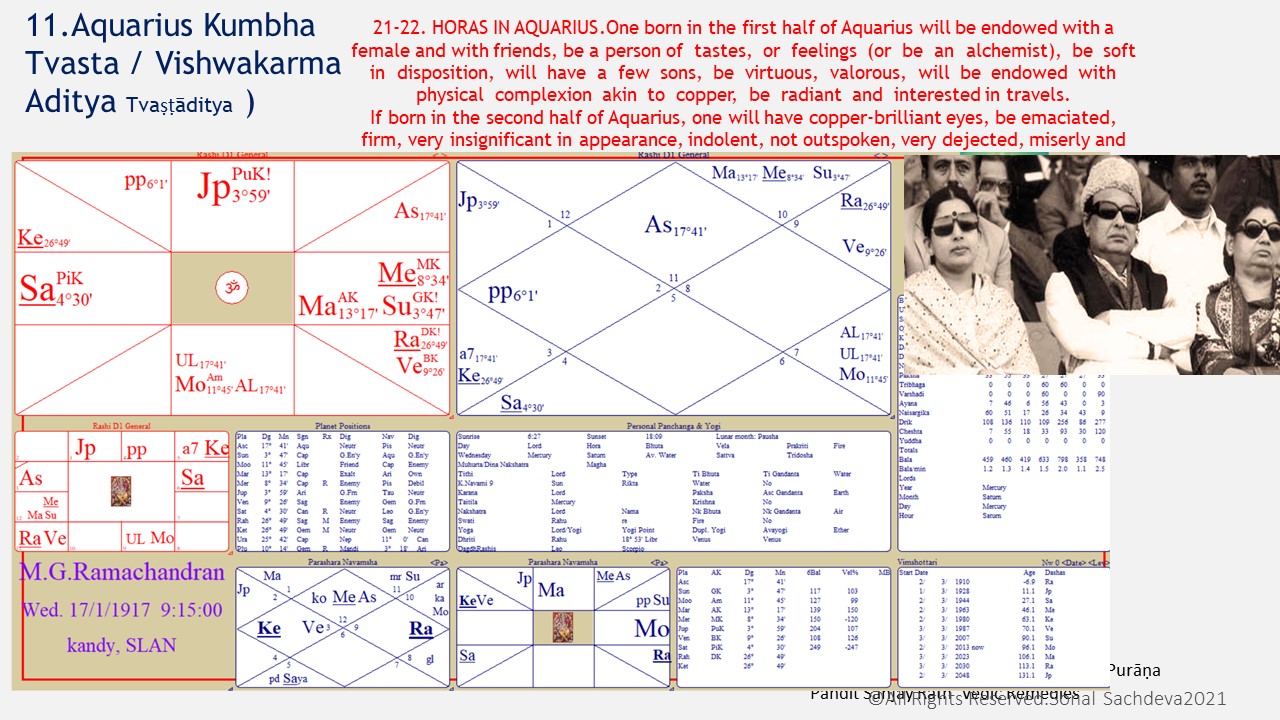
11.Aquarius Kumbha Tvasta / Vishwakarma Aditya Tvaṣṭāditya Ruler Rahu North node of the Moon & Shani Saturn
11 Aquarius Air Fixed Tamas Male Saturn & Rahu -
- Man holding pot•Dark brown -Sat color [Poisonous PurpleRāhu]Purple–Rāhu]•Medium build •Biped -human •Day strong•Resorts to water•Vāyu tattva•Head rising•Tamas guṇa•Śūdra varṇa•West residence•42-45. EFFECTS OF BIRTH IN AQUARIUS ASCENDANT.One born in Aquarius Ascendant will indulge in mean acts, be principal among the men of his race, be foolish, will have blown and sharp nose, be base, irascible, indolent, inclined to enmity, dissatisfied, harsh, be fond of gambling and of base females, will not be helpful to relatives, be agitated, will have checkered prosperity, will acquire wealth, be a talebearer, be crafty, will suffer penury, will face loss of relatives, be prohibited (in social circles), be not agreeable, will acquire great wealth and will honour elders. At birth Aquarius is not an auspicious Ascendant for ever, according to Satyacharya. Yavanas go a step further, stating, that even Aquarius Vargas are not auspicious (at birth), while Chanakya does not consider such divisions inauspicious.
 21-22. HORAS IN AQUARIUS.One born in the first half of Aquarius will be endowed with a female and with friends, be a person of tastes, or feelings (or be an alchemist), be soft in disposition, will have a few sons, be virtuous, valorous, will be endowed with physical complexion akin to copper, be radiant and interested in travels.If born in the second half of Aquarius, one will have copper-brilliant eyes, be emaciated, firm, very insignificant in appearance, indolent, not outspoken, very dejected, miserly and very crafty.
 - YOGAS FOR AQUARIUS from Bhavartha Ratnakara 1. For both Aquarius and Leo ascendant natives, the mere association of the 9thand 10th lords doesn’t confer any rajayoga2. If Venus and Rahu are in lagna with Sun in Scorpio, yoga will be caused in the dasas of Rahu and Jupiter3. If Sun and Mars are in Virgo, the native suffers during their dasas. The Mercury dasa will be better4. Jupiter in lagna with Saturn in Pisces will see mixed results during the Jupiter dasa and an ordinary time during the Saturn dasa5. If Saturn and Venus are in Sagittarius, the Venus dasa proves fortunate6. A Sun–Mercury–Jupiter combine in Aries is good, especially during the Sun dasa when the native enjoys power
11 Aquarius Air Fixed Tamas Male Saturn & Rahu 21-22. HORAS IN AQUARIUS.One born in the first half of Aquarius will be endowed with a female and with friends, be a person of tastes, or feelings (or be an alchemist), be soft in disposition, will have a few sons, be virtuous, valorous, will be endowed with physical complexion akin to copper, be radiant and interested in travels.
If born in the second half of Aquarius, one will have copper-brilliant eyes, be emaciated, firm, very insignificant in appearance, indolent, not outspoken, very dejected, miserly and very crafty.
-
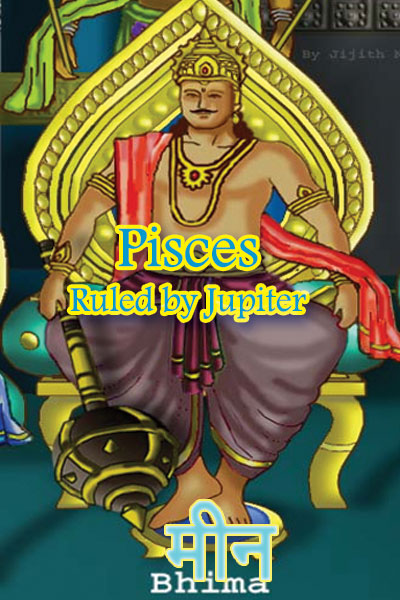
Mīna Pisces- Lord: Guru Jupiter & Ketu South Node of the Moon
12.Pisces Mīna Vishnu Aditya Viṣṇu-āditya (March 15 – Apr 15) & the 12th house-Sun shines in the month of Chaitra shining forth 1200 rays. Vishnu is in all of us and is the destroyer of the demons and enemies of the Gods. Om Grinih VishnuAaditya
Pair of entangled fish – tail locked to head of other•Day strong -saṅdhyāDaystrong-saṅdhyāothers •Jala tattva•Sattva guṇa•Self reliant, healthy•Resorts to water •Without feet -śaktī? •Medium built•North residence•Both head and tail rising•
46-49. BIRTH IN PISCES ASCENDANT.
One born in Pisces Ascendant, will be fortunate, will have well blown nose and unblown (not wide open) eyes, will be interested in profane knowledge and poetry, be respectable, famous, will
180have exposed lips and teeth, be tormented by leprosy, will have an afflicted face, be courteous, trustworthy, will be endowed with goats, she-goats etc., will have pure conduct, will have knowledge of Vedas, be courageous, will have (more) daughters, be modest, gently disposed, be mighty, will have knowledge of music and sexual union, be virtuous, liberal, will gain through brothers and will have good relatives.
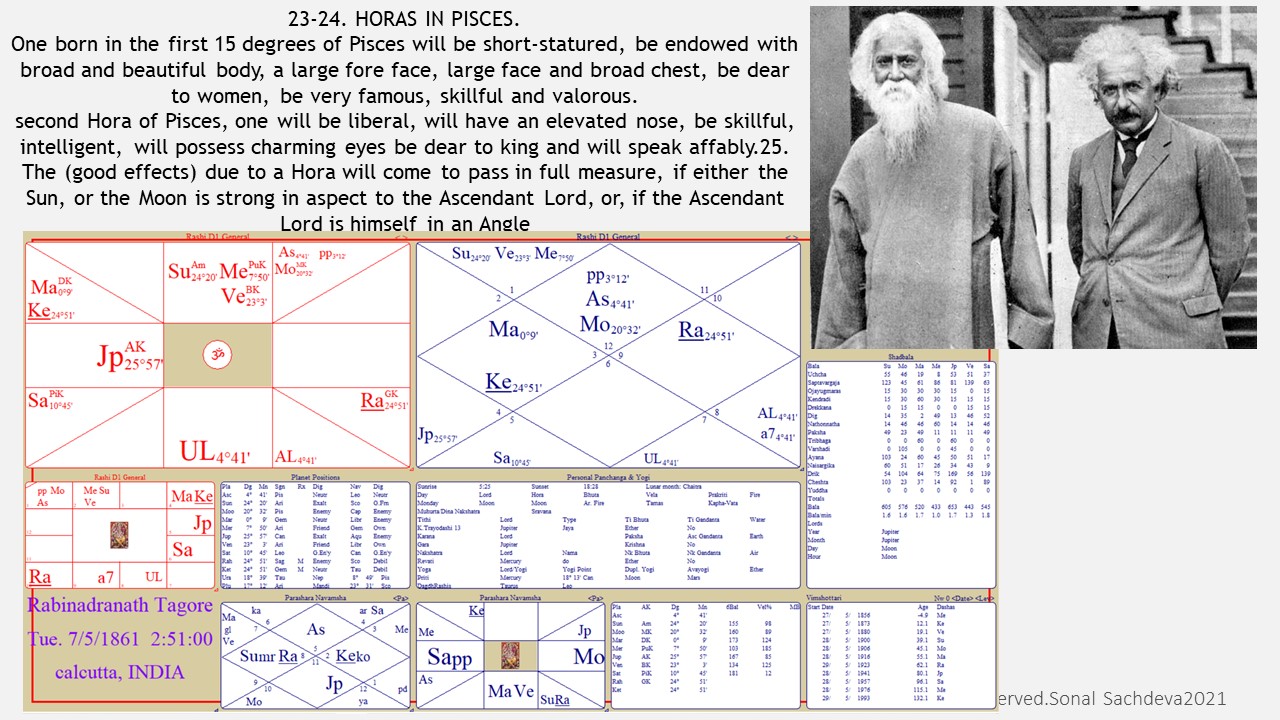
23-24. HORAS IN PISCES.
One born in the first 15 degrees of Pisces will be short-statured, be endowed with broad and beautiful body, a large fore face, large face and broad chest, be dear to women, be very famous, skillful and valorous. second Hora of Pisces, one will be liberal, will have an elevated nose, be skillful, intelligent, will possess charming eyes be dear to king and will speak affably.25. The (good effects) due to a Hora will come to pass in full measure, if either the Sun, or the Moon is strong in aspect to the Ascendant Lord, or, if the Ascendant Lord is himself in an Angle.
|
Zodiac Signs |
Vishnu Mantra – For each Sign – ANy afflications to each sign a Vishnu – Narayana Mantra will help cleanse and purify the sign |
| Aries | ॐ विष्णवे नमः | om viṣṇave namaḥ |
| Taurus | ॐ वासुदेवाय नमः। om vāsudevāya namaḥ | |
| Gemini | ॐ केशवाय नमः। om keśavāya namaḥ | |
| Cancer | ॐ राधाकृष्णाय नमः। om rādhākṛṣṇāya namaḥ | |
| Leo | ॐ हरिहराय बालमुकुन्दाय नमः। om hariharāya bālamukundāya namaḥ | |
| Virgo | ॐ ह्रीं पिताम्बराय परमात्मने नमः। om hrīṁ pitāmbarāya paramātmane namaḥ | |
| Libra | ॐ श्रीराम दाशरथये नमः। om śrīrāma dāśarathaye namaḥ | |
| Scorpio | ॐ नारायणाय नमः। om nārāyaṇāya namaḥ | |
| Sagittarius | ॐ ह्रीं श्रीं क्रीं धरणी धराय नमः। om hrīṁ śrīṁ krīṁ dharaṇī dharāya namaḥ | |
| Capricorn | ॐ श्रीं वत्सलाय नमः। om śrīṁ vatsalāya namaḥ |
| Aquarius | ॐ श्रीं उपेन्द्राय नमः। om śrīṁ upendrāya namaḥ | |
| Pisces | ॐ क्रीं रथान्ग चक्राय नमः। om krīṁ rathānga cakrāya namaḥ | |