Astrological Aromatherapy – Healing Essences and Essential Oils using Ancient Principles of Ayurveda and Modern Techniques on Aromatherapy.
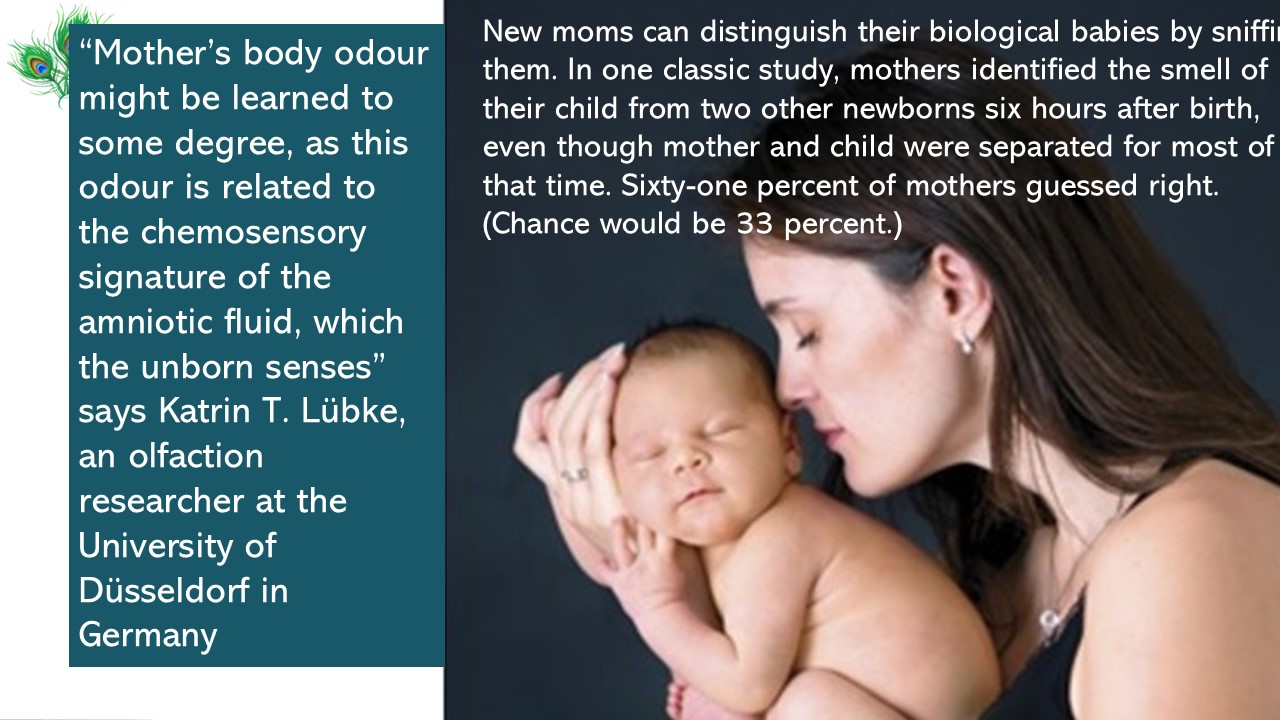
The History of aromatic substances could place us as far back as the origins of mankind. Our sense of smell was quite powerful during these early stages of humanity. Primitive humans may have found the smoke, scents, and aromas affecting our minds and moods in significant ways. Scents, inhaled through the nose or absorbed directly by the body, were considered important healing agents since antiquity.
THE PRIMITIVE BRAIN WHERE THE AROMATICS PLAY A DIRECT ROLE
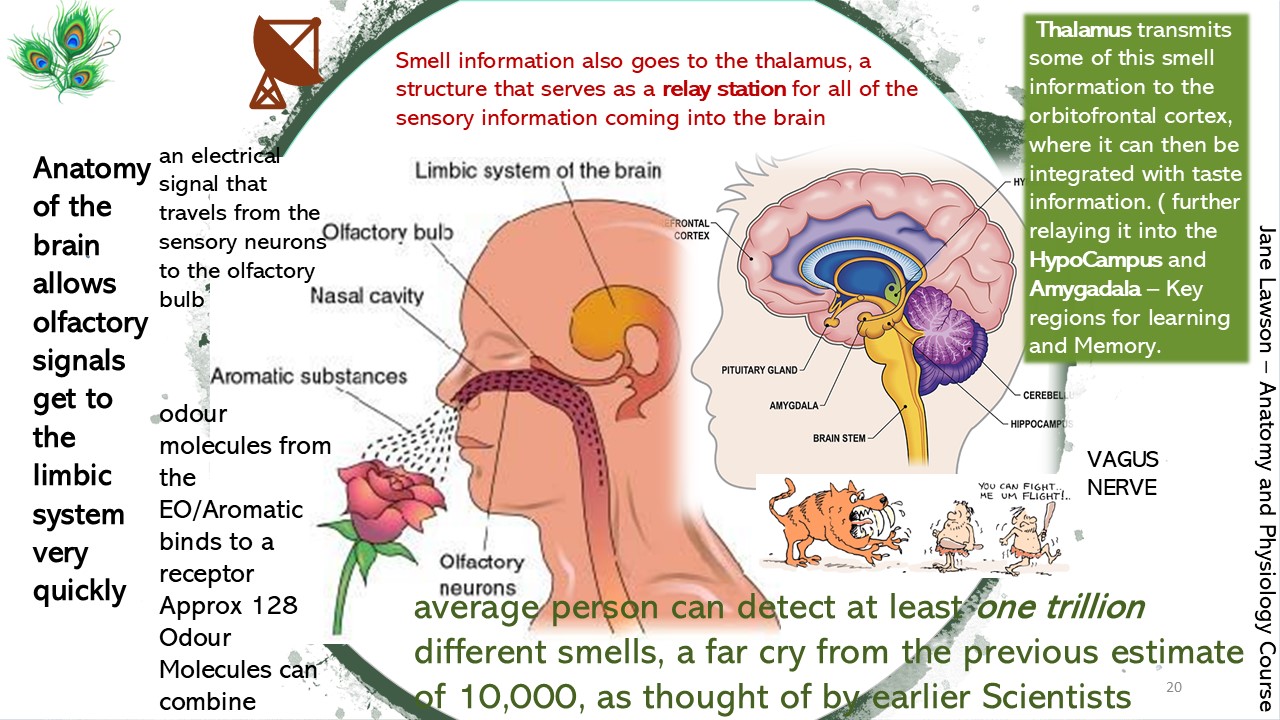
Anatomy of the human brain allows olfactory signals get to the limbic system very quickly. This has direct impact on our primitive brain which invokes the vagus nerve which literally is the master controlling our involuntary functions from breathing rate to heart rate to digestive system to depressive states to skin to immune system health.
COMPLEX WORLD OF SMELL AND HOW IT REACHES DIRECTLY TO THE BRAIN
Hence, aromatics were also used during the Middle Ages (476 to 1453 AD) for defence against the bubonic plague. Aromatics were burned in the streets and in homes to ward off infection. It is commonly suspected that the perfumers and glove makers were mostly immune to the plague because they were constantly surrounded by aromatic plants/pomanders. Those who stayed in town (during the plague) made sure to carry with them some olfactory prophylactic whenever they ventured outside.
One of the most popular of such devices was the pomander – originally an orange stuck full of cloves and later any perforated container filled with scents. People typically might carry a bouquet of aromatic flowers, or a handkerchief sprinkled with perfume as the essential oil guarded a strong protective sheath against any viruses etc.
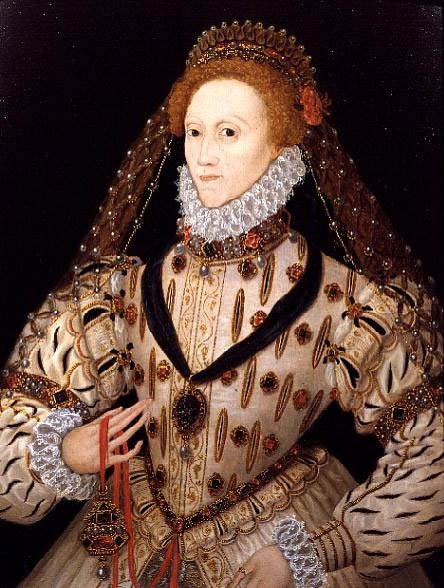
Some of the plant material would have made one feel restful, while others stimulated, and some would have gone to the chest, making breathing easier. Primitive humans discovered that leaves, berries, roots, etc., made sick people better. Smudging or burning aromatic plant material to treat a patient is one of the earliest recorded forms of treatment with herbs, often used to drive out evil spirits or as a form of incense for protection and potential health benefits.
Known written records about medicinal plants date back at least 5000 years to the Sumerians, who lived in the Mesopotamian civilization; the Babylonians, another Mesopotamian civilization, which dates to the second millennium B.C.
The development of systematic pharmacopeia’s dates to 3000 BC when the Chinese were already using over 350 herbal remedies. The Shen Nong Ben Cao Jing is one of the first Chinese herbal medicine books.
Chinese medicine seems to have reached its peak during the Ming dynasty (1368-1644) when Li Shih-Chen 李時珍 wrote his Pen ts’ao kang mu (The Great Herbal). This great pharmacopoeia, which sums up what was known of herbal medicine up to the late 16th century, describes in detail more than 1800 plants, animal substances, minerals, and metals, along with their medicinal properties and applications. Li Shih-Chen was 35 years old when he began to compile his Pen ts’ao kang mu. He took 27 years to finish it!
Ancient Egyptians (approx. 3500 BC but as early as 10,000 BC) Greeks (1100 to 140BC), and Romans (10th century BC to 1453AD) were well known for their use of aromatic plants and aromatic extracts. The Egyptians used balsams, perfumed oils, scented barks and resins for medicine, food preservation, and religious ceremonies and for embalming the dead.
Cleopatra VII ruled ancient Egypt from 51 BC to 30 BC, almost three decades. She was part of a dynasty of Macedonian rulers founded by Ptolemy, who served as general under Alexander the Great during his conquest of Egypt in 332 B.C.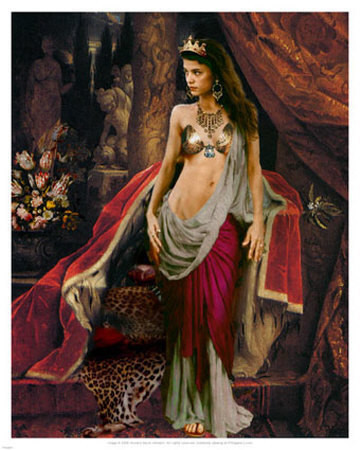
Cleopatra’s beauty secrets dating back to 70 B.C. included many recipes of sesame, avocado and quince oil. She was known to bathe in milk (back when milk was full-fat and all the goodness) as a luxurious beauty treatment. The bible discusses anointing as a rite used within sacred rituals as well as for health and cleanliness. From the 23rd psalm … “You prepare a table before me in the presence of my enemies. You anoint my head with oil, my cup overflows. Surely your goodness and love will follow me all the days of my life.”
Ancient India had a rich knowledge of medicinal plants. Oldest Sanskrit text The Vedas – the Rigveda (5000BC) has recorded 67 medicinal plants, Yajurveda 81 species, Atharvaveda (4500 – 2500BC) lists 290 species. The famous Indian physician Charaka, who wrote the Charaka Samhita (700 BC), covers the uses and applications of over 600 medicinal plants.
What is Kāyākalpa? Could it be the quest of Modern Stem Cell research for staying young which the ancient Sages knew?
The art of staying young and quest for rejuvenation and youthful longevity stems from Indian Sub-continent, which in Ayurveda is known as Kāyākalpa, an ancient system for total body rejuvenation. Originating in India circa 3000 B.C.E., Kāyākalpa purifies and nurtures the body, mind, and soul. A diet in combination with Massage is central to its therapy. Kāyākalpa’s history reaches back to the Siddha yogis and the ancient sages renowned for their youthful longevity and supernatural powers. It predates even the Ayurvedic system and is believed to have been first transferred from the Lord Shiva to his wife Parvati, and other Sages Siddhas, who with Kāyākalpa acquired Siddhis Great mystical powers.
1000’s of years ago, in the Hindu Kingdom, A King had a daughter who was going to get married in a darbar of the first man who would walk-in. As the King was fed-up with her not getting married!Word was sent out, and the day arrived. The Princess stood waiting for the first person to walk in through the grand Court of the king.
A old man with dried herbs who would come regularly to the court for an audience with King, came by, with his ‘pitara’ of herbs for the King. And of course when he walked in, true to the word of the King, this old Man was chosen to be the groom for the Princess. In a few weeks, he was to wed the Young Princess.
So he went to his Master who sent him to his ‘Advait and spiritual Guru’ . He then went on to transform his ‘old man look’ from creaky bones, white hairs on chest and head, sagging chest and lack of libido!
He was put in a hut with no sunlight, with diet of herbs and amalaki, and oil massage with herbs every day. He regained his dark hair, a young person’s ojas returned, and eventually he went to have children!
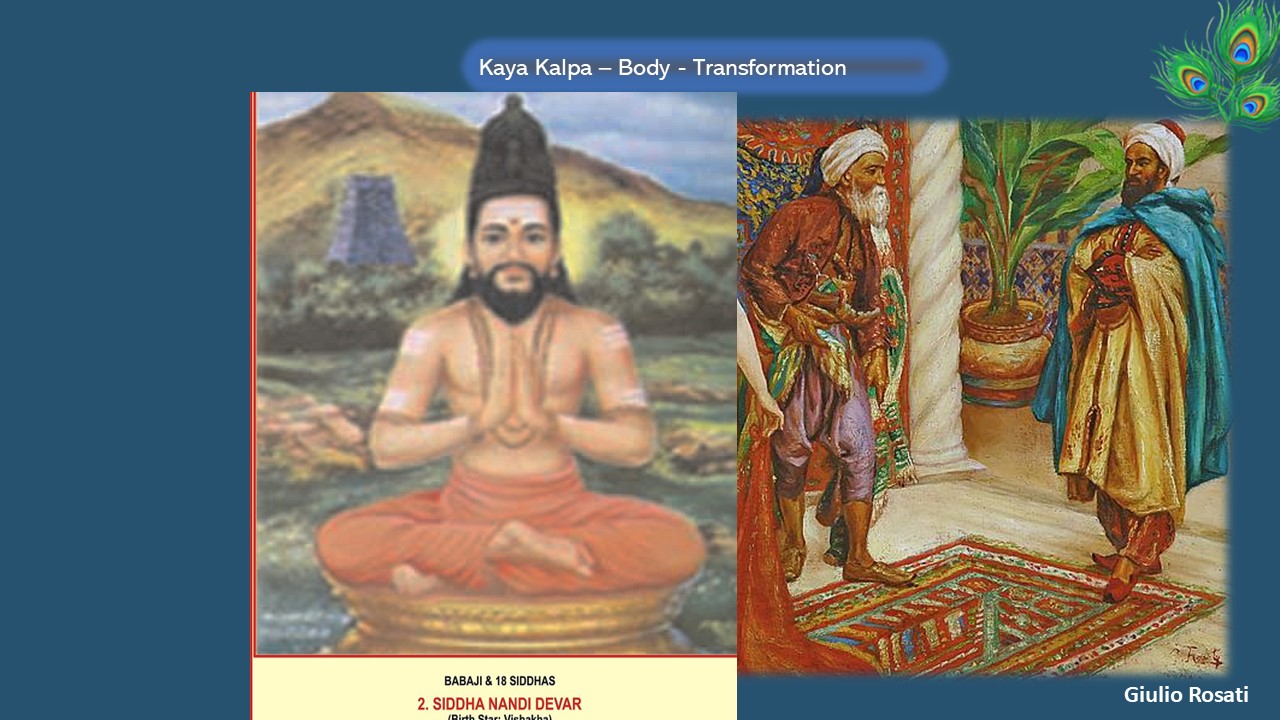
A little Diversion on the Topic of Kaya Kalpa
Devraha Baba was an Indian Siddha Yogi saint who lived beside the Yamuna river in Mathura. He was known as “ageless Yogi”.Life Little is known about the early life of Devraha Baba, beyond that in the first half of the 20th century he visited Maiel, a town 20 km south west of Salempur, Here he started living atop a machan, a high platform made of wooden logs, situated 3 km from the town on the banks of Sarayu river. People of Deoria District, started calling him Devraha Baba, with Baba being an honorific for saints or old men.
Thereafter he shifted to Vrindavan, where again he lived atop a machan (Tree house) on the banks of Yamuna river for the rest of his years. At Purneswari Maa Tara Tarini shakti Peetha in Ganjam (Odisha), locals addressed him by the name of Chamatkari Baba. Even today, the priests of Maa Tara Tarini Shakti Peetha remember his miracles during his visit to Maa’s Peetha. He often narrated that he used Kaya Kalpa for increasing his lonngevity and good health.
Some of his discourses are continued by his disciple Chhote Devraha Maharaj. I had the fortune of meeting his earlier this year and it was amazing…
Rasāvādins are people dealing in all kinds of substances which have rasa – predominantly in Aromatics
Rasāvādins had firm belief in the acquiring of mercury of all the transmutation potencies after saṃskāras., leading to its assimilation into and revitalization of the body.
Rasāvidyā, mercury had to undergo eighteen saṃskāras (treatments) to display its supreme powers of transmuting base metals into gold or silver and of transforming the perishable body into an imperishable! state.
Alchemists and pharmacists were one and the same in TCM – Traditional Chinese medicine also used less concentrated cinnabar and mercury preparations, and dan means “pill, medicine”
for example, dānfāng 丹方 semantically changed from “prescription for elixir of immortality” to “medical prescription”.
Dan was lexicalized into medical terms such as dānjì 丹劑 “pill preparation” and dānyào 丹藥 “pill medicine”.Chinese medical writing, Huang-ti Nei ching (The Canon of Internal Medicine).
The chase of the nectar of immortality and how deeply it is interlinked with Aromatic substances is still very much the holy grail today.
Some-how we have come to belive perfumes, etc have a crucial role to play in our well-being. Indeed it does, as even Sri Shuktam States
गन्धद्वारां दुराधर्षां नित्यपुष्टां करीषिणीम् ।
ईश्वरींग् सर्वभूतानां तामिहोपह्वये श्रियम् ॥९॥
Gandha-Dvaaraam Duraadharssaam Nitya-Pussttaam Kariissinniim |
Iishvariing Sarva-Bhuutaanaam Taam-Iho[a-u]pahvaye Shriyam ||9||
9.1: (Harih Om. O Jatavedo, Invoke for me that Lakshmi) Who is the Source of All Fragrances, Who is Difficult to Approach, Who is Always Filled with Abundance and leaves a Residue of Abundance wherever She Reveals Herself.
9.2: Who is the Ruling Power in All Beings; (O Jatavedo) Please Invoke Her Here, Who is the Embodiment of Sri.
To appease any deity and God we make use of the following
Dhūpa
‘Dhupa’ signifies the act of burning fragrant substances, typically in the form of incense, for the purpose of purification, spiritual offerings, or enhancing an environment’s aroma. It played a vital role in rituals, aiding in the worship of deities and creating a meditative atmosphere as recorded in ancient texts.
Floral waters have been used in Indian Subcontinent throughout the ages. Sprinkling Rose water during weddings is an age old practise. These waters often contained perfumed ingredients, enhancing cleanliness and providing therapeutic benefits, playing a significant role in both religious practices and uplifts the mood of the ceremonies and people.
GANDHA – derived from
Gandhashastra, a science of Gandhas i.e. cosmetics and perfumes was contemporary to ancient
Ayurveda. A rare manuscript viz.Gandhasara by Gangadhar (12th Century A.D.) and Gandhavada by an
anonymous author is resting on the Gandhasastra. The literature pertaining to Gandhashastra is scattered right
from the Vedas to the modern day Ayurvedic texts. The Vedas-Upanishadas-Puranas-Smrutis-Samhitas are the sources referred for literature of
Basic processes described in Gandha Sastra is very similar if not exactly the same as Modern Extraction of Aromatherapy Essential Oils.
1) It states that a Gandhadravya should be subjected to the following Six processes viz.
Bhavana, Pachana, Bodhana, Vedhana, Dhupana and Vasana. These processes are summarized as follows2-
Bhavana:- It is a maceration process where a solid base is macerated by a liquid base. It is done for 5-6 times.
This process is used for the preparation of gandhodaka, mukhavasa and udvartana etc.
Pachana:- It is a process of baking or ripening. Here a solid base is baked with the help of various yantras. It
has 11 sub-types. This process is used for the preparation of gandhataila and kusumdruti etc.
Bodhana:- It is the process of intensification where a solid base is intensified by another solid base. It is done
for about a week for the preparation of udvartana and mukhavasa etc.
Vedhana:- In this process a liquid base is intensified by another liquid base. This process is done once for
preparing niryasa, parijata and dipataila etc.
Dhupana:- It is the process of fumigation where a solid base is fumigated by a gaseous base .It is done once
with the help of dhupayantra. It is used to prepare udvartana and mrugaraja etc.
Vasana:- In this process of transmission of scents a solid or liquid base is made fragrant by a gaseous base ;
used to prepare gandhataila and jalavasa etc.
2) Gandhayukti (Blending Techniques for Perfumes as described by Varahamihira) have complicated formulae to acheive the best results.
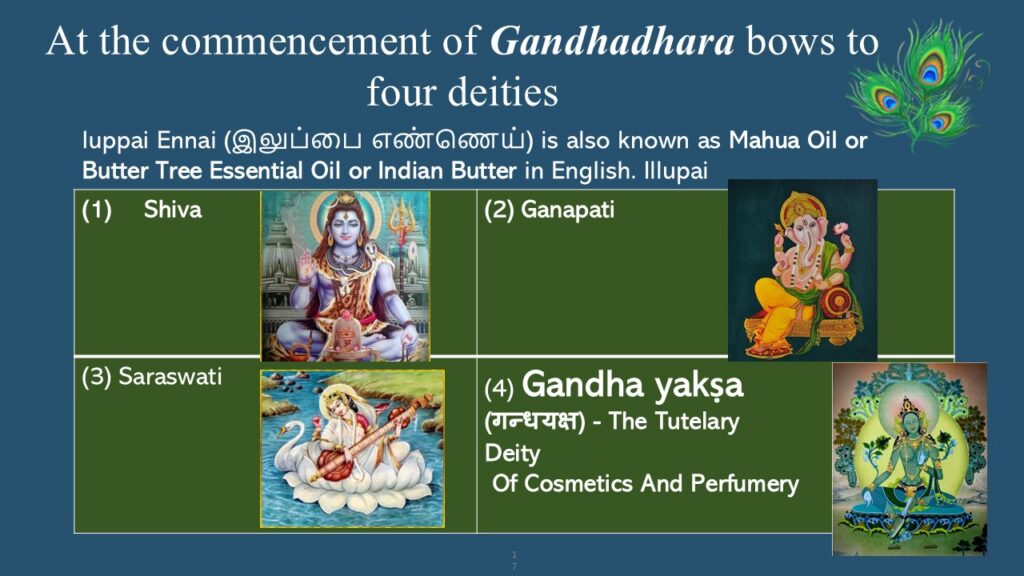
KEY DEITIES FOR GANDHA AND RASAYANA
This knowldge has no doubt been imparted from Lord Siva, and Ganesha is the presiding deity related to the Tattva of Earth Element which is connected with smell. Saraswati as the Goddess of learning and the 12th house also connects us with learning and trine houses too.
One of the key factors when extracting oils and use of aromatics was the seasons and the nature of planets affecting us and our own nature
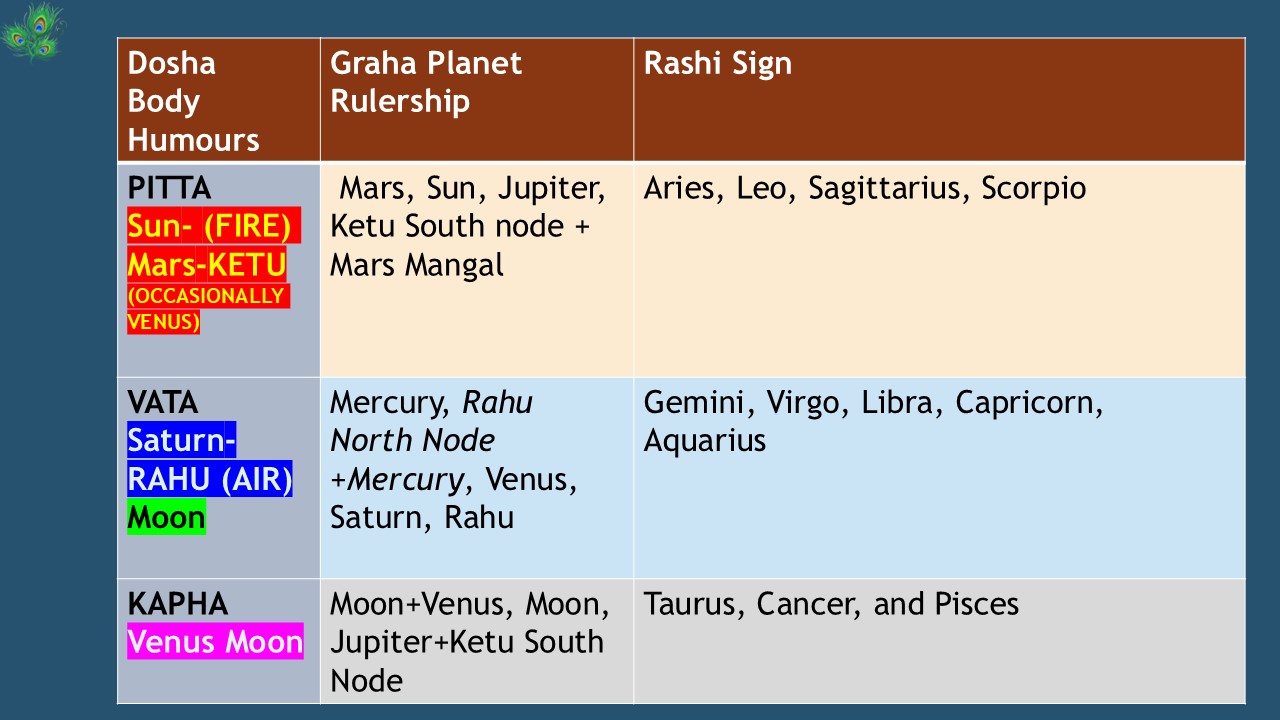
First we examine the Nature of Planets in relation to whether it is Pitta, Kapha or Vata prone. So, for example the table below is quite self explanatory.
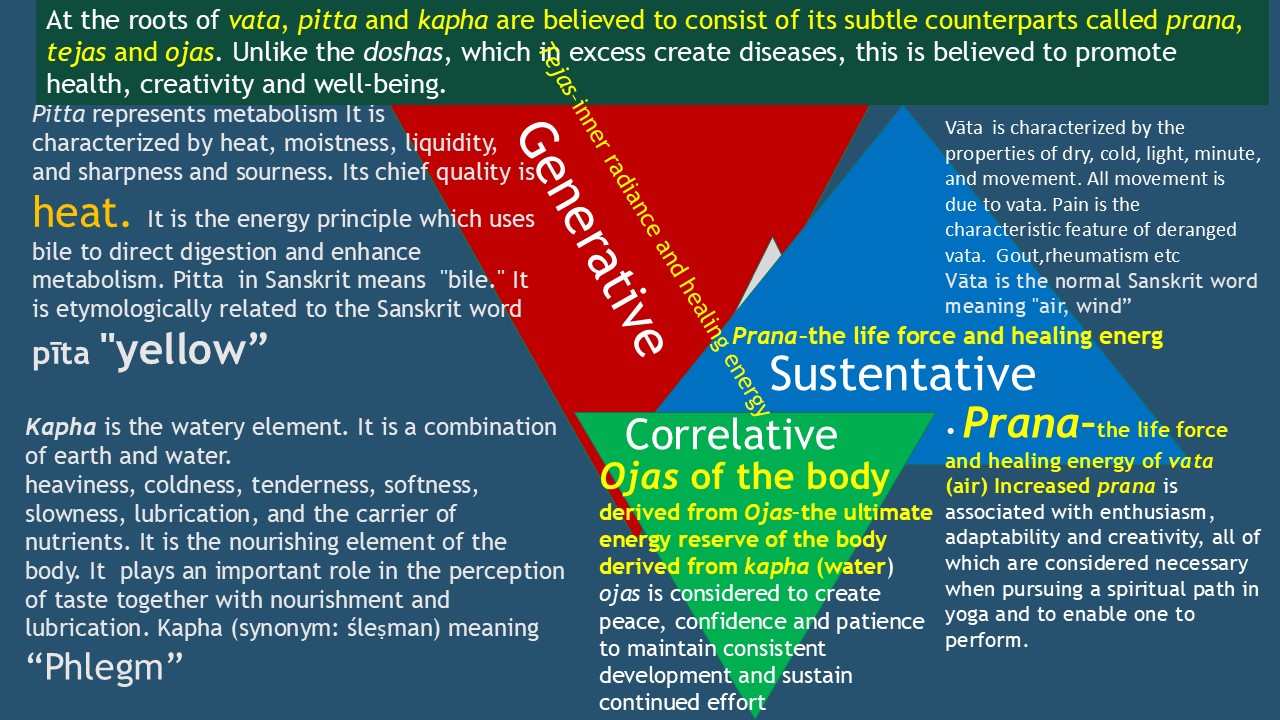
Pitta performs the activities like digestion, metabolism, production of heat and that is why it is called ‘Agni’ meaning ‘Fire’. For all practical purposes, ‘Agni’ and ‘Pitta’ are to be considered as identical entities (Suśrutasaṃhitā Sūtrasthāna 21/9, Carakasaṃhitā Sūtrasthāna 12/11). When it is normal, it performs the functions like maintenance of normal digestion, normal vision, normal body temperature, normal complexion, valor, happiness and nutrition. When it is abnormal, all these functions also will be abnormal (Carakasaṃhitā Sūtrasthāna 12/11). Other functions of endocrine system are described under the functions of ‘Pitta’.
Pitta (पित्त) It is situated in umbilicus, stomach, sweat, lymph, blood, watery fluids of the body, eye and skin. It is predominant of Fire Agni Great element mahābhūta. Its attributes are: Sasneha (slightly unctuous), Tīkṣṇa (sharp), Uṣṇa (hot), Laghu (light), Visra (of pungent odour), Sara (flowing) and Drava (liquid).
Ketu rules the Natural 8th house so it is classified as Pitta. All Fire Signs along with Mars Ruled signs will have a predominant fire, heat prakriti – constitution and is easy to get heated up.Similarly, Jupiter and in combination with ketu will have strong pitta too.
Similarly, As the Air Element – Vata , all source of it is Rahu and Shani Saturn follows suits. To an extent Moon also creates and is prone to Vata issues.
Vāta (वात).—The word ‘vāta’ is derived from the verb-root ‘vā’ meaning ‘to move’, ‘to inform’ and ‘to impel’ which are the natural actions of Vāta. Enthusiasm, respiration, movement, normal transportation of dhātus (‘nutrients’), proper elimination of excrete—these are the normal functions of Vāta. All motions, transportation, and electromagnetic activities are controlled by vāta.
Vāta is aggravated by intake of rough, bitter, astringent and pungent substances, fasting, suppression of natural urges, physical exertion, excessive cold, wasting of dhātus, mental worry, keeping awake in night, in early rains, old age, last phase of day and night, and after the food is digested.
Kapha (कफ) A synonym for Śleṣmā. One of the three bodily Doṣas responsible for stability, unctousness, lubrication, immunity, and cohesion. This is predominant of Pṛthvi Earth and Jala Water Great Elements Mahābhūtas. The attributes of Kapha are: Guru (heavy), Manda (dull), Hima (cold), Snigdha (unctuous), Ślakṣṇa (smooth), Mṛtsna (soft) and Sthira (stable).
Similarly, Kapha is Moon and Venus predominantly, which is very ‘water’ intensive and has heavy energy. Water Element is like a full Moon, full of security, is strong and stable, which is a positive Kapha kind of personality. The negative side os Kapha is lazy, slothfuil, prone to over heating, issues with water lymphatic system etc.
To be continued part 2