
 1.The Use of the Sidereal Zodiac by Vedic Astrology is derived and based on the Nakshatras or the Lunar Star Constellations
Indian Vedic Astrology rests on the shoulders of the various Astronomers such as Lagadha (approximatey 1st century BCE), Aryabhatt, Brahmagupta (598–668 CE) Varahmihira(approximately 500 CE) to name a few. Varaha Mihira was a native of Avanti and the son of Adityadasa who was an astronomer and from whom he received his education as he himself tells us in his Brihat Jataka (Chapter. XXVI Verse 5).The date of his birth is involved in obscurity. It is the practice of all the Hindu astronomers to give this information in their works on astronomy; but unfortunately, Varaha Mihira ’s work on astronomy, known as the Panchasidhantika, is now lost! (See footnote at the end)
In verse 2 of Chapter III of his Brihat Samhita Varaha Mihira (He was one of the 12 gems of the Court of Vikramarka, came to now known as the Vikrama Era, as per the Hindu calendar, dates from 56 B. C. whereas Varaha Mihira is considered to have flourished in the sixth century after Christ) Stated:—
“At present the Solstitial points coincide with the beginning of Karkataka (Sign Cancer) and with the beginning of Makara (Sign Capricornus).”
This amounts to saying that the Vernal equinox, which is midway between the Solstices (90° from each), was at the commencement of Mesha (Sign Aries) i.e., coincided with the Star Revati where the fixed Hindu Zodiac commences.
2.Case of the Shifting Zodiac over 1500 years – Precession of the Equinoxes
The precession of the equinoxes was known to the Hindus long before it was known to the Europeans, although Hindu astronomers are not agreed as to the nature of its course—some asserting that it oscillates on both sides of the star Revati while others that it makes a complete revolution round the heavens, a point about which even European astronomers have not arrived at any conclusion.
Various Authors have given Tithi, NaKshatra, lunar month etc. Sages in particular to mention the Nakshatra of the Sun at the Winter Solstice or the Summer Solstice or the equinoxes. From these records it is evident that the ancient sages knew of the precession of Equinoxes due to which the Sun recedes in the Nakshatra Cakra. If we know the rate of the precession of equinoxes as one degree in 72 years or one Nakshatra in 960 years or one Rashi i.e., 30 degrees of a Sign in about 2160 years, we can calculate the year or the period of any incident about which these records are available.
(Brihat Samhita – Commentary) The Sun as the Giver of Seasons and the Ayana Direction splitting the Year into two Halves. The Solstice points are vital markers in Vedic Astronomy. They Mark the Sun’s sojourn from Uttarayna to Dakshinaya.
Vedic ritual was based on the times for the full and the new moons, solstices, and the equinoxes. The year was known to be somewhat more than 365 days and a bit less than 366 days. The solar year was marked variously in the many different astronomical traditions that marked the Vedic world.
The year was divided into two halves: Uttar Ayana, when the Sun sojourn into the northward way, and Dakshin Ayana, when the Sun travels south.
According to Kaushatika Brahmana, the year-long sacrifices began with the winter solstice, noting the occurrence of the summer solstice, visuvant, after six months.
The twelve tropical months, and the six seasons, are named in the Yajurveda:
- 22nd Feb – 22nd April – Madhu, Madhava in vasanta (spring) Sidereal Pisces & Aries
2. 22 April – 22d June – (Approximately Summer Solstice) -Sukra, Suci in grishma (summer) Sidereal Taurus & Gemini
3. (22 June – 22 Aug – Signs Cancer & Leo Nabha, Nabhasya in varsha (rains)
4.22 Aug – 22 Oct Virgo & Libra Isa Urja in sarada (autumn)
5. 22 Oct – 22 Dec Scorpio – Sagittarius Saha, Sahasya in hemanta (winters)
6.22 Dec – 22 Feb -Tapa, Tapasya in Sishir (freezing Winters)
Nakshatra names of the months began with Caitra in spring, although some lists begin with Phalguna.Since the months shift with respect to the twelve nakshatra about 2,000 years per Nakshatra (Given the precession of the Equinox).
This change in the list iindicates a corresponding long period. The lists that begin with Caitra mark the months thus: The earliest lists of Nakshatras began with the Nakshatra of Kritika in the Constellation of Pleiades; much later lists dating from sixth century CE begin with Ashwini when the vernal equinox occurred on the border of Revati (in Sidereal Pisces) and Ashwini (Sidereal Aries)
Summer Solstice 2021
The Conjunction on 22nd June 2021 as Venus from Gemini Mithuna moves into Cancer. Eventually it will go into an exact conjunction with Mars in Cancer at 26 degrees in Aslesha Fixed Star. This configuration over the next few weeks will be quite potent on a collective as well as on a personal level. As it is aspected by Ketu South Node in Scorpio.
The planets Venus and Mars will make a close approach, passing within a mere 28.1 arc minutes of each other.
Venus will be at mag -3.9; and Mars will be at mag 1.8. ( For more please check below on Conjunctions). Both objects will lie in the constellation tropical Leo.They will be close enough to fit within the field of view of a telescope but will also be visible to the naked eye or through a pair of binoculars.At around the same time, the pair will also share the same right ascension – called a conjunction.
The Sun will move from Nakshatra of Ardra to Punarvasu in the sign of Gemini. Sun in Gemini is extraordinarily Strong and invokes the mitra Aditya form of Sun God. That has to do with friendships and bringing about alliances. Mercury its ruler is the proverbial little Prince who loves to play and be with friends. Hence a great time for all those activities but be aware of excesses. The Mars Venus conjunction can swing to extremes and then regret later. And aspected from Saturn in Capricorn will put some brakes on the eternal fiesta.
Jupiter turning its Motion to Retrograde from
June 20 2021 – October 17 2021
During 2021, the transit of Jupiter will give us quite a bit of variety, moving between Saturn’s earth sign, Capricorn and airy Aquarius, co-ruled by Saturn and Rahu North Node of the Moon. We have the two biggest planets Saturn & Jupiter both going trorgrade and are very powerful. On April 5, 2021, Jupiter moved to Aquarius, and now will go back traversing those degrees in Capricorn. With the Planet of restriction, Karma, and debt collector – Shani Saturn in same sign as Jupiter Guru, the planet whose ethos is exact reverse of Shani, will make for one step ahead and then 3 steps back! This is also the combination of ‘kill and be killed’ as in if this configuration enters into any kind of protest or renegade behaviour it will ensure it not just brings the enemy down but will happily go down with the enemy! Jupiter expands whatever it touches and at the moment that conjunction of Venus + Mars is being triggered by Jupiter.
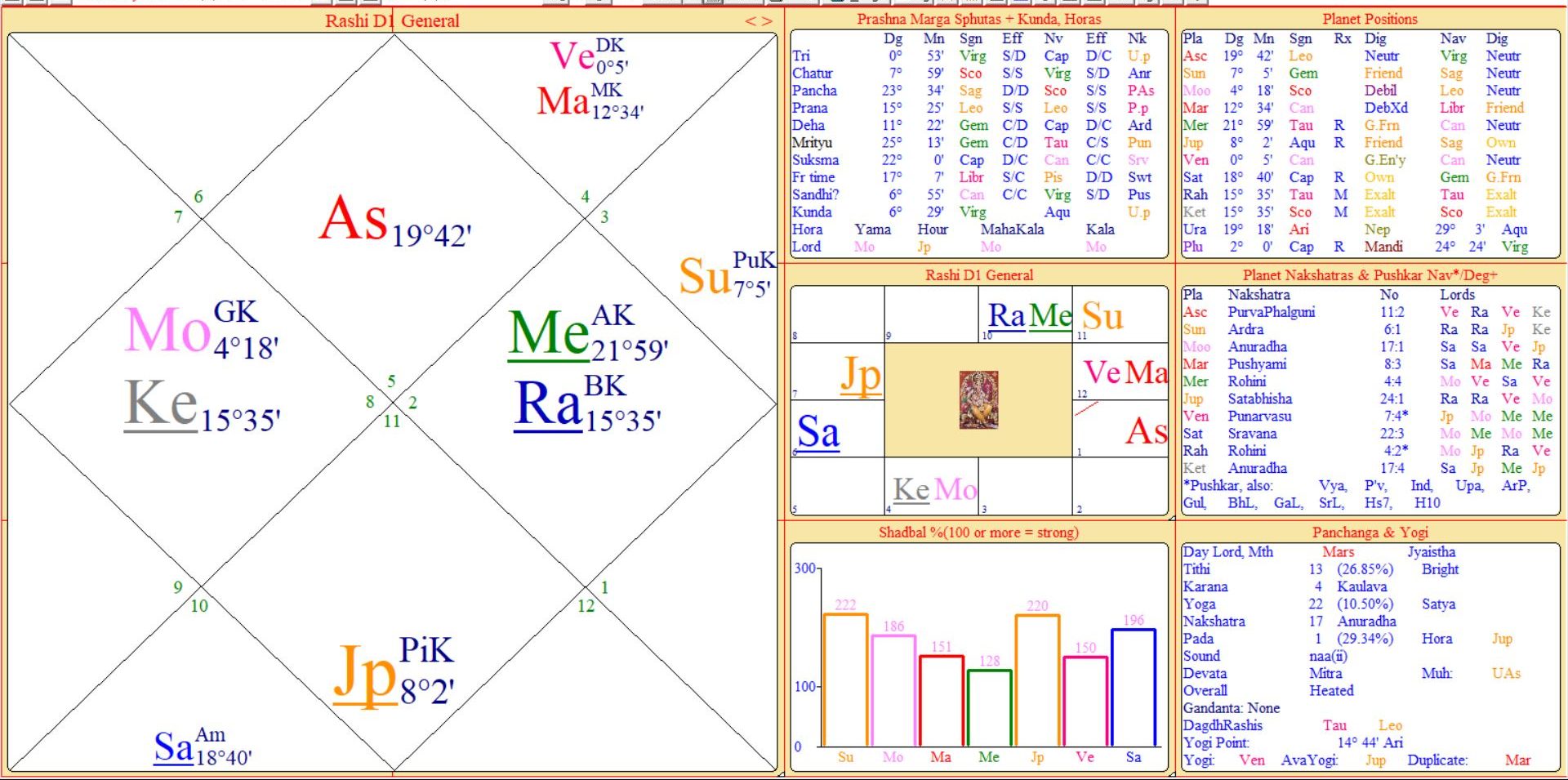
Quaite a eventful day! 22nd June as Venus ingress ino Cancer to join Mars, aspected by Saturn, and Moon+Ketu Conjunctions.Emotions running very high over next two weeks..
Jupiter Retrograde June 20 – October 17
During 2021, the transit of Jupiter will give us quite a bit of variety, moving between Saturn’s earth sign, Capricorn and airy Aquarius, co-ruled by Saturn and Rahu. On April 5, 2021, Jupiter moved to Aquarius, which was a positive step that fostered some expansion and progress for many.
People with Rising, Moon in Cancer, Sun, Scorpio will be surely affected. There may be positive events that will open great opportunities for them but not without some frustration, explosive situations, as Saturn – Mars Oppositions are always quite potent. It is a Yama Yoga – Transform or die! Libra is the sign most impact of this Saturn + Mars, and so Sun, Moon and Ascendant in Libra should be on alert over next few weeks. Self control is tough for libra whose biggest obstacle can be impetuous behaviour, act now think later often disabling the delicate and harmonious balance of the scales that Libra is meant to maintain. Expect a lot of unrest on a collective level especially around July 11th 2021 – when it starts to get into each others close orbit or partile aspect. (Exact degrees).
4.Similar Influences in this Century with the Nodal Axis in Taurus Scorpio aspected by Saturn, Mars
1.Year 1909 when Nodal Axis (North Node & South Node were in the sign of Sidereal Taurus-Scorpio Axis)
| Feb 17, 1909 | Sep 06, 1910 |
aspected by Mars in Capricorn and Saturn in Pisces.
March 31 – Construction begins on the RMS Titanic, at the Harland and Wolff Shipyard in Belfast.
April 11 – The city of Tel Aviv (known in its first year as Ahuzat Bayit) is founded by the Jewish community, on the outskirts of Jaffa.
April 13 (March 31 by Eastern reckoning) – A countercoup begins in the Ottoman Empire.
April 14 – Adana massacre: Ottoman Turks kill 15,000–30,000 Armenian Christians, in the Adana Vilayet.
April 18 – Joan of Arc is beatified in Rome.
November 18 – In Nicaragua, 500 revolutionaries (including 2 Americans) are executed by order of dictator José Santos Zelaya. The United States responds by sending 2 warships.
July 25 – Louis Bleriot is the first man to fly across the English Channel (thus a large open body of water) in a heavier-than-aircraft. Rahu rules Air – Vayu Tattva and large machines which is what avaition is all about ‘Super large machines in the sky’.
July 25–August 2 – “Tragic Week”: The city of Barcelona experiences a workers’ uprising.
| Sep 24, 1927 To Apr 12, 1929 |
1.Sep 3, 1928, Alexander Fleming First Discovers Penicillin
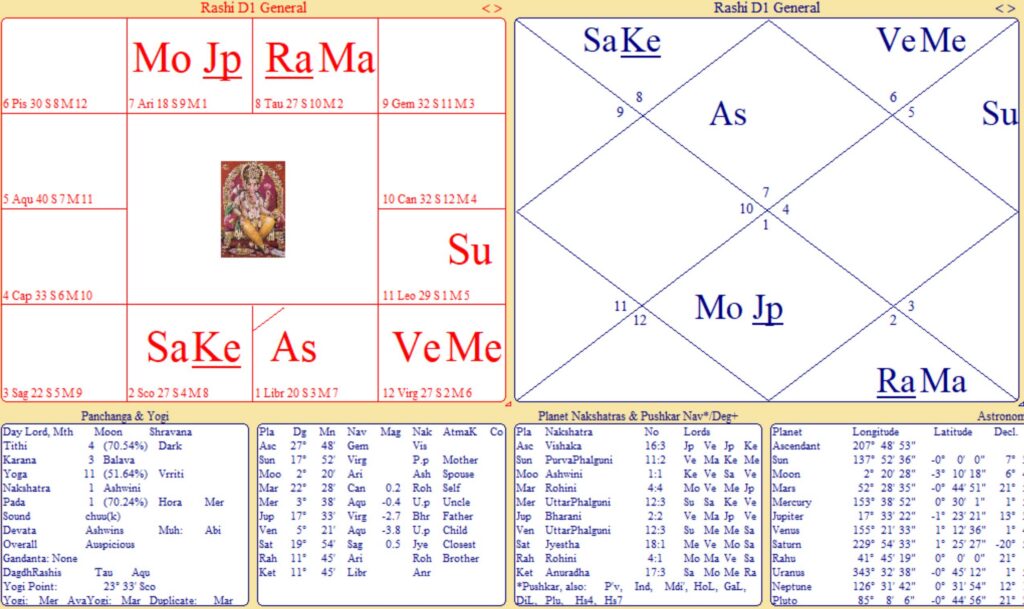
Saturn – Mars configured with the Nodal Axis, is quite significant to phenomenal changes in the collective. This is a similar influence as current times – Where the Nodes in Taurus – Scorpio are in aspect to MArs, Venus and Saturn!
For the first 2 million years or so of human history, bacterial infections—pneumonia, scarlet fever, syphilis, festering wounds—were often tantamount to a death sentence.
But one London morning, humanity got a dramatic reprieve when a Scottish researcher named Alexander Fleming happened to glance at some Petri dishes about to be sterilized for reuse and said, “That’s funny.” Fleming, who had seen the horrors of infection during World War I, was searching for a safe, powerful antibiotic.
| May 01, 1946 to Nov 18, 1947 |
References & Footnotes
Kak on Indian Astronomy
From Brhat Samhita on Conjunctions of Planets
Bheda: This conjunction occurs when the disc of one of the planets appears eclipsed by that of the other planet.
Ullekha: This occurs when the disc of the one appears to rub against the disc of the other.
Aṃśumardana: This occurs when the light of the one mix with the light of the other.
Asavya: This occurs when the planets are distinctly apart from each other.
Planetary conjunction is known in Hindu Astronomy as Yuddha (fight); when, a planet in conjunction, is to be deemed as suffering defeat or as triumphant, the author describes further on.
The commentator states, as a corollary to the above, that a planet in conjunction which might appear of small disc or dim must be deemed to suffer defeat though he might be the northern planet.
Again, as Venus is ever bright, he is generally the successful planet in conjunctions whether he happens to be the northern or southern planet according to Sūrya Siddhānta and Pauliṣa Siddhānta.
So, the Vikramarka of the first century before Christ must be different from the Vikramarka of the 6th century after Christ, unless we go to the length of believing that Vikramarka reigned, according to the Hindu legend, for a thousand years!
Learned Sages and Astronomers were said to have a longevity of 500 – 1000 years depending on the Yuga.
This is similar resonances to the Christian Bible where there have been instances in which Enos is said to have lived 905 years, Cainan 910 years, Seth 912 years, Adam 930 years, Noah 950 years, Jared 962 years and Methusala 969 years; and yet poor non-biblical Vikramarka is grudged a comparatively small matter of 500 years!